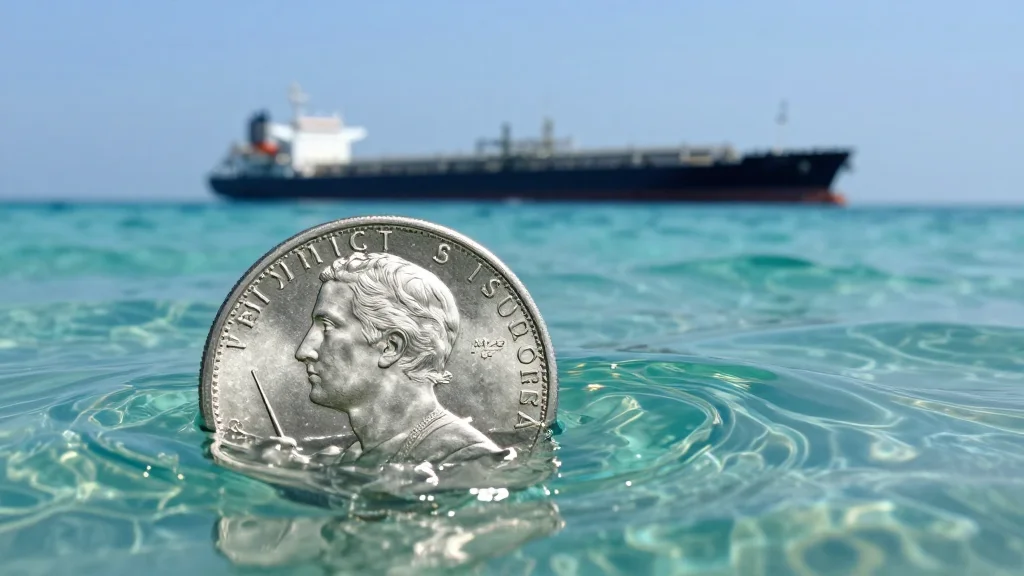
Fresh Peace Proposal From Iran as Traffic Through the Straight of Hormuz Remains Blocked
Key Takeaways
- •Iran offers peace deal via Pakistan, omits nuclear dismantlement demand.
- •Dollar slips 0.5% as investors price potential Hormuz reopening.
- •Pakistan raises policy rate to 11.5% amid war‑driven inflation risk.
- •Oil stays above $95/barrel despite 0.8% price dip.
- •Chinese industrial earnings jump 15.5% YoY, outpacing prior quarters.
Pulse Analysis
The latest Iranian overture, routed through Islamabad, reflects a strategic pivot toward de‑escalation without conceding on its nuclear ambitions. By tying the reopening of the Strait of Hormuz—a vital artery for roughly a fifth of global oil trade—to a cease‑fire extension, Tehran aims to extract economic relief while preserving its core bargaining chip. Analysts note that the omission of nuclear dismantlement weakens the proposal’s appeal to Washington, yet the mere prospect of unblocking Hormuz can shift risk premia in energy markets and restore some confidence among shipping firms.
Financial markets have already priced in a tentative optimism. The U.S. dollar weakened across the board, losing roughly half a percent against the Australian, New Zealand, Canadian, Korean, euro, sterling, and yen pairs. Asian equity indices rallied, with Japan up 1.4% and South Korea 1.2%, while European markets posted modest gains. Despite a 0.8% dip, WTI crude still trades above $95 per barrel, underscoring the lingering premium on oil amid supply‑chain uncertainty. Sovereign‑bond yields nudged higher, led by Japan’s JGBs, signaling that investors are demanding a modest risk buffer as geopolitical tensions persist.
The ripple effects extend beyond the Middle East. Pakistan’s State Bank, citing the war’s impact on global energy costs and freight rates, raised its policy rate to 11.5%—its first hike in three years—highlighting how regional conflicts can tighten monetary conditions in vulnerable economies. Higher rates aim to pre‑empt inflationary spikes, yet they also risk slowing growth in a country already grappling with volatile capital flows. The confluence of a potential Hormuz reopening, elevated oil prices, and tighter emerging‑market financing creates a complex backdrop for investors navigating both geopolitical and macroeconomic headwinds.
Fresh Peace Proposal From Iran as Traffic Through the Straight of Hormuz Remains Blocked
Comments
Want to join the conversation?