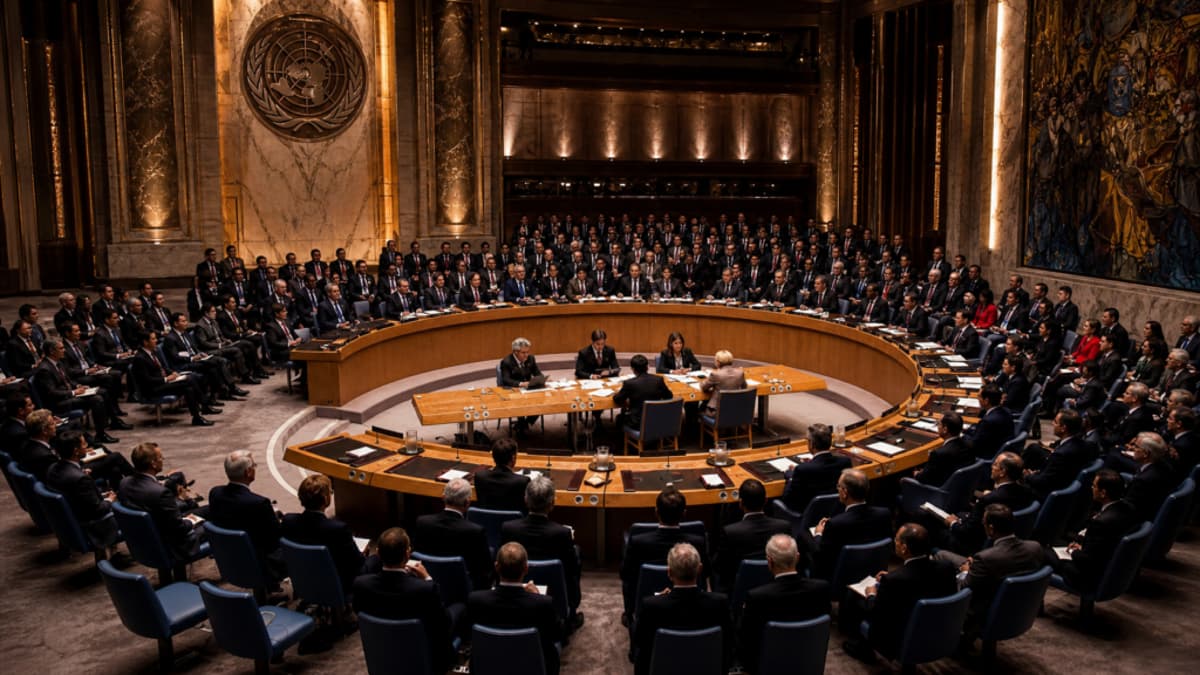
From Bilateralism to Multilateralism: Washington’s Push for Strategic Stability Through the P5
Key Takeaways
- •New START expired Feb 5 2026, prompting U.S. policy shift.
- •U.S. proposes P5 multilateral talks to replace bilateral U.S.–Russia treaty.
- •Russia’s theater warheads and new systems highlighted as New START gaps.
- •China’s arsenal could reach 1,000 warheads by 2030, driving inclusion.
- •France and UK likely to support dialogue, but may resist binding limits.
Pulse Analysis
The expiration of New START marks a watershed moment for nuclear arms control, exposing the treaty’s narrow focus on deployed strategic warheads while overlooking Russia’s burgeoning theater‑nuclear stockpiles and emerging delivery systems. Analysts note that the bilateral framework, once a cornerstone of U.S.–Russia security dialogue, failed to adapt to the evolving threat landscape, prompting Washington to seek a broader, more inclusive mechanism. By invoking Article 6 of the NPT, the United States aims to legitimize a P5‑centered forum that could address gaps left by the old treaty and incorporate emerging nuclear actors.
Central to the U.S. push is the rapid expansion of China’s nuclear force, which experts estimate could surpass 1,000 warheads by 2030, narrowing the quantitative gap with the legacy powers. Coupled with Russia’s development of novel weapons like the Skyfall cruise missile and Poseidon torpedo, the strategic calculus now demands a multilateral dialogue that can manage both quantitative and qualitative dimensions of nuclear risk. The proposed P5 platform would bring together the United States, Russia, China, France, and the United Kingdom, each with distinct security concerns, to negotiate limits, verification protocols, and confidence‑building measures that reflect today’s multipolar reality.
The success of a P5‑driven process could stabilize the strategic environment, curb a potential arms race, and reinforce non‑proliferation norms, but it also faces significant obstacles. The United States and Russia together hold roughly 80 percent of the world’s nuclear arsenal, giving them leverage that may deter smaller P5 members from accepting binding caps without reciprocal reductions. Moreover, divergent threat perceptions—particularly China’s insistence on parity before any limits—could stall negotiations. Nonetheless, a functional multilateral forum would reshape defense industry priorities, encouraging investment in verification technologies and prompting NATO allies to recalibrate their nuclear postures in line with a more collective security framework.
From Bilateralism to Multilateralism: Washington’s Push for Strategic Stability Through the P5
Comments
Want to join the conversation?