Hellscape Taiwan: Drones, Deterrence, and the Future of Asymmetric Defense
Key Takeaways
- •Cheap expendable drones can raise PLA invasion costs dramatically
- •Taiwan's narrow beaches and mountains enable layered unmanned defenses
- •Mobile air defenses and sea mines create a “porcupine” barrier
- •Political inertia hampers rapid deployment of autonomous systems
- •Ukraine's drone warfare lessons inform Taiwan's asymmetric plans
Pulse Analysis
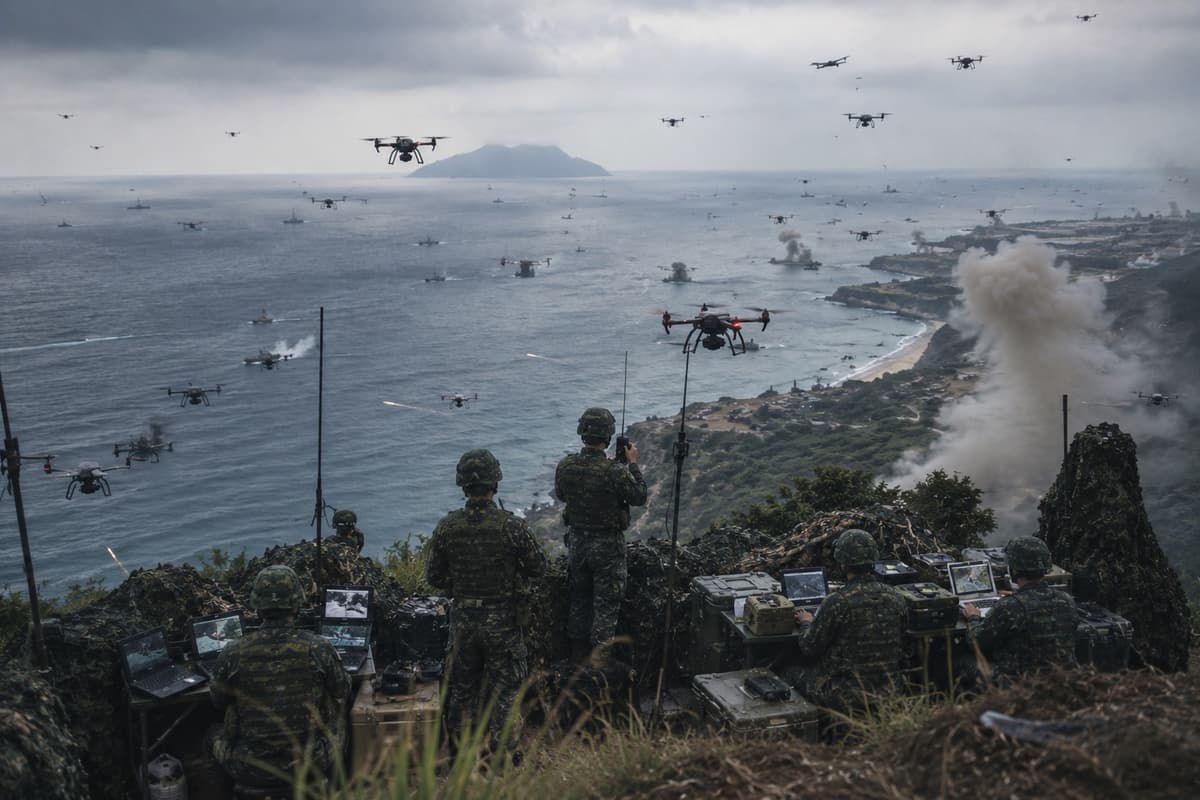
The strategic calculus surrounding Taiwan has shifted from conventional force ratios to the economics of denial. The CNAS "Hellscape for Taiwan" report, now amplified on the Irregular Warfare Podcast, posits that a dense swarm of low‑cost UAVs can transform the Taiwan Strait into a lethal barrier. By saturating the air and sea with kamikaze drones, loitering munitions and autonomous surface vessels, Taipei could force the People’s Liberation Army to expend disproportionate resources just to achieve a foothold on the island.
Geography amplifies this asymmetric formula. Taiwan’s 100‑mile strait, punctuated by narrow landing zones, steep terrain and densely populated coastlines, naturally funnels an invading force into predictable paths. Layered defenses—mines, mobile short‑range air‑defense systems, and swarms of expendable drones—can exploit these choke points, creating a “porcupine” effect that inflicts continuous attrition. Lessons from Ukraine’s drone‑heavy battles underscore how inexpensive, networked systems can outpace traditional artillery and air power, delivering real‑time targeting data and striking high‑value assets before they can consolidate.
Yet the blueprint faces non‑technical obstacles. Taiwan’s procurement processes, inter‑service coordination and political consensus on autonomous weaponry remain fragmented. Accelerating a resilient drone ecosystem demands streamlined acquisition, robust training pipelines and public acceptance of unmanned combat. If resolved, Taiwan’s model could ripple across the region, offering a playbook for smaller nations to deter larger foes through cost‑effective, technology‑driven deterrence, while compelling Beijing to weigh the escalating financial and reputational costs of a failed amphibious operation.
Hellscape Taiwan: Drones, Deterrence, and the Future of Asymmetric Defense
Comments
Want to join the conversation?