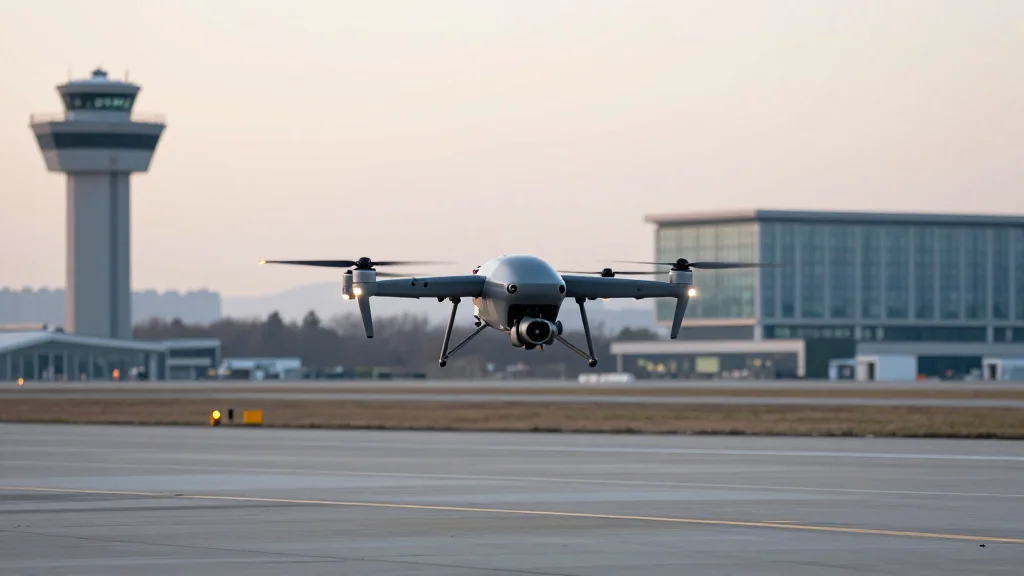
Helsinki Airport Shuttered For Hours After Military Drone Threat Puts Finland On High Alert
Key Takeaways
- •Helsinki Airport closed 3 hours after drone threat detected
- •Nine inbound flights diverted, including a 13‑hour Seoul‑to‑Tallinn A350
- •Around 10% of scheduled flights canceled due to airspace shutdown
- •Finnish authorities scrambled fighters, later assured no public safety risk
- •European airports increasingly adopt anti‑drone radar systems after similar incidents
Pulse Analysis
Early Friday, May 15, Helsinki International Airport (HEL) was forced to shut down after authorities detected a military‑grade drone approaching the capital’s airspace. The city’s rescue department issued an indoor‑shelter warning to roughly 1.8 million residents of the Uusimaa region, and all take‑offs and landings were halted at 4 a.m. The closure lasted until about 7 a.m., during which nine inbound flights—among them a Finnair Airbus A350 that had flown 13 hours from Seoul—were diverted to alternate fields such as Tallinn. By the time the all‑clear was given, the airport resumed operations, but roughly 10 % of scheduled flights were canceled for the day.
The Helsinki incident is the latest in a string of high‑profile drone disruptions across Europe. Munich Airport faced two consecutive nights of drone sightings in October 2025, while Copenhagen and Oslo airports were crippled by a coordinated attack in September, an event investigators linked to a capable operator with possible Russian ties. These incursions differ from hobbyist drones; they are military‑grade platforms capable of colliding with commercial aircraft and causing catastrophic damage. The growing frequency of such threats has prompted aviation regulators to treat drone intrusion as a national security issue rather than a mere safety nuisance.
Airports are responding by deploying advanced detection and mitigation systems. London Heathrow installed a permanent anti‑drone solution in 2020, and Paris Charles de Gaulle now uses Aveillant’s holographic radar, which can locate drones up to five kilometres away and pinpoint the operator’s position. While current technology cannot physically neutralize an intruding drone, rapid identification enables law‑enforcement or military assets to intervene before a collision occurs. As European airspace becomes a contested domain, airlines and governments will likely invest in layered defenses, integrating electronic countermeasures and real‑time data sharing to safeguard the skies.
Helsinki Airport Shuttered For Hours After Military Drone Threat Puts Finland On High Alert
Comments
Want to join the conversation?