Hormuz Data Chokepoints and Iranian Threats Against Undersea Internet Cables

Key Takeaways
- •Iran proposes fees for tech firms using Hormuz undersea cables
- •Legal argument ignores UNCLOS Article 79 protecting cable rights
- •Cables carry SWIFT, cloud traffic, and everyday internet services
- •Sabotage could cause weeks‑long outages across three continents
- •Experts deem the fee proposal a geopolitical pressure tactic
Pulse Analysis
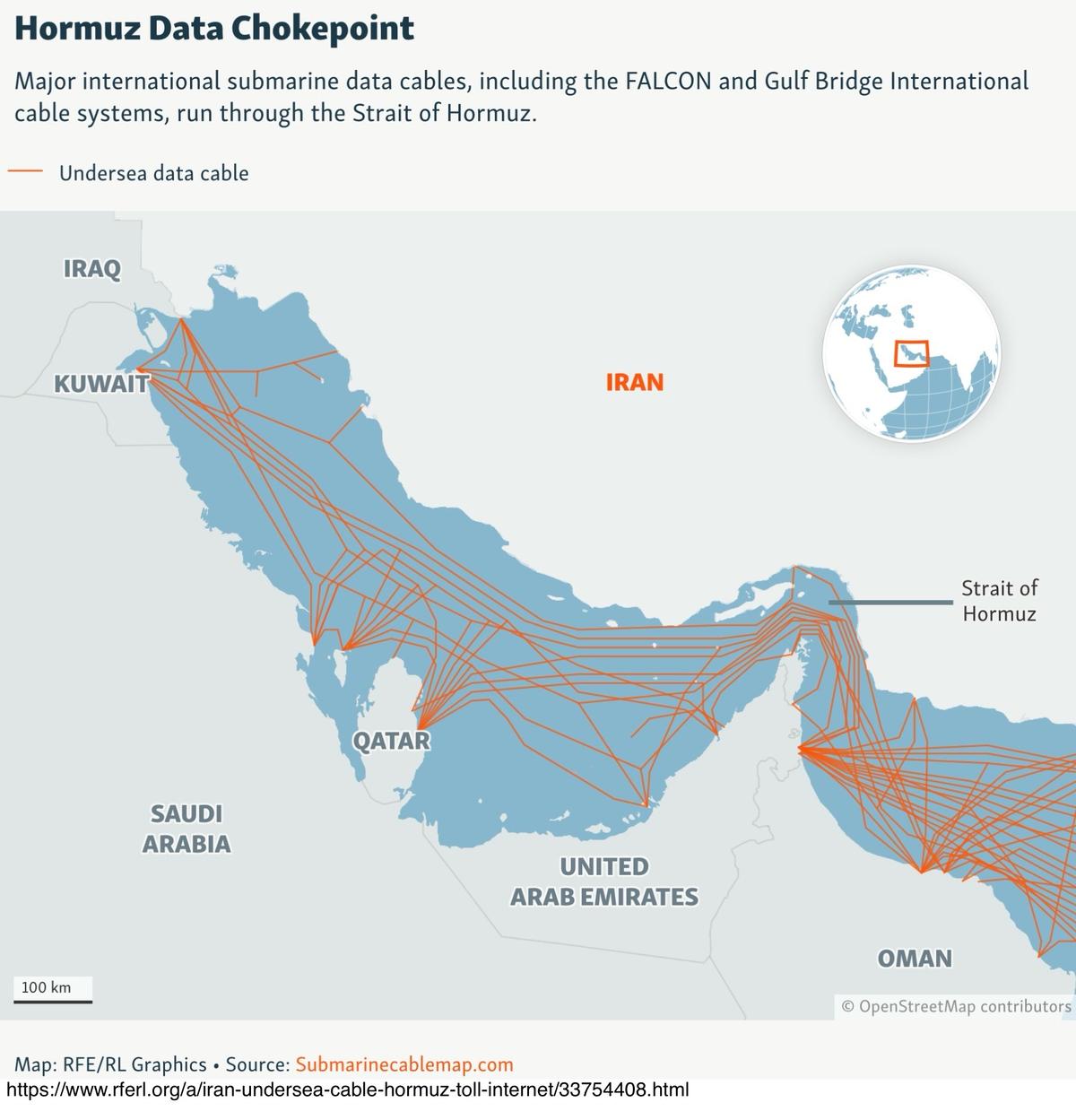
The Strait of Hormuz, a narrow chokepoint linking the Persian Gulf to the open ocean, already hosts a dense web of submarine cables owned by giants such as Google, Meta, Microsoft and Amazon. These fibers transmit everything from high‑frequency trading data to video calls, making them essential arteries for the global digital economy. By invoking a narrow interpretation of UNCLOS, Iran’s IRGC‑linked agencies aim to turn this strategic asset into a revenue stream, citing Egypt’s Suez Canal licensing model as precedent. However, international law explicitly safeguards the right of states to lay and maintain undersea cables, limiting any unilateral fee‑imposition.
Beyond the legal debate, the practical implications of Iran’s threat are stark. A deliberate cut or even a temporary shutdown would force traffic onto a limited number of alternative routes, overloading capacity and degrading speeds for users in Asia, Europe and the Middle East. Repair crews typically need weeks, sometimes months, to locate, retrieve and splice damaged segments, during which businesses could face payment processing delays, cloud service outages, and disrupted communications. The ripple effect would extend to sectors reliant on real‑time data, including finance, logistics, and media streaming.
Geopolitically, the proposal reflects Tehran’s broader strategy of leveraging infrastructure to extract concessions amid the ongoing conflict with the United States and Israel. While the $2 million ship‑transit fees previously levied illustrate Iran’s willingness to monetize maritime passage, extending that model to digital pathways raises new security concerns. For multinational tech firms, the episode underscores the need for diversified routing, robust contingency planning, and active engagement with international regulatory bodies to safeguard the resilience of the global internet backbone.
Hormuz Data Chokepoints and Iranian Threats Against Undersea Internet Cables
Comments
Want to join the conversation?