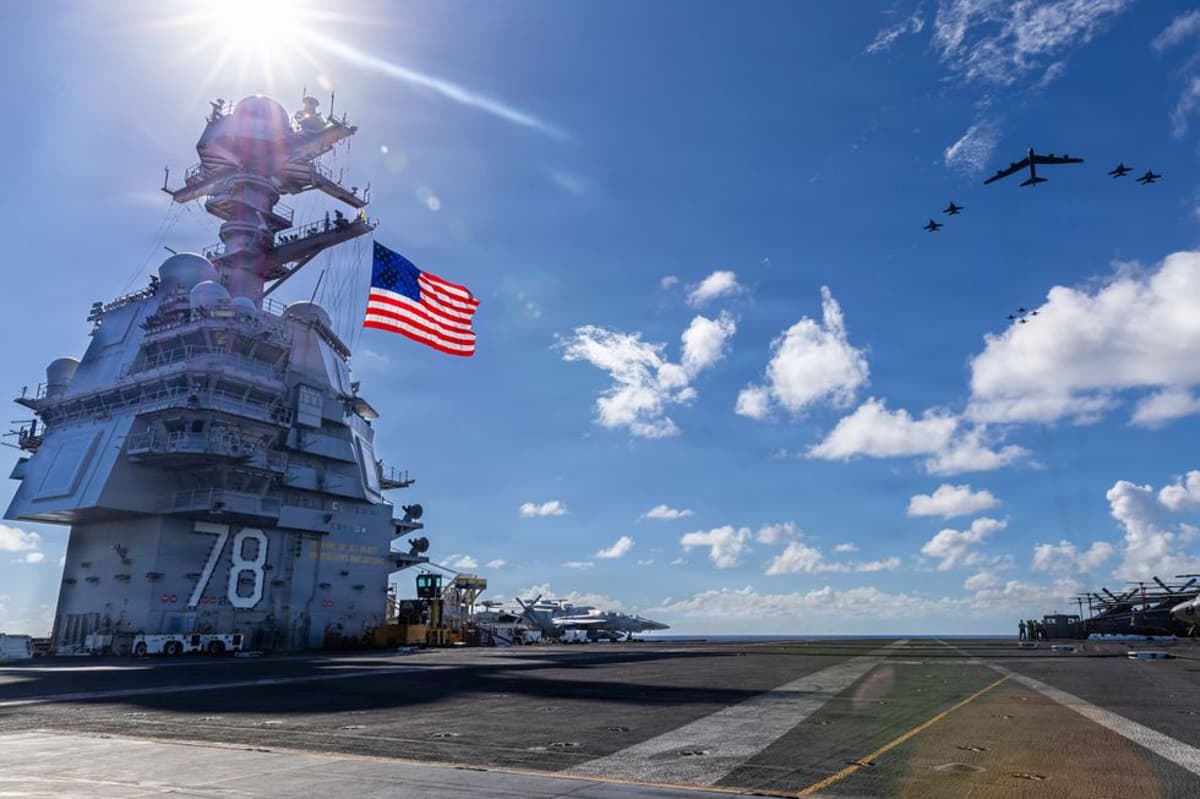
Inside the High-Stakes U.S. Pressure Campaign on Iran
Key Takeaways
- •US adds Gerald R. Ford carrier to Middle East fleet.
- •Iran faces nuclear, missile, and proxy pressures simultaneously.
- •Economic sanctions push Iranian rial beyond 1.6 million per dollar.
- •Regional sea lanes remain vulnerable to Iranian retaliation.
- •Diplomatic timeline uncertain; military action remains plausible.
Pulse Analysis
The United States’ decision to dispatch the USS Gerald R. Ford alongside the Abraham Lincoln marks a strategic escalation designed to reinforce diplomatic leverage over Tehran. By positioning two of the world’s most powerful carrier strike groups in the Persian Gulf, Washington aims to keep vital sea lanes open, deter Iranian aggression, and signal unwavering commitment to its regional allies. This naval presence also underpins a broader pressure campaign that combines sanctions, diplomatic outreach, and the threat of kinetic action, creating a multifaceted deterrent that extends beyond traditional military posturing.
Iran’s strategic calculus is being reshaped by a confluence of internal and external pressures. The June 2025 conflict degraded its nuclear infrastructure, yet the regime retains the capacity to rebuild enrichment facilities and expand its ballistic missile arsenal, potentially fielding up to sixty ICBMs by 2035. Simultaneously, crippling inflation, a collapsing rial, and widespread public dissent have eroded domestic legitimacy, while the Quds Force continues to revive proxy networks across the region. These vulnerabilities limit Tehran’s ability to sustain prolonged confrontation, but also motivate asymmetric tactics such as missile strikes, drone attacks, and cyber operations aimed at disrupting U.S. interests.
Looking ahead, the outcome hinges on whether diplomatic overtures can extract meaningful concessions before the pressure cooker erupts into open conflict. A negotiated settlement would stabilize oil markets, preserve the security of the Strait of Hormuz, and prevent a costly U.S. military engagement. Conversely, a misstep could trigger a rapid escalation, drawing regional powers into a broader confrontation and unsettling global energy supplies. Stakeholders must therefore monitor the interplay of sanctions, carrier deployments, and Iran’s internal dynamics to anticipate the next move in this high‑stakes geopolitical chess game.
Inside the High-Stakes U.S. Pressure Campaign on Iran
Comments
Want to join the conversation?