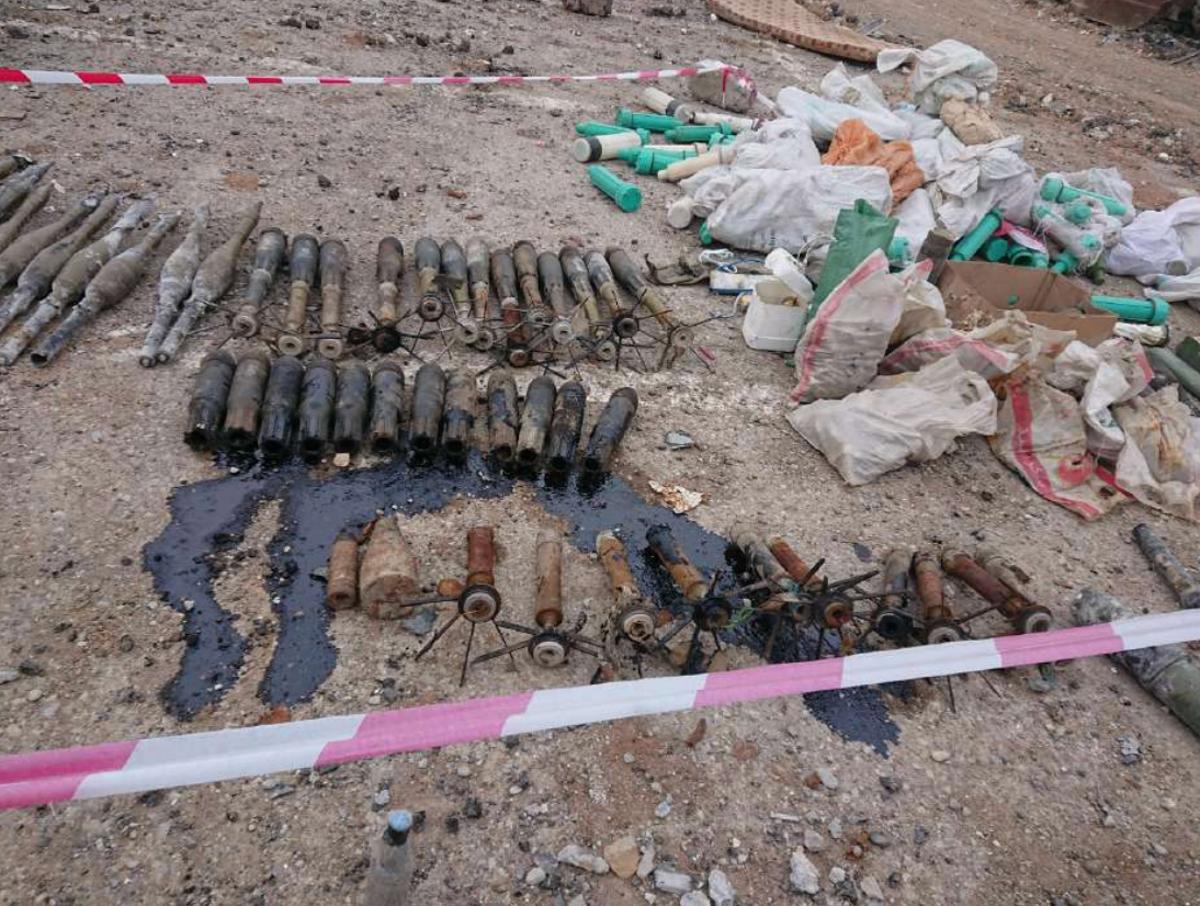
Inside the Islamic State Recoilless Gun Program | ARES
Key Takeaways
- •IS built five recoilless gun types using shared 89 mm barrel
- •Type 5 integrates sulphur‑mustard chemical payload
- •Plastic‑nose warhead signals possible chemical variant
- •Production relied on captured industrial facilities, enabling rapid iteration
Pulse Analysis
Armament Research Services’ Special Report 6 sheds new light on the technical ingenuity of the Islamic State’s improvised weapons program. By reverse‑engineering Soviet‑era anti‑tank munitions, IS engineers created a family of four conventional recoilless guns that could be fired from tight urban corridors with minimal back‑blast—an advantage over the RPG‑7 and SPG‑9 in dense cityscapes. The standardized 89 mm barrel, common propelling charge and interchangeable countermass components streamlined manufacturing, allowing the group to produce functional anti‑armor weapons despite limited access to conventional arms supplies.
The report’s most consequential finding is the fifth variant, a munition that couples the same propulsion system with a sulphur‑mustard chemical warhead produced via the Levinstein process. Field teams in Mosul recovered over 25 of these shells, and exposure symptoms among EOD personnel confirmed their toxicity. Because the only external cue is a rounded plastic nose, distinguishing chemical rounds from conventional ones requires meticulous inspection, prompting new protocols that treat any IS recoilless munition with a plastic warhead as a potential chemical threat. This blurs the line between kinetic and chemical warfare, complicating force‑protection measures for troops and civilian responders.
Beyond the immediate tactical implications, the IS recoilless gun program illustrates a broader trend: non‑state actors with access to captured industrial infrastructure can rapidly develop semi‑standardized weapon families that integrate unconventional payloads. The destruction of Mosul’s production hub by coalition airstrikes largely halted the program, yet the documented design process suggests that similar groups could resurrect or adapt the concept if they regain manufacturing capacity. Policymakers and military planners must therefore monitor industrial sites in conflict zones and invest in detection technologies that can identify hybrid weapons before they reach the battlefield.
Inside the Islamic State Recoilless Gun Program | ARES
Comments
Want to join the conversation?