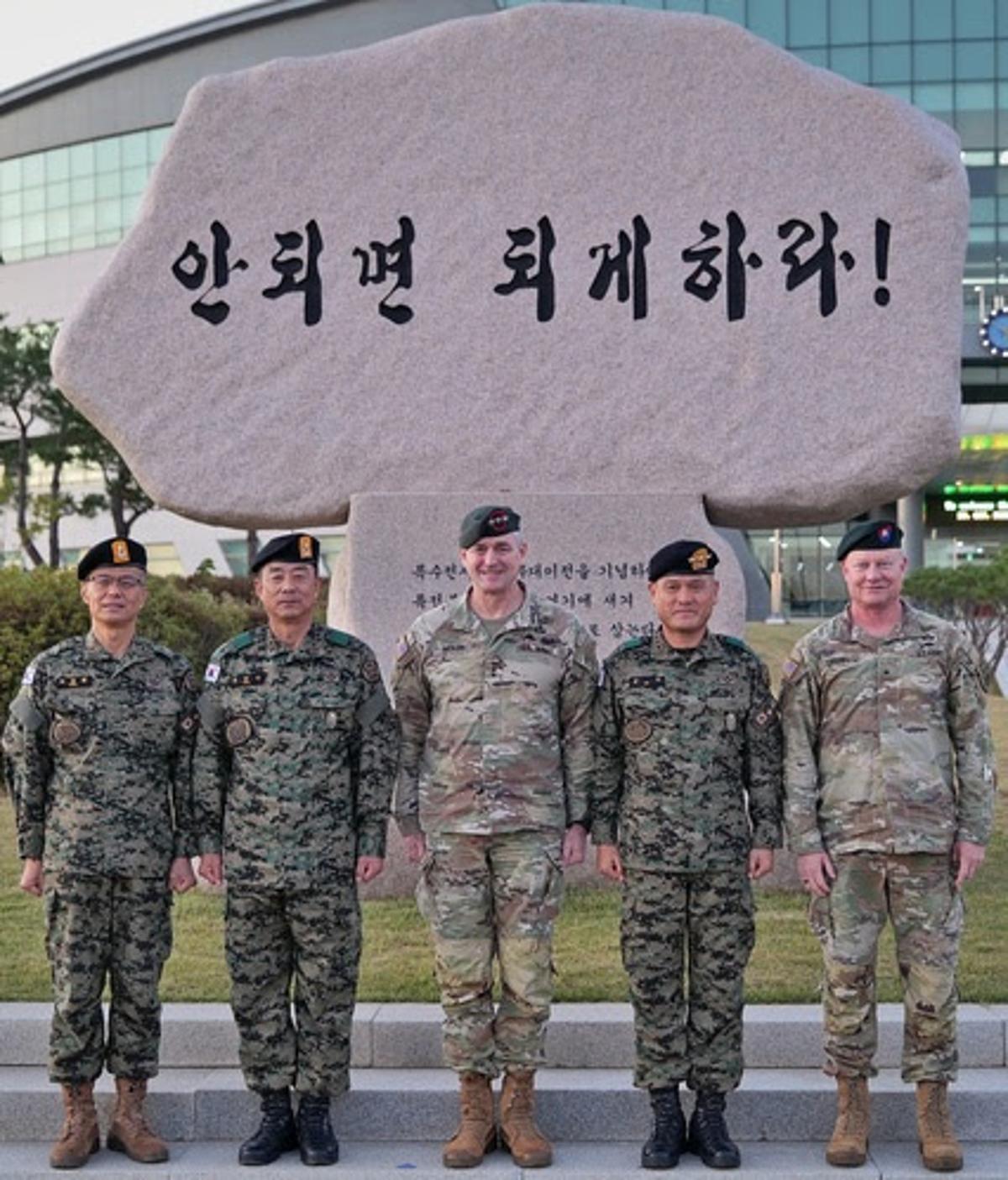
Katchi Kapshida: How to Deter North Korea, Together
•March 10, 2026
0
Key Takeaways
- •Strengthen alliance interoperability through joint exercises
- •Increase South Korean defense spending for missile defense
- •Deploy coordinated information campaigns against DPRK disinformation
- •Establish joint task forces to disrupt sanction evasion
Summary
The article outlines a three‑pronged policy framework for the United States and South Korea to deter North Korea more effectively. It calls for strengthening the US‑ROK alliance through deeper interoperability, improving burden sharing by boosting South Korean defense capabilities, and launching a US‑led gray‑zone competition campaign that emphasizes information warfare and sanction‑evasion disruption. By integrating these lines of effort, the author argues the alliance can reduce crisis volatility, limit Pyongyang’s coercive leverage, and enhance resilience below the war threshold. The piece concludes that abandoning the partnership would heighten regional instability.
Pulse Analysis
The United States‑South Korea partnership has long been the linchpin of stability on the Korean Peninsula, but evolving threats demand a more nuanced strategy. Beyond traditional deterrence, policymakers are increasingly focused on gray‑zone tactics—cyber attacks, illicit finance, and propaganda—that fall below the threshold of open conflict. By expanding joint exercises, sharing real‑time intelligence, and deepening economic ties, the alliance can present a unified front that discourages miscalculation while preserving diplomatic flexibility.
A critical component of this new approach is equitable burden sharing. South Korea’s growing economic capacity enables it to invest in advanced missile‑defense systems and modernized command structures, reducing reliance on forward‑deployed US forces. When combined with targeted US investments in interoperability platforms, the partnership can achieve a higher return on investment measured in operational readiness rather than mere cost savings. This financial partnership also frees resources for both nations to allocate toward sub‑threshold operations that directly undermine the Kim regime’s revenue streams.
Information warfare emerges as perhaps the most underutilized lever in the deterrence toolkit. Coordinated public‑private campaigns that expose DPRK disinformation, coupled with robust Voice of America broadcasts and DMZ loudspeaker initiatives, can erode the regime’s narrative control. Joint task forces focused on sanction enforcement and cyber‑crime disruption further strain Pyongyang’s hard‑currency lifelines, making aggressive brinkmanship less attractive. Together, these measures create a multi‑layered deterrent that not only curbs nuclear escalation but also addresses the broader spectrum of coercive behavior shaping Northeast Asian security.
Comments
Want to join the conversation?