Kraken Warns Patchwork Won’t Cover the High North
Key Takeaways
- •Kraken secured ~£12.3m ($15.6m) contract for 20 unmanned vessels.
- •Company urges mass deployment, not patchwork, for High North monitoring.
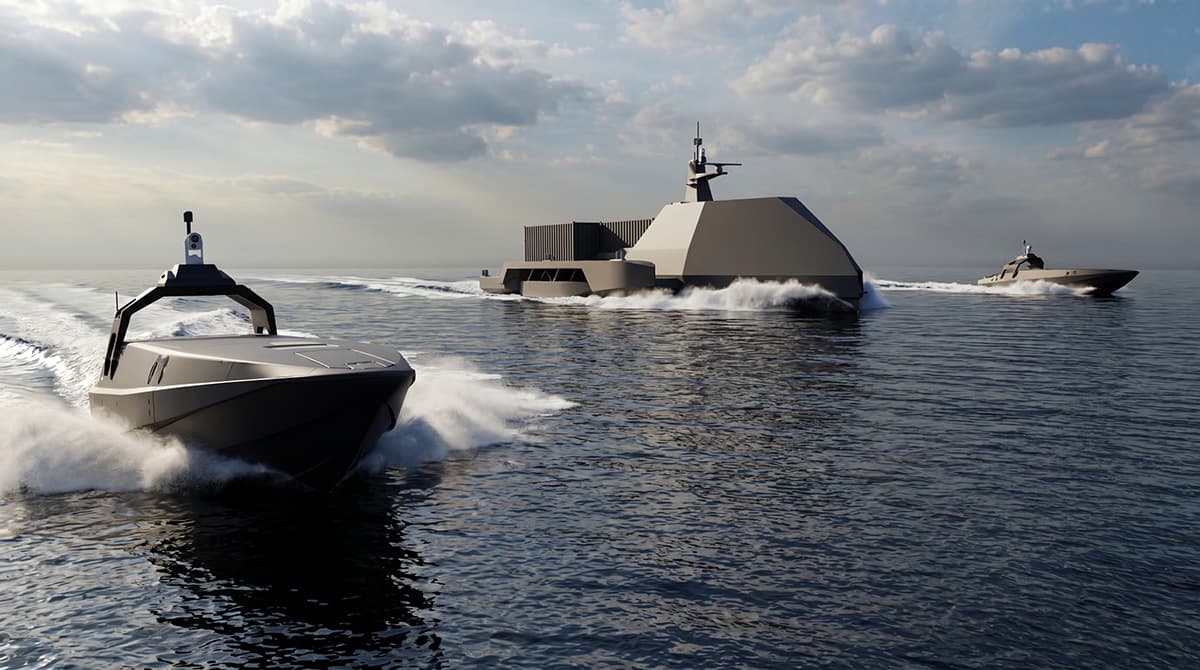
- •K3 SCOUT’s modular hull can be re‑roled for any theatre.
- •Vessels built to operate in extreme weather, with de‑icing kits.
- •Export potential high as allies seek interoperable unmanned maritime platforms.
Pulse Analysis
The High North has re‑emerged as a strategic flashpoint, with the GIUK Gap serving as a choke point for submarine and surface traffic between the Atlantic and the Arctic. Traditional manned patrols struggle with the region’s harsh weather, limited endurance, and heightened crew safety concerns. By advocating for a fleet‑scale approach, Kraken aligns its unmanned surface vessels with NATO’s need for persistent, low‑cost coverage that can adapt to rapid changes in threat posture, thereby strengthening the overall maritime domain awareness in a contested environment.
Kraken’s product line, anchored by the K3 SCOUT, exemplifies the shift toward modular, re‑configurable platforms. The vessel’s hull can be swapped between payloads—ranging from surveillance radars to anti‑submarine torpedoes—without structural redesign, enabling rapid re‑role across the High North, Baltic, and Mediterranean theatres. Built to withstand sea states exceeding 7 meters, equipped with integrated de‑icing systems and climate‑controlled engine bays, the craft maintains operational readiness when others would seek shelter. Complementary systems such as the K4 MANTA delivery platform and the K5 KRAKEN precision engagement module expand the fleet’s mission set, offering a versatile toolkit for allied navies facing diverse maritime challenges.
From a business perspective, Kraken’s contracts signal a growing market for autonomous maritime solutions. The £12.3 million UK award and the $49 million U.S. Special Operations Command deal not only validate the technology but also position the company as a key supplier for allied forces seeking interoperable, cost‑effective assets. Scaling production to meet mass‑deployment requirements could catalyze a domestic supply chain, boost UK industrial output, and generate export revenue as partner nations adopt similar hybrid‑navy concepts. As defense budgets prioritize risk reduction and capability‑over‑quantity, Kraken’s modular approach offers a compelling value proposition for future procurement cycles.
Kraken warns patchwork won’t cover the High North
Comments
Want to join the conversation?