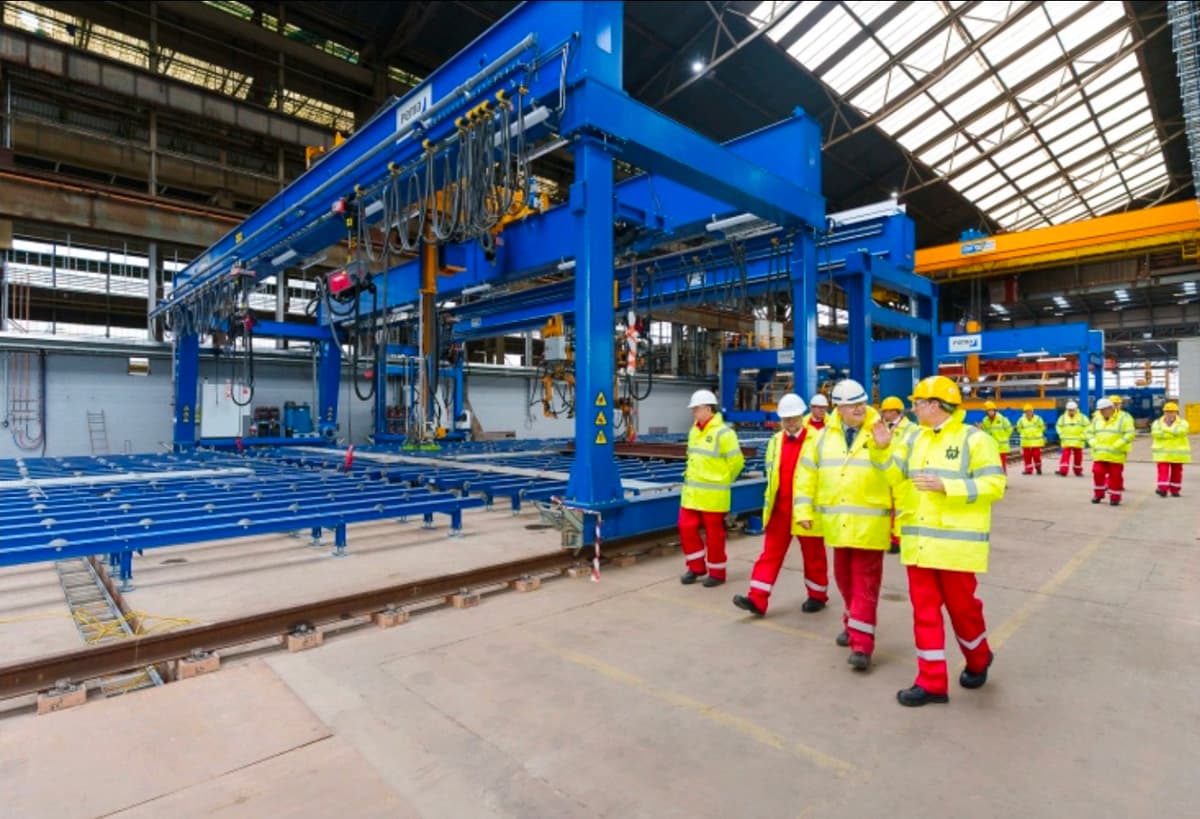
Naval Chiefs Visit Belfast as FSS Investment Continues
Key Takeaways
- •£98.5 million (≈ $125 million) invested in Belfast shipyard.
- •New robotic and AI systems aim for Shipyard 5.0 status.
- •FSS vessels crucial for sustaining carrier and fleet operations worldwide.
- •Combined UK investment reaches £114.4 million (≈ $145 million) across Belfast and Appledore.
- •Apprenticeship program expands to 312 trainees by year‑end.
Pulse Analysis
The Fleet Solid Support (FSS) programme represents a cornerstone of the United Kingdom’s effort to sustain carrier‑based operations, and the recent £98.5 million injection into Harland and Wolf signals a decisive push toward that goal. By channeling funds into advanced fabrication halls, the Ministry of Defence is not only accelerating ship construction timelines but also ensuring that logistical vessels can keep pace with the Royal Navy’s high‑tempo deployment cycles. This financial commitment dovetails with broader defence procurement trends that prioritise modular, rapidly producible platforms.
At the heart of the Belfast upgrade is Navantia’s Shipyard 5.0 concept, which blends robotics, artificial intelligence and automated quality control to create a near‑autonomous production environment. Robotic plasma‑cutting stations and mechanised panel lines reduce manual labor, cut error rates, and enhance repeatability—key factors for meeting the July operational deadline. Such technology adoption positions Harland and Wolf among Europe’s most advanced yards, potentially reshaping competitive dynamics in the global shipbuilding market and attracting further commercial contracts.
Beyond hardware, the programme fuels a strategic talent pipeline. Navantia now employs 222 apprentices, with an additional 90 slated to start later this summer, driving a total of 312 trainees by year‑end. This focus on skills development reinforces the UK’s industrial base, ensuring a ready workforce capable of supporting both military and civilian shipbuilding projects. As the FSS class becomes integral to sustaining carrier strike groups worldwide, the synergy between cutting‑edge technology and a skilled labour pool will be pivotal for long‑term naval resilience.
Naval chiefs visit Belfast as FSS investment continues
Comments
Want to join the conversation?