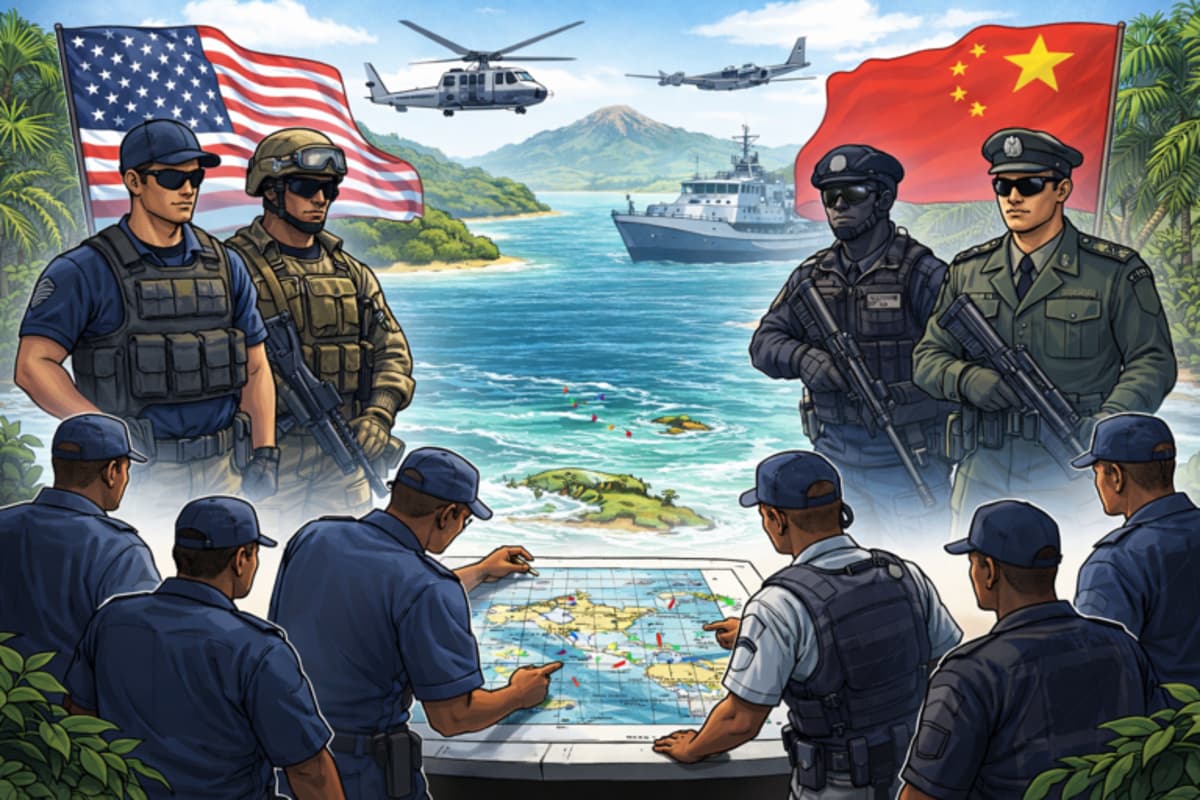
Out of Depth: Shortcomings in U.S. Police Assistance and Coordination Warrant a Shift in the Pacific Islands
Key Takeaways
- •U.S. law enforcement efforts in Pacific are fragmented and duplicative.
- •China funds police academies, expanding influence across Pacific island nations.
- •JIATF‑West currently limited to counternarcotics, needs broader mandate.
- •Centralized hub would synchronize U.S. police capacity‑building with military strategy.
- •Integrated approach essential to counter PRC security‑sector capture in Oceania.
Pulse Analysis
China’s aggressive policing outreach in Oceania reflects a broader geopolitical playbook that leverages security assistance to embed influence where traditional diplomatic tools are limited. By funding police academies, providing training, and integrating with local law‑enforcement structures, Beijing creates a low‑cost, high‑visibility presence that normalizes its security footprint and offers partner nations tangible benefits. This approach dovetails with China’s Global Security Initiative, positioning policing as a conduit for broader strategic objectives, from intelligence gathering to shaping domestic governance models.
In contrast, U.S. federal law‑enforcement agencies operate in a siloed, decentralized fashion, each pursuing its own budget, training agenda, and engagement protocols. The lack of a unified command results in overlapping visits, redundant curricula, and missed opportunities to align with the Indo‑Pacific Command’s overarching strategy. Without a central coordinating body, the United States cannot efficiently track past engagements, deconflict missions, or present a coherent front to Pacific partners, allowing Chinese initiatives to appear more organized and reliable.
Expanding JIATF‑West into a joint interagency hub offers a pragmatic solution. By integrating DOJ, DHS, State, and DoD resources under a single Pacific‑focused mandate, the United States can streamline capacity‑building, share intelligence, and align policing assistance with broader military and diplomatic objectives. This model would not only reduce duplication and budget strain but also signal a committed, whole‑of‑government presence that can match China’s coordinated approach, safeguarding U.S. strategic interests and enhancing regional security resilience.
Out of Depth: Shortcomings in U.S. Police Assistance and Coordination Warrant a Shift in the Pacific Islands
Comments
Want to join the conversation?