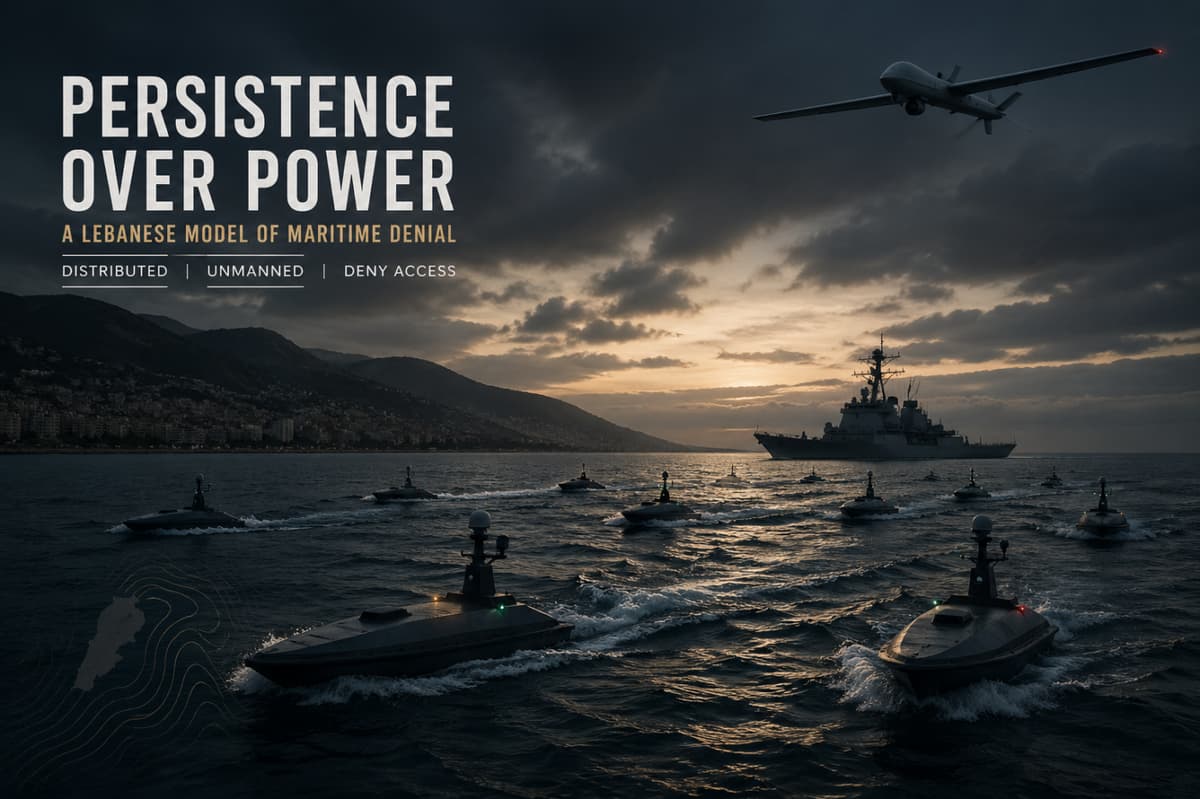
Persistence Over Power: A Lebanese Model of Maritime Denial
Key Takeaways
- •Lebanon can use unmanned swarms for persistent maritime denial.
- •Distributed systems cost far less than a single patrol vessel.
- •Legal and humanitarian duties shape Lebanon's low‑profile enforcement.
- •Swarm tactics force the U.S. to rethink littoral force design.
- •Persistence, not firepower, becomes the decisive factor in congested littorals.
Pulse Analysis
Swarm tactics are reshaping naval competition worldwide, as low‑cost, autonomous platforms prove capable of disrupting trade routes in the Red Sea, Strait of Hormuz and other chokepoints. Unlike traditional high‑end warships, these systems can be fielded in large numbers, creating a persistent presence that forces adversaries to adapt their operational tempo. The Ukrainian Navy’s recent use of unmanned surface vessels to harass Russian logistics illustrates how repeated, inexpensive actions can achieve strategic denial without decisive battles, setting a precedent for other littoral actors.
Lebanon’s maritime challenges epitomize the constraints faced by small states: limited budgets, aging vessels, and overlapping humanitarian responsibilities. By deploying a network of unmanned surface and aerial drones, Beirut can maintain continuous surveillance across its 225‑kilometer coastline at a fraction of the cost of a single patrol boat. The technology’s endurance and tolerance for attrition enable a layered denial posture that respects international law, allowing human operators to intervene only when humanitarian assistance or lawful interdiction is required. This balance of automation and human control mitigates legal risks while delivering the persistent visibility needed to deter smugglers and hostile navies.
For the United States, the rise of distributed maritime denial forces a strategic pivot. High‑end platforms designed for power projection are increasingly vulnerable to swarms that impose disproportionate operational burdens. Investing in partner capacity—providing affordable unmanned kits, training, and logistical support—offers a scalable solution that reduces the need for continuous U.S. presence in volatile littorals. As Lebanon’s model shows, endurance and legal legitimacy can substitute for raw firepower, compelling U.S. planners to integrate swarm‑resilient doctrines and collaborative security frameworks into future maritime strategy.
Persistence Over Power: A Lebanese Model of Maritime Denial
Comments
Want to join the conversation?