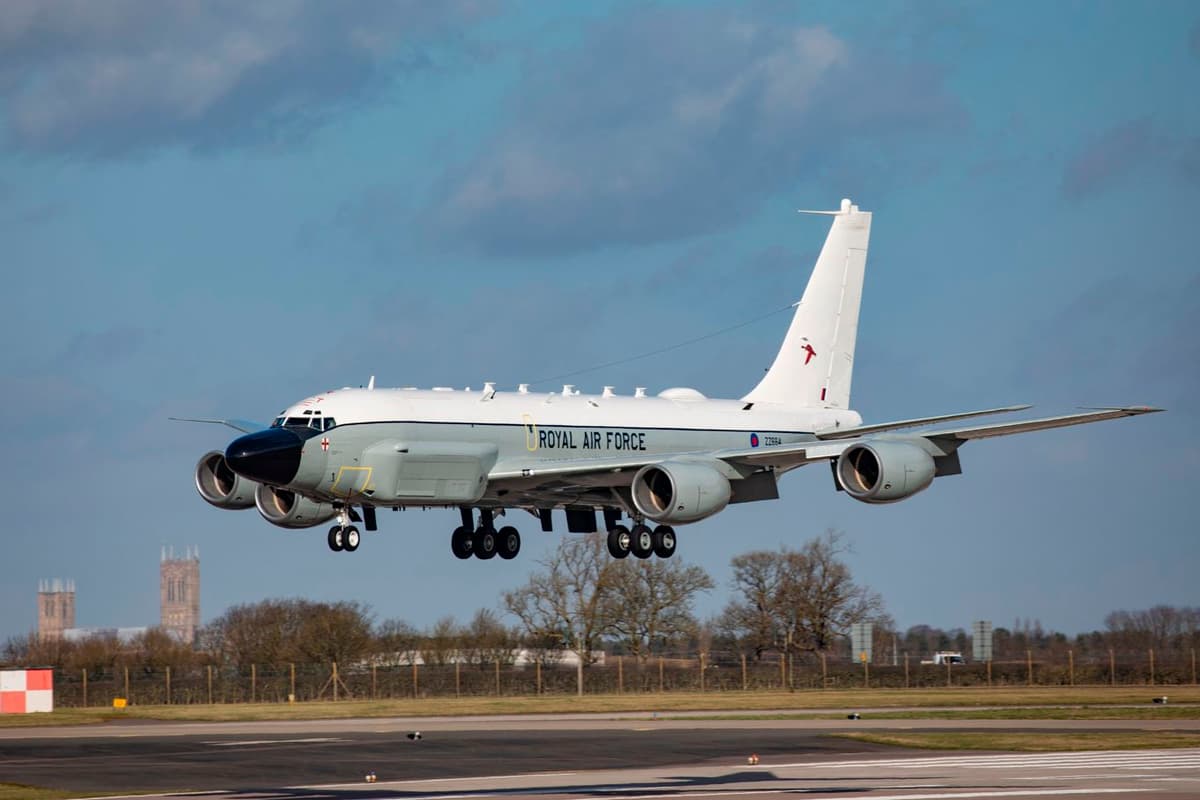
RAF Rivet Joint Spy Plane Deploys to Norwegian Fjords
Key Takeaways
- •RAF Rivet Joint operated from Ørland, Norway, during ACE exercise.
- •Deployment proved dispersed basing with minimal support is feasible.
- •Aircraft integrated with NATO AEW and Norwegian F‑35 units.
- •Enhances electronic signals intelligence sharing across allied forces.
- •Demonstrates NATO’s resilience against long‑range missile threats.
Pulse Analysis
The RAF’s Rivet Joint platform, a Boeing‑modified business jet equipped with sophisticated signals‑intelligence (SIGINT) suites, has long been a cornerstone of Britain’s airborne surveillance capability. By sending the aircraft to Ørland Air Base, the service tested the Agile Combat Employment (ACE) doctrine that emphasizes rapid, low‑footprint operations from forward locations. This approach counters the growing threat of anti‑access/area‑denial (A2/AD) systems that can target large, predictable airfields, and it aligns with NATO’s push for a more flexible, survivable air posture across Europe.
During the exercise, Rivet Joint crews worked hand‑in‑hand with Norway’s F‑35 squadrons and NATO’s airborne early‑warning (AEW) assets, creating a layered ISR picture that blends electronic‑signals collection with radar‑based situational awareness. The seamless data exchange demonstrated how real‑time SIGINT can augment fighter decision‑making, improve target identification, and shorten the sensor‑to‑shooter loop. For allied planners, this interoperability translates into a more credible deterrent, as adversaries must now contend with a distributed network that can survive missile strikes and still feed actionable intelligence to combat units.
Strategically, the deployment signals a shift toward decentralized basing that could reshape European security dynamics. As NATO members invest in austere forward operating sites, the ability to field high‑value assets like Rivet Joint without extensive ground support becomes a force multiplier. However, sustaining such operations will require robust logistics, secure communications, and continued joint training to maintain proficiency. If successfully institutionalized, the ACE model could set a new standard for coalition air power, ensuring that allied forces remain agile, resilient, and ready to respond to emerging threats across the continent.
RAF Rivet Joint spy plane deploys to Norwegian fjords
Comments
Want to join the conversation?