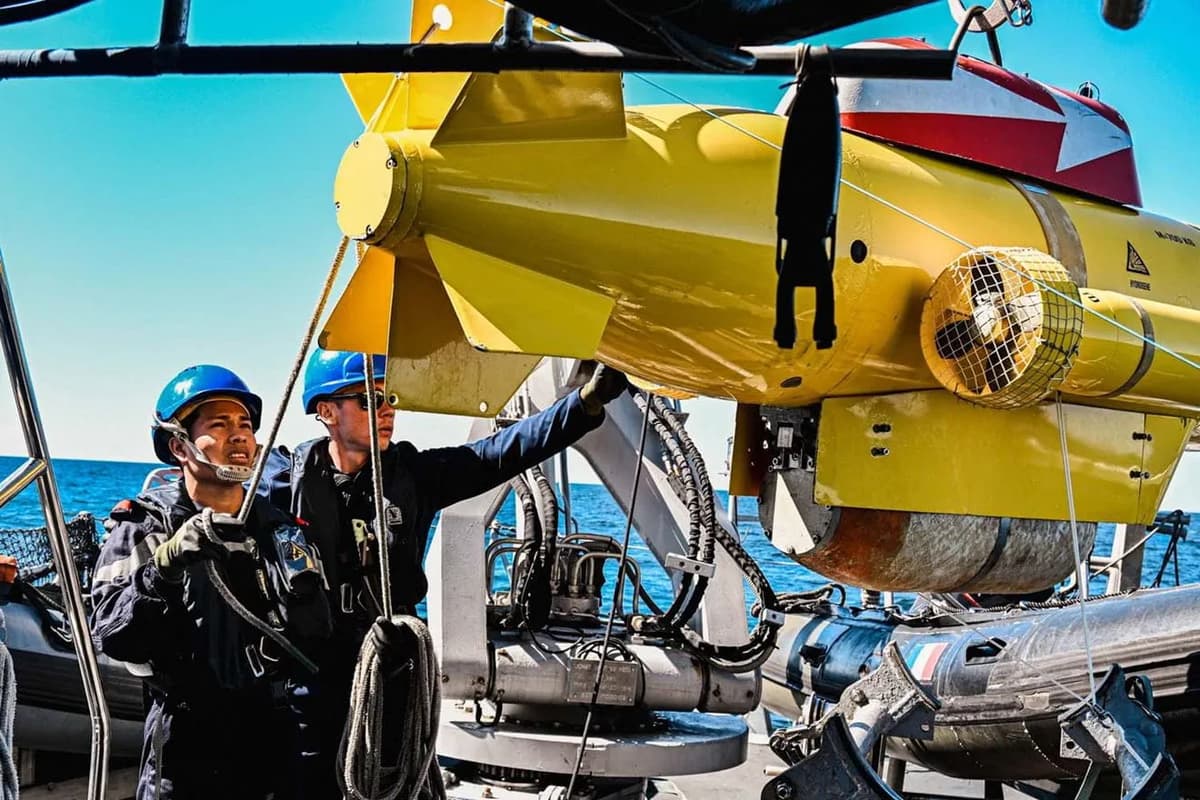
Royal Navy Divers Clear WWII Ordnance in Baltic Exercise
Key Takeaways
- •Delta Squadron cleared WWII mines in Baltic’s Gulf of Riga.
- •Exercise involved 400 personnel from seven NATO and partner nations.
- •Gulf of Riga handles ~2,500 vessels annually, vital for trade.
- •New sonar and ROV tech boosted diver detection in low visibility.
- •Clearance supports NATO’s strategic posture near Russia’s western flank.
Pulse Analysis
The Baltic’s Gulf of Riga remains littered with decades‑old munitions, a legacy of both World Wars that still poses a hidden threat to navigation. With depths averaging just 54 metres yet spanning an area four times larger than Hampshire, the waterway is a choke point for roughly 2,500 vessels each year, including bulk carriers bound for Riga’s port. Unexploded mines can cause catastrophic damage to commercial ships and fishing fleets, prompting regional authorities to prioritize clearance as a prerequisite for safe, uninterrupted trade.
Exercise Open Spirit 26 showcased a high‑level NATO partnership, bringing together divers, engineers and cutting‑edge unmanned systems from seven nations. The Royal Navy’s Delta Squadron leveraged the Artimis Pro handheld sonar and VideoRay Defender ROV to locate ordnance in murky, low‑visibility conditions, dramatically improving detection speed and diver safety. This blend of human expertise and autonomous technology not only accelerates the neutralisation process but also serves as a training platform, allowing allied divers to refine mine‑clearance skills in a realistic, multinational environment.
Beyond maritime safety, the operation carries clear strategic weight. Situated on NATO’s northeastern flank, the Gulf of Riga borders a region that has grown increasingly volatile since Russia’s 2022 invasion of Ukraine. Demonstrating the alliance’s ability to conduct coordinated clearance missions signals a commitment to maintaining freedom of navigation and deterring potential aggression. As climate change opens new Arctic routes, ensuring the Baltic remains secure will be essential for Europe’s broader supply‑chain resilience and for reinforcing collective defence postures across the alliance.
Royal Navy divers clear WWII ordnance in Baltic exercise
Comments
Want to join the conversation?