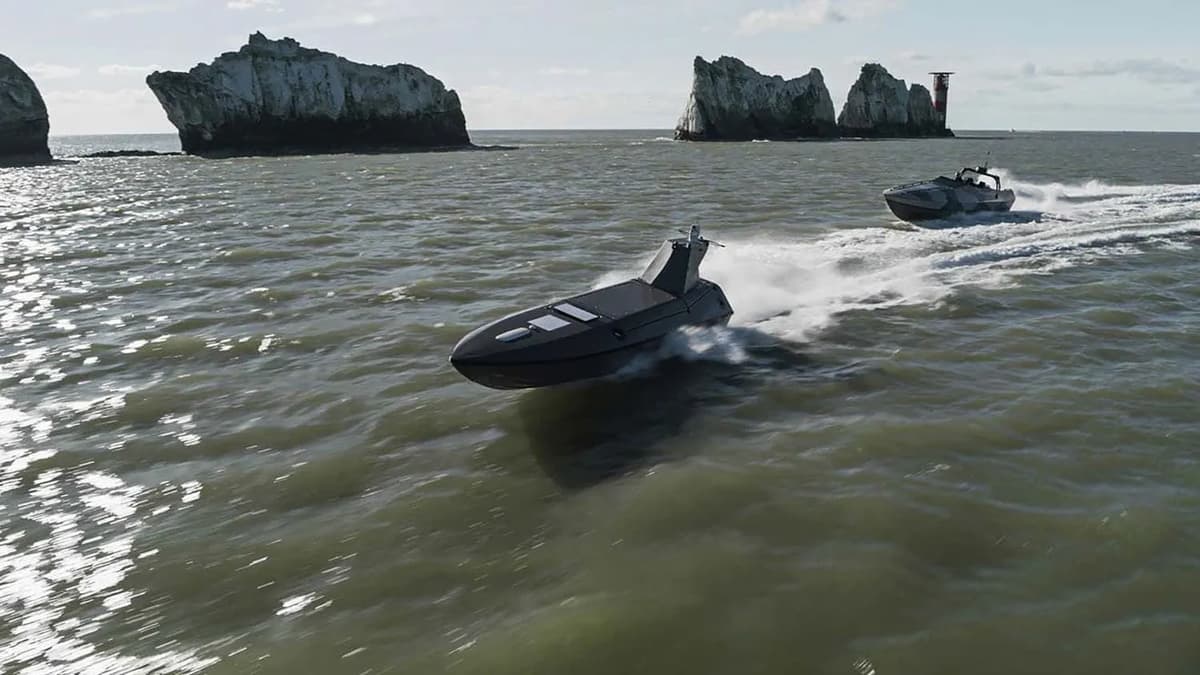
Royal Navy Receives First Sizable Uncrewed Vessel Fleet
Key Takeaways
- •20 uncrewed vessels delivered to Royal Navy via Kraken partnership.
- •Wargame showed three‑fold missile capacity increase for Hybrid Navy.
- •Uncrewed gliders to patrol North Atlantic later this year.
- •First autonomous escort ships expected operational within two years.
- •RFA Lyme Bay converted into autonomous mine‑hunting mothership.
Pulse Analysis
The arrival of a 20‑boat autonomous fleet marks a pivotal moment for the Royal Navy’s transition to a Hybrid Navy, a concept that blends traditional warships with unmanned systems. Project Beehive, driven by the Ministry of Defence’s push for rapid procurement, leverages British industry expertise, particularly Kraken’s modular vessel designs, to field capabilities that would have taken years under conventional acquisition cycles. This approach aligns with broader defense trends emphasizing agility, digital integration, and AI‑enabled platforms to maintain maritime superiority in contested environments.
A recent wargame at Southwick Park provided concrete evidence that the Hybrid Navy can dramatically amplify combat power. Simulations showed missile payloads tripling and sensor suites expanding, effectively increasing the fleet’s strike density without adding crewed hulls. The operational benefits are twofold: first, the reduced personnel footprint lowers risk to sailors during high‑intensity missions; second, autonomous platforms cut lifecycle costs, offering a fiscally responsible path to sustain the UK’s global commitments. These gains are especially relevant as the Royal Navy confronts evolving threats in the North Atlantic and the increasingly contested littorals of the Middle East.
Looking ahead, the integration timeline is ambitious. Uncrewed gliders will begin Atlantic patrols this year, providing persistent surveillance against hostile activity. Within two years, autonomous escort vessels are slated to accompany surface combatants, while a carrier‑based jet drone is expected to debut next year, extending strike reach from the flight deck. Such developments not only reinforce the UK’s NATO obligations but also set a benchmark for allied navies exploring similar unmanned initiatives. The success of Project Beehive could catalyze further public‑private collaborations, cementing the UK’s position at the forefront of maritime autonomous technology.
Royal Navy receives first sizable uncrewed vessel fleet
Comments
Want to join the conversation?