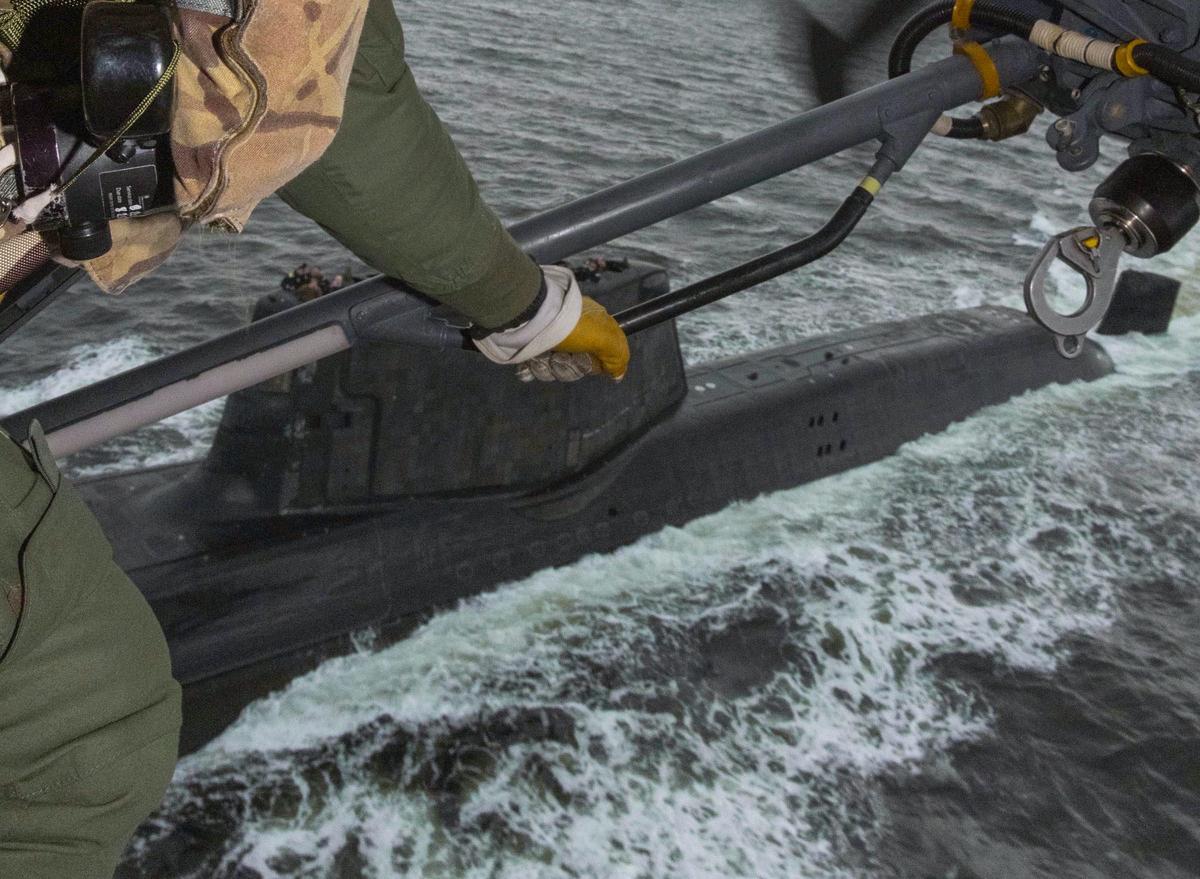
Royal Navy Submarine Trainees Pass Out at HMNB Clyde
•February 19, 2026
0
Key Takeaways
- •39 trainees completed RNSTC dry phase.
- •First double-class pass out this year.
- •Training supports Vanguard and future Dreadnought subs.
- •Award highlighted exceptional engineering leadership.
- •Long-service warrant officer recognized for 30 deterrent patrols.
Summary
Thirty-nine Royal Navy submarine qualifying students completed the classroom‑based dry phase of training at HMNB Clyde, marking the first double‑class pass out this year with 15 Astute‑class and 24 Vanguard‑class trainees. Commodore Ben Haskins presented certificates and highlighted the ceremony’s timing alongside the service’s 125th anniversary. The event also honored top engineering student Wilkes and Warrant Officer 2 McVey for exceptional service. The RNSTC is part of a broader transformation to a Single Integrated Operating Base supporting current Vanguard and future Dreadnought submarines.
Pulse Analysis
The Royal Navy’s Submarine Training Centre at HMNB Clyde has become a pivotal node in the United Kingdom’s undersea warfare pipeline. By graduating 39 qualifying students in a single ceremony, the centre demonstrated its capacity to handle concurrent Astute‑class and Vanguard‑class courses, a first for the year. This dual‑class throughput not only accelerates crew availability for existing platforms but also ensures a steady flow of talent ready for the forthcoming Dreadnought‑class deterrent fleet, reinforcing the nation’s maritime security posture.
Celebrated against the backdrop of the Submarine Service’s 125th anniversary, the ceremony underscores the enduring strategic value of the UK’s nuclear‑armed submarine force. Vanguard‑class boats continue to form the backbone of the Continuous At Sea Deterrent (CASD), while the imminent Dreadnought class promises enhanced stealth and payload capabilities. The ongoing transformation of HMNB Clyde into a Single Integrated Operating Base consolidates training, maintenance, and operational command functions, streamlining logistics and fostering a cohesive environment for submarine crews and support personnel.
Recognition of individual excellence, such as the engineering award to ET WESM Wilkes and the long‑service commendation for WO2 McVey, highlights the Royal Navy’s focus on retaining skilled personnel. These accolades reinforce a culture of professionalism and leadership, essential for operating complex platforms in high‑risk environments. As the fleet modernizes, the sustained investment in human capital and state‑of‑the‑art facilities positions the UK to maintain a credible, forward‑looking undersea deterrent for decades to come.
Comments
Want to join the conversation?