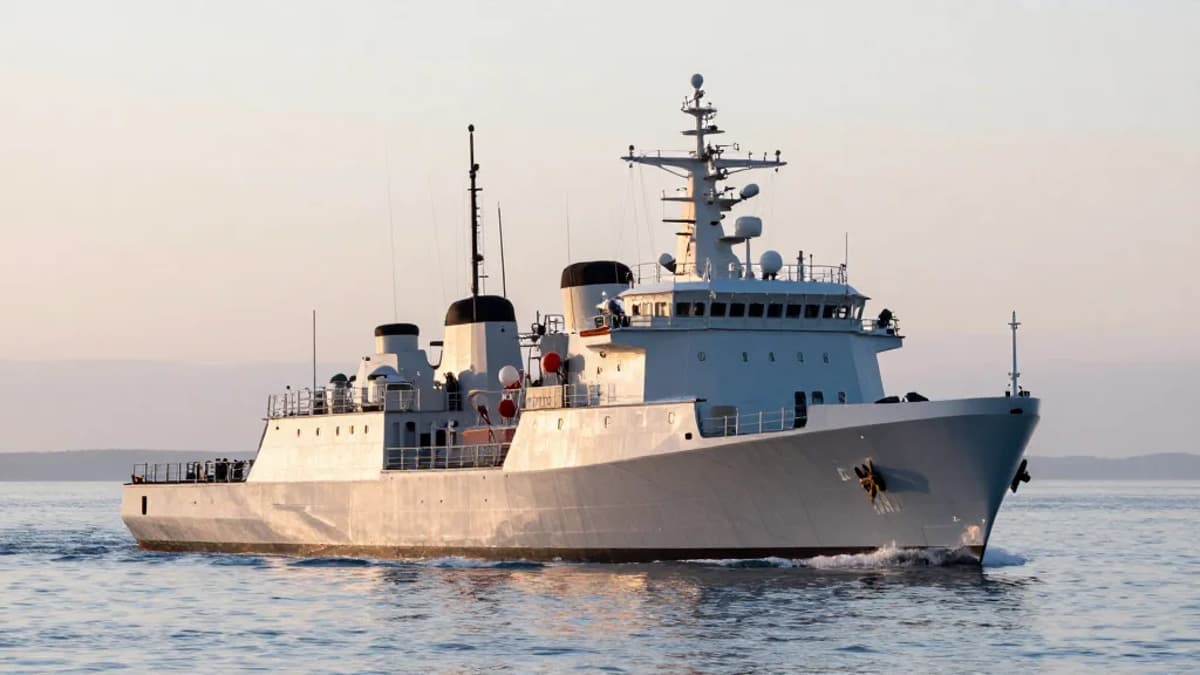
Royal Navy’s Last Gulf Minehunter HMS Middleton Has Returned to UK
•March 6, 2026
0
Key Takeaways
- •HMS Middleton returned via heavy‑lift vessel, not under own power.
- •Ship not certified; due for dry‑dock and Lloyd’s inspection.
- •RN prioritises uncrewed minehunting over manned minehunters.
- •Sister vessels also laid up, low readiness status.
- •Block 2 MHC programme approval still pending in Defence plan.
Summary
HMS Middleton, the Royal Navy’s last Gulf‑based minehunter, arrived in Southampton aboard the semi‑submersible heavy‑lift vessel MV Rolldock Storm after a 6,200‑nautical‑mile transit from Bahrain. The ship was transported rather than sailing under her own power because she no longer holds certification for independent navigation and is due for a dry‑dock inspection under Lloyd’s rules. With her sister ships similarly laid up, the RN is shifting focus toward uncrewed mine‑countermeasure capabilities. Block 2 of the Mine‑Hunter Coastal programme remains awaiting approval in the Defence Investment Plan.
Pulse Analysis
The arrival of HMS Middleton in Southampton marks the end of an era for the Royal Navy’s manned mine‑countermeasure fleet in the Arabian Gulf. Transported on MV Rolldock Storm, the vessel avoided a self‑propelled voyage after failing Lloyd’s certification, a status stemming from a five‑year gap since her last refit. This logistical choice underscores the growing maintenance burden of aging minehunters and the strategic decision to preserve crew resources by rotating out the MCM Crew 4 team.
Beyond the immediate operational shift, the RN’s emphasis on uncrewed minehunting reflects broader defence trends toward autonomous maritime platforms. The Block 2 Mine‑Hunter Coastal (MHC) programme, which promises remotely operated or autonomous vessels, is positioned to replace legacy ships like Middleton, Chiddingfold, and Bangor. However, its progress is tethered to the Defence Investment Plan, leaving funding and timeline uncertainties that could affect the UK’s ability to project mine‑countermeasure capabilities abroad.
Regionally, the withdrawal of manned minehunters from Bahrain raises questions about maritime security in the Strait of Hormuz. While Iran has not yet deployed mines, the potential for aerial or drift‑mine attacks persists, especially amid heightened tensions. The absence of UK expertise may create a capability gap that allies or commercial operators will need to fill, reinforcing the urgency for a seamless transition to autonomous systems that can operate in contested waters without endangering personnel.
Comments
Want to join the conversation?