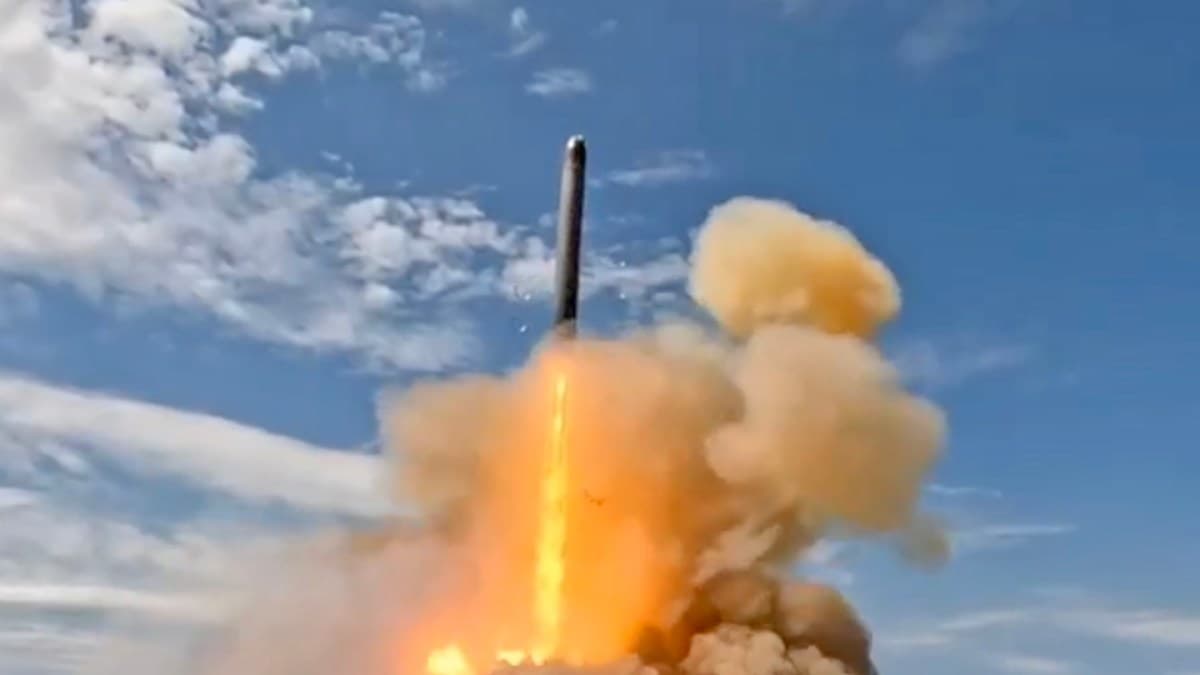
Russia Plans To Deploy Sarmat ICBM Operationally Later This Year
Key Takeaways
- •Sarmat test hit target at Kamchatka's Kura range.
- •Putin orders first regiment fielding by end‑2026.
- •Missile range exceeds 35,000 km, evades missile defenses.
- •Liquid‑fuel design uses stable hydrazine/NTO propellants.
- •Deployment follows New START lapse, may spark arms‑race.
Pulse Analysis
The Russian Defence Ministry confirmed that the RS‑28 Sarmat, NATO’s SS‑29 “Satan II,” successfully completed a flight from the Plesetsk Cosmodrome to the Kura impact zone on the Kamchatka Peninsula. President Vladimir Putin hailed the launch as an “unconditional success” and announced that the first missile regiment will be placed on combat duty in the 62nd Red Banner Rocket Division at Uzhur before the end of 2026. With a reported range beyond 35,000 km and a payload capacity for multiple warheads, decoys and possibly hypersonic boost‑glide vehicles, the Sarmat restores a heavy‑lift ICBM capability that Russia has been unable to field since the Soviet‑era R‑36M2.
The timing of the Sarmat’s entry into service is noteworthy because it comes after the 2021‑2022 expiration of the New START treaty, which previously capped the combined number of land‑based ICBMs, submarine launch tubes and strategic bombers for the United States and Russia. With those limits gone, Moscow can replace its aging R‑36M2 launchers on a one‑for‑one basis while retaining its other strategic arsenals, potentially expanding the overall size of its nuclear force. Washington is likely to reassess the LGM‑35A Sentinel program and other modernization efforts to preserve deterrent parity.
Beyond the bilateral balance, the Sarmat’s deployment could reshape global arms‑control dynamics. Its liquid‑fuel architecture, using hydrazine and nitrogen tetroxide, allows rapid launch readiness and complicates missile‑defense planning, prompting NATO to review early‑warning and interception architectures. The test also signals that Russia’s defense‑industrial base, despite sanctions and economic strain, can still deliver high‑profile strategic weapons, which may encourage Beijing and other powers to pursue comparable heavy ICBM projects. Analysts warn that the new capability, combined with Russia’s ongoing hypersonic programs, raises the risk of a renewed strategic arms race.
Russia Plans To Deploy Sarmat ICBM Operationally Later This Year
Comments
Want to join the conversation?