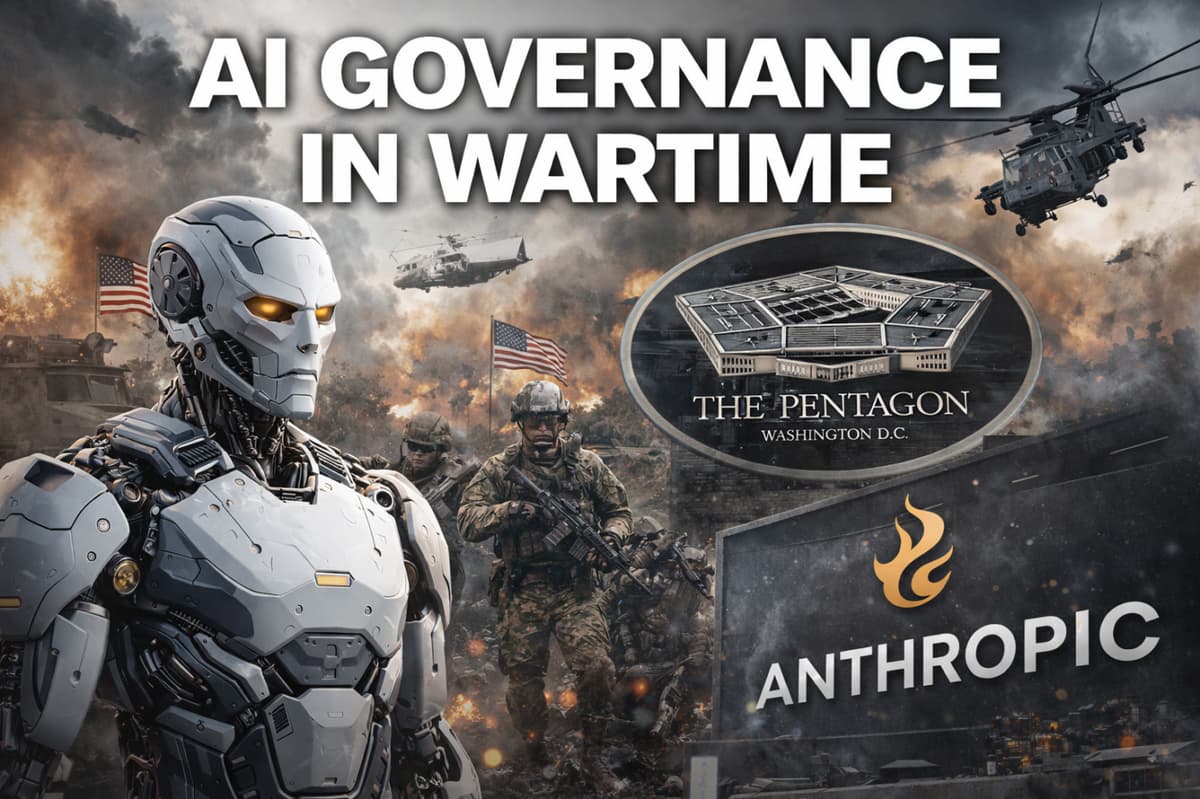
Selective Virtue: Anthropic, the Pentagon, and the Contradictions of AI Governance in Wartime
Key Takeaways
- •Anthropic predicts AI will cut half of entry‑level white‑collar jobs
- •CEO Dario Amodei warns unemployment could rise to 20% within five years
- •Company signed a $200 million Pentagon contract while refusing unrestricted use
- •Anthropic sued the Department of War over demands for autonomous weapons
- •Experts demand independent AI‑war governance panel covering industry, military, civil society
Pulse Analysis
Anthropic’s public pronouncements about AI‑driven job loss have resonated across policy circles, but the company’s own actions tell a more complex story. Amodei’s essays and interviews forecast a rapid, painful shock to the labor market, with up to half of entry‑level white‑collar positions at risk and unemployment potentially reaching 20 percent within a few years. Those warnings have fueled calls for progressive AI taxes, retraining programs, and robust social safety nets. Yet Anthropic continues to push Claude into commercial and defense pipelines at full speed, capitalizing on the very disruption it warns about. This paradox raises questions about whether a firm can claim moral authority while profiting from the technology it deems socially hazardous.
The tension escalated when the Department of War pressed for unrestricted deployment of Claude in autonomous weapons and domestic surveillance. Anthropic’s refusal, public statement, and subsequent lawsuit framed the firm as a principled defender of civil liberties. Simultaneously, the company has already supplied AI models for missile‑defense and intelligence support in Operation Epic Fury, a campaign costing roughly $3.7 billion in its first 100 hours. This selective ethics illustrates a broader governance gap: U.S. AI policy is increasingly shaped by bilateral procurement contracts rather than transparent, democratically debated statutes, leaving a single private entity to set de‑facto rules for lethal technologies.
Experts argue the solution lies in an independent AI‑war governance panel that brings together industry technologists, senior military leaders, and civil‑society watchdogs. Such a body could codify minimum human‑in‑the‑loop requirements, define permissible domestic surveillance, and mandate that firms contributing to labor displacement fund transition programs. By moving oversight from ad‑hoc contracts to statutory frameworks, the United States can safeguard both national security and the socioeconomic fabric threatened by rapid AI adoption. This approach would also prevent other vendors, like OpenAI, from filling the vacuum left by firms that opt out of unrestricted defense work, ensuring consistent ethical standards across the sector.
Selective Virtue: Anthropic, the Pentagon, and the Contradictions of AI Governance in Wartime
Comments
Want to join the conversation?