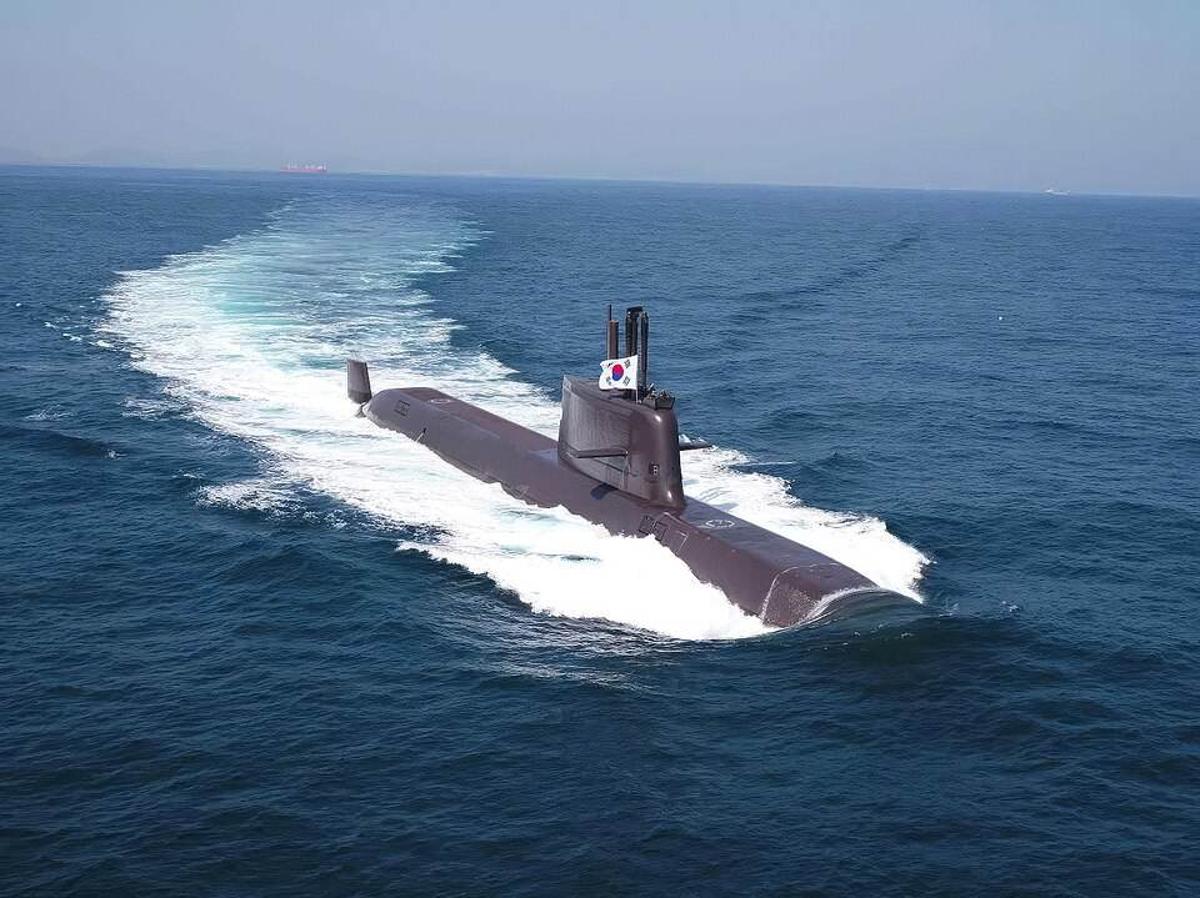
South Korea’s Undersea Dilemma: Why SSNs and UUVs Must Work Together
•February 21, 2026
0
Key Takeaways
- •SSNs provide blue‑water endurance for dual‑contingency scenarios
- •UUVs enable cost‑effective, persistent coastal surveillance and targeting
- •North Korean SLBM program raises strategic tracking and deterrence challenges
- •Russian NSR activity complicates undersea environment in Western Pacific
- •Integrated SSN‑UUV doctrine reduces reliance on allied assets
Summary
South Korea confronts simultaneous undersea threats from North Korea’s emerging SLBM‑capable submarines, a potential Taiwan crisis that could stretch U.S. and Japanese naval assets, and an increasingly active Russian presence via the Northern Sea Route. The author argues that choosing between nuclear‑powered attack submarines (SSNs) and unmanned underwater vehicles (UUVs) is a false dilemma; instead, a layered force that integrates both is required. SSNs would deliver blue‑water endurance and independent deterrence, while UUVs would provide cheap, persistent surveillance and strike options in coastal waters. This combined approach aims to safeguard sea lines of communication and reduce reliance on allied forces.
Pulse Analysis
The undersea domain around the Korean Peninsula is rapidly evolving from a single‑threat arena to a multi‑contingency battlefield. North Korea’s push for sea‑based nuclear deterrence, the prospect of a Taiwan flashpoint that could divert U.S. and Japanese anti‑submarine forces, and Russia’s expanding Arctic‑Pacific naval corridor all converge to create a congested, ambiguous operating environment. For Seoul, the strategic calculus now hinges on maintaining freedom of navigation and protecting vital sea lines of communication without over‑extending limited resources.
Nuclear‑powered attack submarines offer capabilities that diesel‑electric boats cannot match: sustained high speed, virtually unlimited endurance, and the ability to operate far from home ports. In a dual‑contingency scenario—simultaneous pressure from the north and a crisis in the Taiwan Strait—SSNs could project power across the western Pacific, conduct long‑range anti‑submarine warfare, and provide a credible independent deterrent. However, the high acquisition cost, lengthy production cycles, and global shortages of skilled labor mean that South Korea could field only a modest fleet, making SSNs a strategic hedge rather than a standalone solution.
Unmanned underwater vehicles fill the gap left by limited SSN numbers. Modern UUVs can be mass‑produced, deployed in swarms, and used for persistent coastal ISR, mine counter‑measures, and even precision attacks on vulnerable submarine bases. Their expendable nature lowers escalation risks while increasing the cost for adversaries attempting to hide or launch SLBMs. By layering UUVs for near‑shore dominance and SSNs for blue‑water reach, South Korea can craft a flexible, cost‑effective deterrence architecture that mitigates allied strain and adapts to the increasingly crowded undersea battlespace.
Comments
Want to join the conversation?