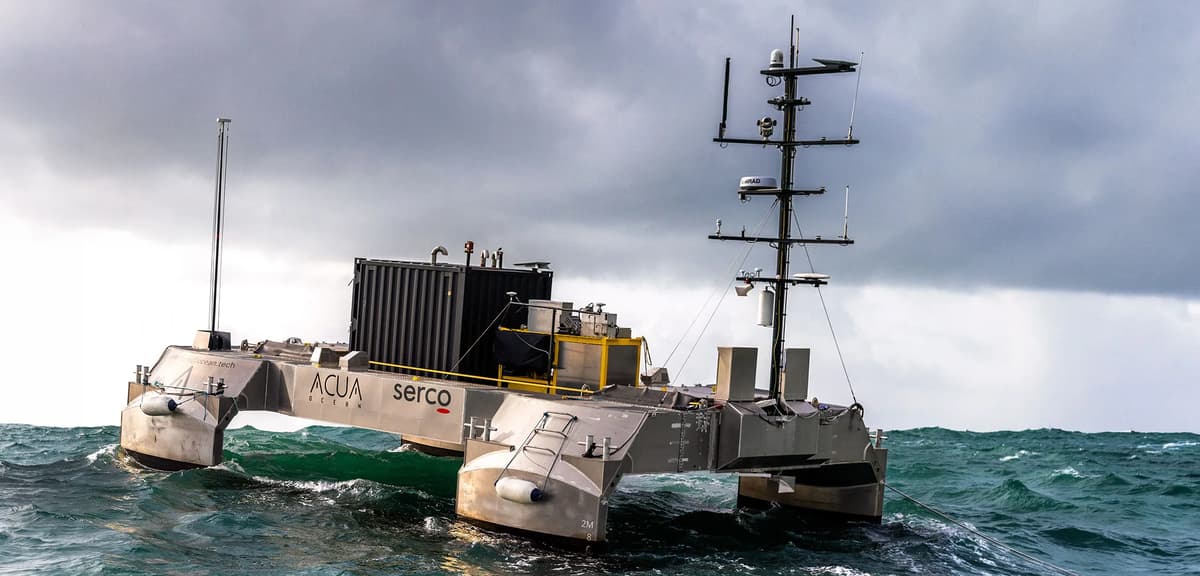
Stability over Speed: Pioneer – a Different Approach to Uncrewed Surface Vessels
•February 24, 2026
0
Why It Matters
Pioneer demonstrates that high‑stability, long‑endurance USVs can meet demanding defence and offshore‑energy missions while navigating regulatory hurdles, offering a cost‑effective alternative to crewed vessels.
Key Takeaways
- •SWATH hull delivers submarine‑level stability on small platform
- •50‑day endurance supports 5,000 nm range at 4 knots
- •Modular moonpool enables rapid payload swaps without structural changes
- •Certified by Lloyd’s Register, easing regulatory adoption for operators
- •Can host sensors, UAVs, and acoustic arrays for ISR missions
Pulse Analysis
The uncrewed surface vessel market has long wrestled with the trade‑off between speed and sea‑keeping. While many designs chase higher knots to shorten transit times, operational reality in the North Atlantic and other high‑sea‑state regions demands platforms that stay on station. Pioneer’s SWATH architecture achieves submarine‑like stability by submerging buoyancy tanks, dramatically reducing pitch and roll. This design choice enables the vessel to function effectively in sea state 5, a capability that many conventional monohulls lack, positioning it as a reliable workhorse for offshore logistics, subsea surveys, and persistent surveillance.
Beyond its hull form, Pioneer’s modular construction underpins its versatility. Road‑transportable aluminium sections simplify production scaling, while shock‑mounted generator racks and a hybrid diesel‑electric (with hydrogen‑ready) powertrain provide both endurance and flexibility in energy sourcing. The central ISO‑standard moonpool accommodates a 20‑foot payload or two 10‑foot modules, allowing rapid reconfiguration for sonar arrays, ROV/AUV launch systems, or electronic‑warfare packages without structural alterations. With a 4,000‑litre fuel capacity and a 50‑kW electrical margin, the vessel can sustain 50‑day missions, delivering up to 5,000 nautical miles of range—critical for long‑duration offshore energy projects and maritime domain awareness.
In the defence arena, Pioneer’s stability and payload capacity translate into a compelling Sentinel concept for the Royal Navy. Integrated electro‑optical/infrared sensors, radar, AIS, and the ability to host tethered or untethered UAVs create a layered ISR node that can operate autonomously for weeks. Adding passive acoustic arrays or electronic‑warfare suites expands its role into anti‑submarine warfare and electronic support. By networking multiple Pioneer units, the UK can establish a distributed, low‑cost maritime security mesh that reduces reliance on high‑value crewed ships while enhancing coverage of critical ports and chokepoints. As the platform moves toward larger 43‑metre MROS derivatives, its proven SWATH stability and modularity are set to influence the next generation of long‑endurance USVs across both commercial and military sectors.
Stability over speed: Pioneer – a different approach to uncrewed surface vessels
0
Comments
Want to join the conversation?
Loading comments...