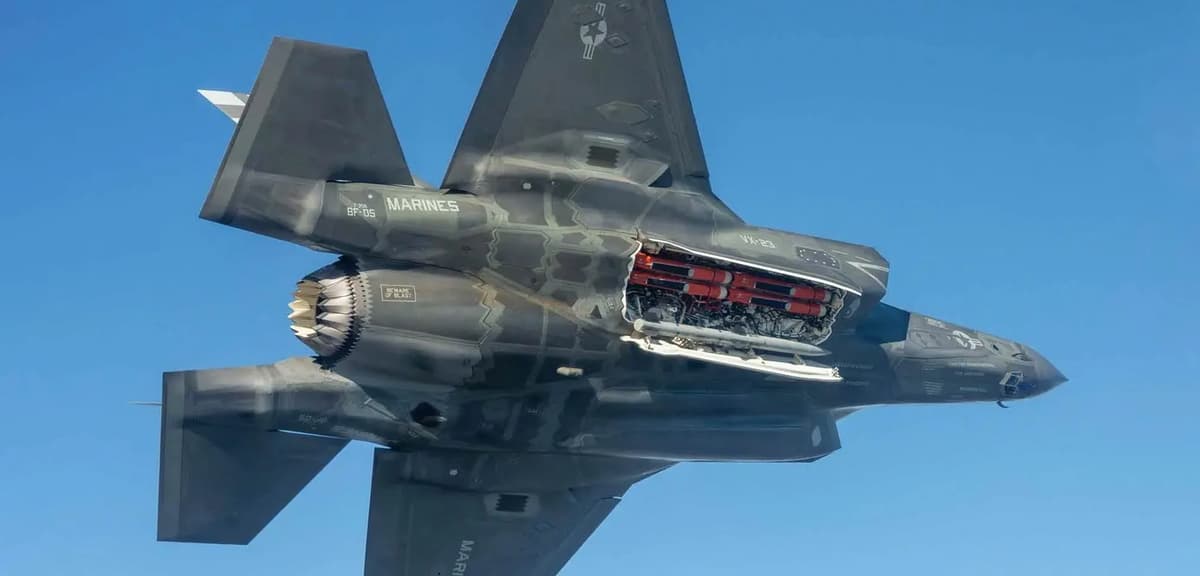
Stand-Off Weapon Demonstration Shows F-35B Integration Still Alive Despite Years of Delays
Key Takeaways
- •F-35B successfully carried four inert SPEAR‑3 missiles in captive‑carry test
- •Integration progress does not accelerate Block 4 software timeline, now slated for 2031
- •TR‑3‑standard jets need combat‑ready software before operational use
- •Interim Small Diameter Bomb II approved, offering greater reach than Paveway IV
- •SPEAR‑3 aims to suppress enemy air defenses while preserving stealth
Pulse Analysis
The recent captive‑carry sortie marks the first tangible proof that the SPEAR‑3 stand‑off missile is moving beyond the drawing board for the F‑35B. While the aircraft’s internal bay successfully housed four inert weapons, the real milestone lies in the data harvested for mission‑systems integration and future jettison trials. This test comes at a time when the broader Block 4 software suite—essential for unlocking SPEAR‑3’s advanced targeting and swarm capabilities—has slipped to a 2031 horizon, underscoring the chronic software stability challenges that have plagued the F‑35 program.
Technical analysts note that SPEAR‑3’s turbojet‑powered design, capable of eight missiles per aircraft and internal carriage, preserves the F‑35B’s low‑observable profile while delivering a potent anti‑access/area‑denial punch. Yet the pathway to operational use is hampered by hardware retrofits needed on legacy TR‑2 jets and the pending certification of combat‑ready software on newer TR‑3 airframes. The missile’s ability to navigate contested airspace and execute coordinated “swarm” attacks could reshape how NATO forces suppress integrated air‑defence systems, but only once the software bottleneck is cleared.
For the United Kingdom and its partners, the delay forces a reliance on interim weapons such as the Small Diameter Bomb II, approved by the MoD to bridge the capability gap. While the SDB II extends strike range beyond legacy Paveway IV bombs, it lacks the stand‑off reach and stealth integration of SPEAR‑3. The ongoing integration effort, however, signals that the programme remains alive, offering a future where the F‑35B can fulfill its original promise as a true strike platform rather than a limited precision‑attack aircraft. Stakeholders will watch closely as software milestones approach, knowing that the timing of SPEAR‑3’s fielding will influence force postures across the Atlantic alliance.
Stand-off weapon demonstration shows F-35B integration still alive despite years of delays
Comments
Want to join the conversation?