Targeting Decisions: A Simpler Framework for Information Warfare
Key Takeaways
- •PSYOP success hinges on targeting adversary decision points, not just tools
- •Decision criteria include doctrine, culture, emotions, and situational pressures
- •Manipulating information translation layers offers high‑impact intervention opportunities
- •Organizing PSYOP around decisions integrates cyber, EW, and messaging capabilities
- •Framework aligns with Army’s multi‑domain operations transformation goals
Pulse Analysis
The rapid expansion of cyber, electronic warfare and traditional PSYOP tools over the past decade has left the U.S. Army with a powerful but fragmented information‑warfare arsenal. Planners often deploy these capabilities in isolation, constrained by domain‑specific authorities and siloed organizations. This fragmentation hampers the ability to translate technical prowess into measurable changes in adversary behavior, a shortfall that becomes stark when strategic objectives demand coordinated influence across multiple theaters.
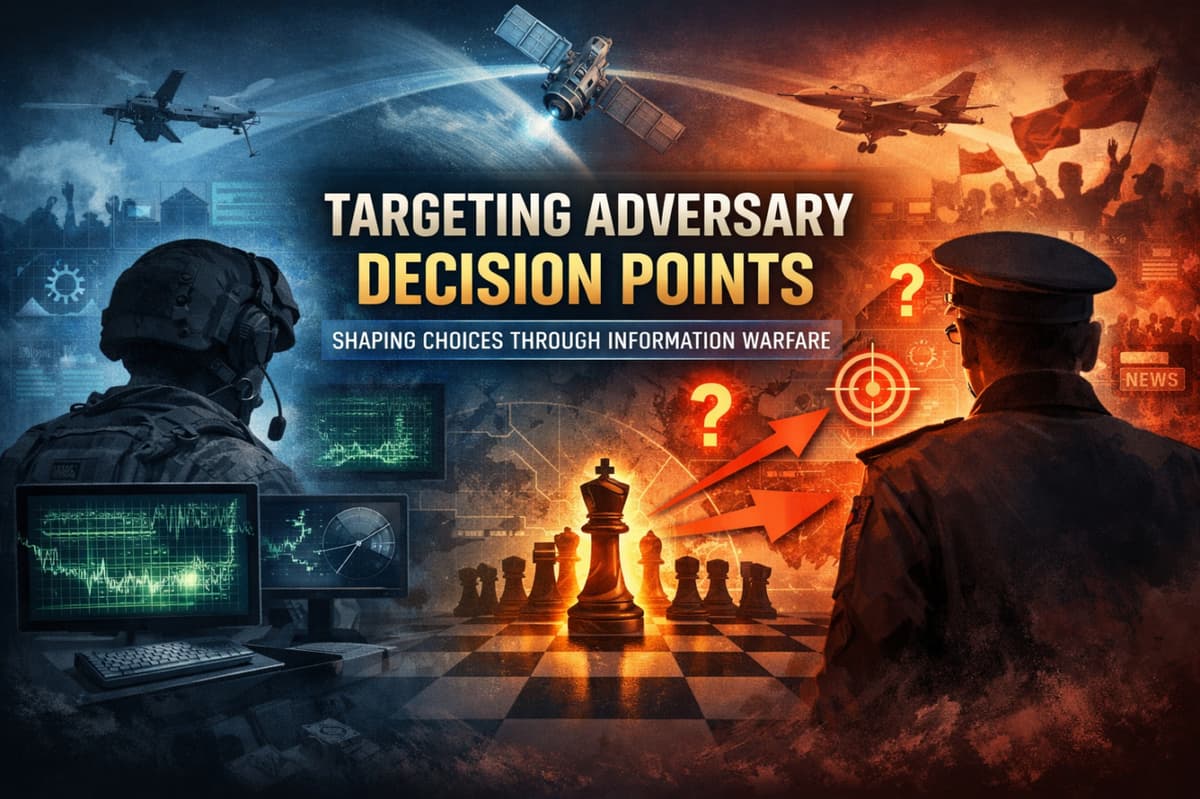
A decision‑centric framework reframes PSYOP as a problem of targeting the enemy’s decision process rather than merely delivering messages. It begins with pinpointing decision points—moments when an opponent must choose a course of action—then mapping the explicit and implicit criteria that guide those choices, from doctrinal thresholds to cultural fears. The final layer examines how information travels from sensors through transmission conduits to interpreters, revealing three vulnerable translation stages where deception, distortion, or amplification can sway outcomes. By aligning cyber disruption, electronic jamming, and narrative operations with these stages, planners can create synergistic effects that are greater than the sum of individual tools.
Adopting this methodology has profound organizational implications. Instead of structuring PSYOP units around capabilities, the Army can organize around the decision cycles it seeks to influence, fostering cross‑domain collaboration and clearer metrics for success. This aligns with the broader multi‑domain operations (MDO) doctrine, which calls for seamless integration of land, air, sea, space, and cyber assets. A decision‑focused PSYOP strategy not only improves operational efficiency but also provides senior leaders with tangible evidence of influence, supporting budgetary justification and strategic messaging in an era where information dominance is a decisive factor.
Targeting Decisions: A Simpler Framework for Information Warfare
Comments
Want to join the conversation?