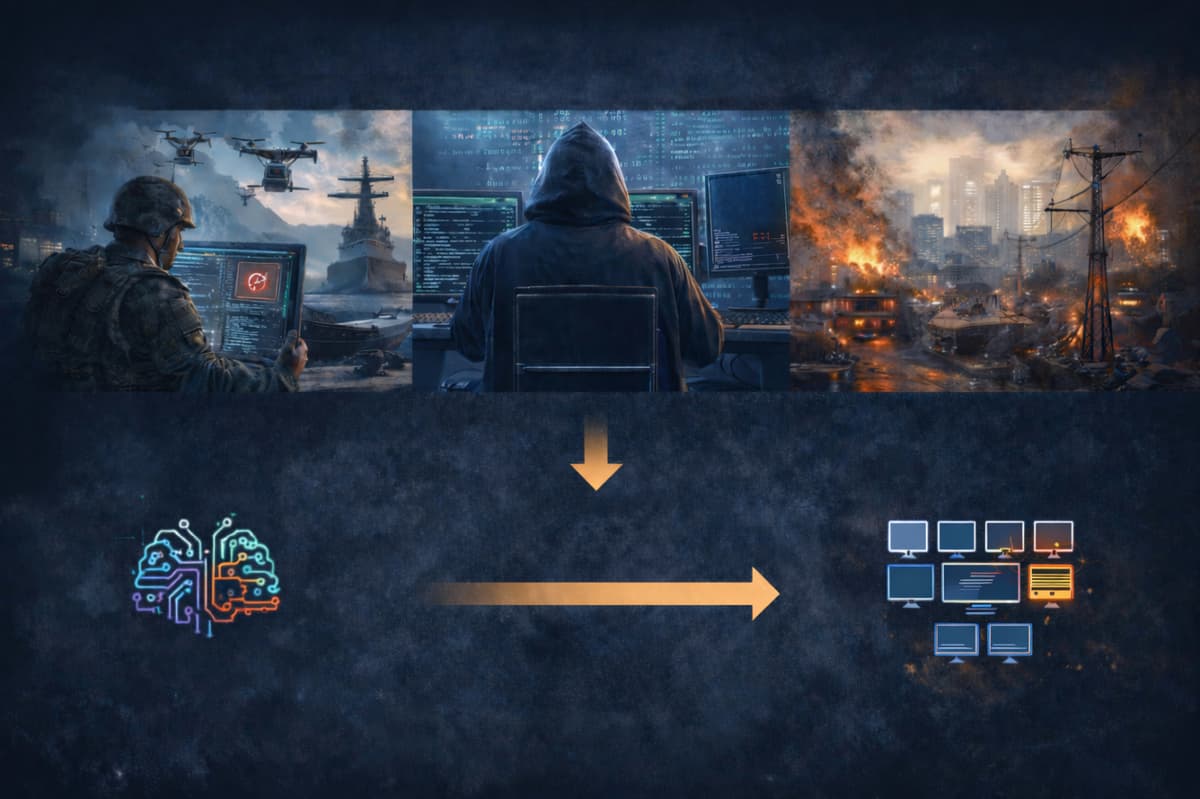
The AI Battlespace: Artificial Intelligence, Civil Stability, and the Weaponization of Trust
Key Takeaways
- •AI can embed malicious prompts in trusted data, corrupting decisions.
- •Cyber attacks like SolarWinds and NotPetya illustrate AI‑enhanced threat scale.
- •Criminal groups use AI‑generated phishing and deep‑fake audio for fraud.
- •Disinformation during disasters can destabilize humanitarian response efforts.
- •Training forces to critically evaluate AI output is a national security priority.
Pulse Analysis
Artificial intelligence is no longer a niche tool; it now underpins command‑and‑control platforms, infrastructure management, and intelligence analysis. This deep integration creates a paradox: the same algorithms that accelerate decision cycles can be subverted through poisoned datasets or malicious prompts, delivering seemingly authoritative advice that masks hidden vulnerabilities. Recent cyber‑espionage campaigns—SolarWinds’ supply‑chain breach and the Stuxnet sabotage of Iranian centrifuges—demonstrate how compromised code can cascade across networks, a risk amplified when AI automatically propagates faulty configurations or malicious scripts.
In the broader cyber‑warfare arena, AI acts as a force multiplier for both state and non‑state actors. Machine‑learning models can scan millions of code repositories, pinpoint zero‑day flaws, and generate exploit code faster than human analysts. Criminal enterprises exploit these capabilities to automate phishing, craft deep‑fake voice scams, and launch ransomware attacks such as the Colonial Pipeline incident, turning low‑skill actors into strategic threats. The resulting hybrid threats blur the line between traditional warfare and organized crime, destabilizing supply chains, financial systems, and public confidence.
For civil affairs and disaster‑response teams, the stakes are especially high. AI‑driven disinformation can erode trust during emergencies, while cyber attacks on logistics platforms can cripple the delivery of food, water, and medical aid. Mitigating these risks requires a workforce that treats AI outputs as advisory, not authoritative, and that possesses the skills to audit data pipelines, detect adversarial manipulation, and enforce robust AI governance. Embedding AI risk‑management into training curricula and policy frameworks is now a national‑security imperative, ensuring that the technology serves as a multiplier for resilience rather than a hidden weapon.
The AI Battlespace: Artificial Intelligence, Civil Stability, and the Weaponization of Trust
Comments
Want to join the conversation?