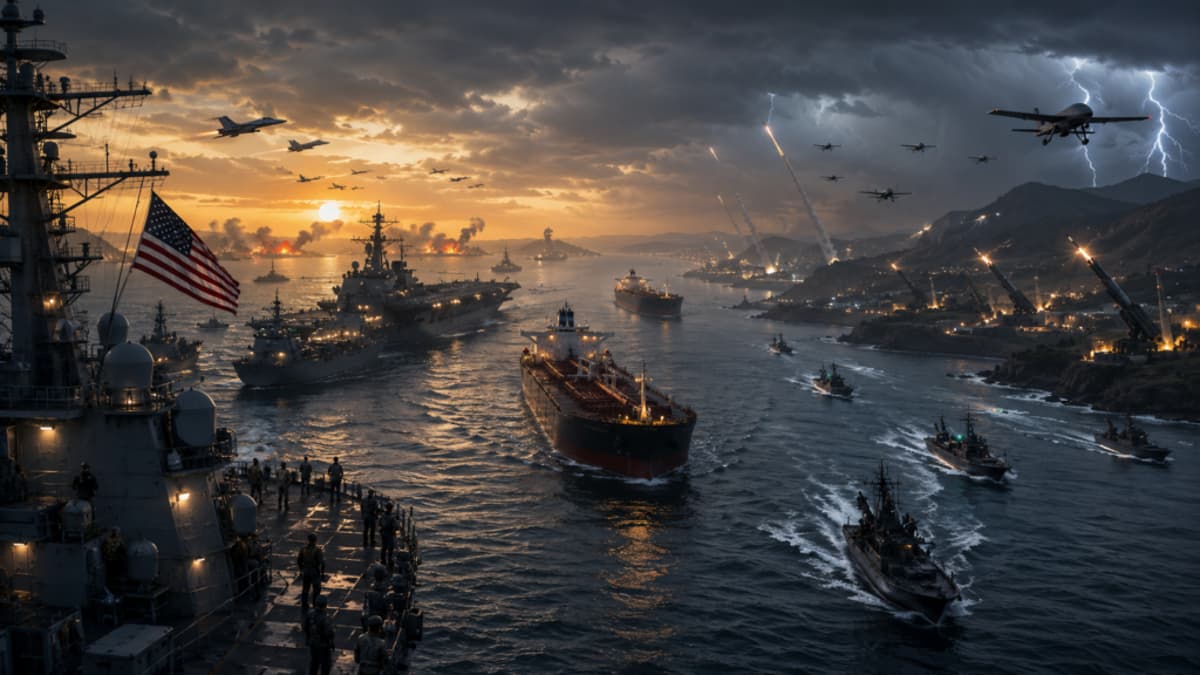
The Escalation Trajectory of U.S.-Iran Tensions After the Collapse of the Negotiations
Key Takeaways
- •US imposes maritime blockade on Iranian ports, targeting oil export revenue
- •Iran's IRGC treats nuclear program as regime survival, limiting concessions
- •Pre‑positioned US and Iranian forces increase rapid‑escalation risk
- •Strait of Hormuz handles ~20% of global oil, vulnerable to disruption
- •Controlled escalation likely; missteps could spark full‑scale conflict
Pulse Analysis
The U.S. blockade marks a strategic pivot from diplomatic engagement to economic coercion, targeting Iran’s lifeline of oil exports that fund both the state and its regional proxy network. By choking revenue streams, Washington hopes to force Tehran back to the negotiating table without resorting to kinetic strikes, yet the move also signals a willingness to escalate if Tehran retaliates. This approach mirrors past sanctions campaigns but adds a naval dimension that directly threatens commercial shipping, raising insurance premiums and prompting multinational firms to reassess supply‑chain routes through the Gulf.
Iran’s response is constrained by internal politics; the IRGC frames the nuclear program as a non‑negotiable pillar of national sovereignty. Any perceived concession could erode the regime’s legitimacy, while overt aggression risks catastrophic retaliation that the country cannot sustain militarily. Consequently, Tehran is likely to employ asymmetric tactics—drone attacks, naval mines, and proxy strikes—to impose costs on the U.S. and its allies while avoiding a full‑scale war. The presence of pre‑positioned U.S. forces in the region, combined with Iran’s ready‑to‑fire missile arsenals, creates a classic escalation dilemma where a single misstep could spiral into broader conflict.
For markets and policymakers, the stakes extend beyond regional security. Disruption in the Strait of Hormuz would reverberate through global oil prices, potentially adding $10‑$15 per barrel to benchmarks and pressuring inflation worldwide. Moreover, a drawn‑out U.S.–Iran confrontation would divert attention and resources from the strategic competition with China, complicating Washington’s broader foreign‑policy agenda. Stakeholders should monitor maritime incident reports, proxy activity levels, and any shifts in U.S. force deployments as early indicators of whether the current trajectory remains a controlled escalation or tips toward open war.
The Escalation Trajectory of U.S.-Iran Tensions After the Collapse of the Negotiations
Comments
Want to join the conversation?