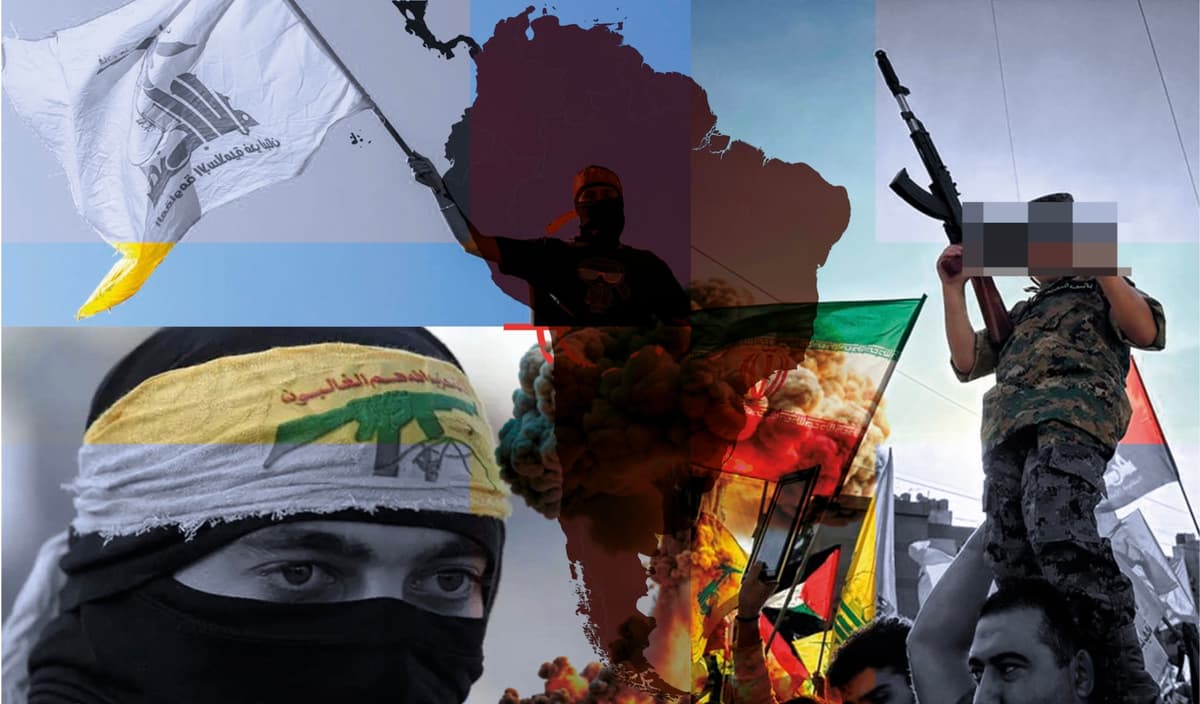
The Iranian Revolution and the Expansion of Terrorism in Latin America

Key Takeaways
- •Triple Border hub fuels Hezbollah money laundering and recruitment.
- •Al-Mustafa University trains Latin Americans to spread Iranian revolutionary doctrine.
- •Operation Trapiche uncovered failed Hezbollah plot against Brazil’s Jewish community.
- •Some Latin American states still lack formal Hezbollah terrorist designation.
- •Youth scout programs indoctrinate teens for potential Hezbollah combat roles.
Pulse Analysis
The ideological echo of Iran’s 1979 revolution reverberates far beyond the Middle East, finding fertile ground in Latin America’s left‑leaning movements. By aligning with regimes in Cuba, Bolivia, Nicaragua and Venezuela, Tehran projects an anti‑imperialist narrative that resonates with local dissidents. This soft power foundation enables Hezbollah to embed itself within diaspora communities, particularly among Lebanese Shiites, and to cultivate a network of cultural centers, media outlets, and religious institutions that disseminate propaganda in Spanish and Portuguese.
At the operational core lies the Triple Border region, a porous corridor that facilitates drug, arms and cash flows essential to Hezbollah’s financing. The 2023 Operation Trapiche raid in Brazil revealed a sophisticated plot involving Lebanese and Syrian operatives, highlighting how local criminal enterprises intersect with Iranian‑backed terror cells. Parallel to these illicit activities, Al‑Mustafa International University—sanctioned by the U.S. Treasury—has produced roughly 40,000 graduates, with a notable slice returning to Latin America to teach revolutionary doctrine and recruit for the Quds Force. Youth programs modeled on Hezbollah’s Imam al‑Mahdi Scouts further institutionalize indoctrination, grooming teenagers for future combat roles.
Policy makers face a fragmented landscape: while Argentina, Paraguay, Colombia and Honduras have labeled Hezbollah a terrorist organization, many neighboring states have not, limiting law‑enforcement tools such as asset freezes and entry bans. Experts urge a unified regional approach that includes formal terrorist designations, stricter financial monitoring, and the suppression of Spanish‑language Hezbollah propaganda. Coordinated action would not only blunt Tehran’s influence in the Western Hemisphere but also safeguard U.S. interests against a transnational threat that blends ideology, crime and terrorism.
The Iranian Revolution and the Expansion of Terrorism in Latin America
Comments
Want to join the conversation?