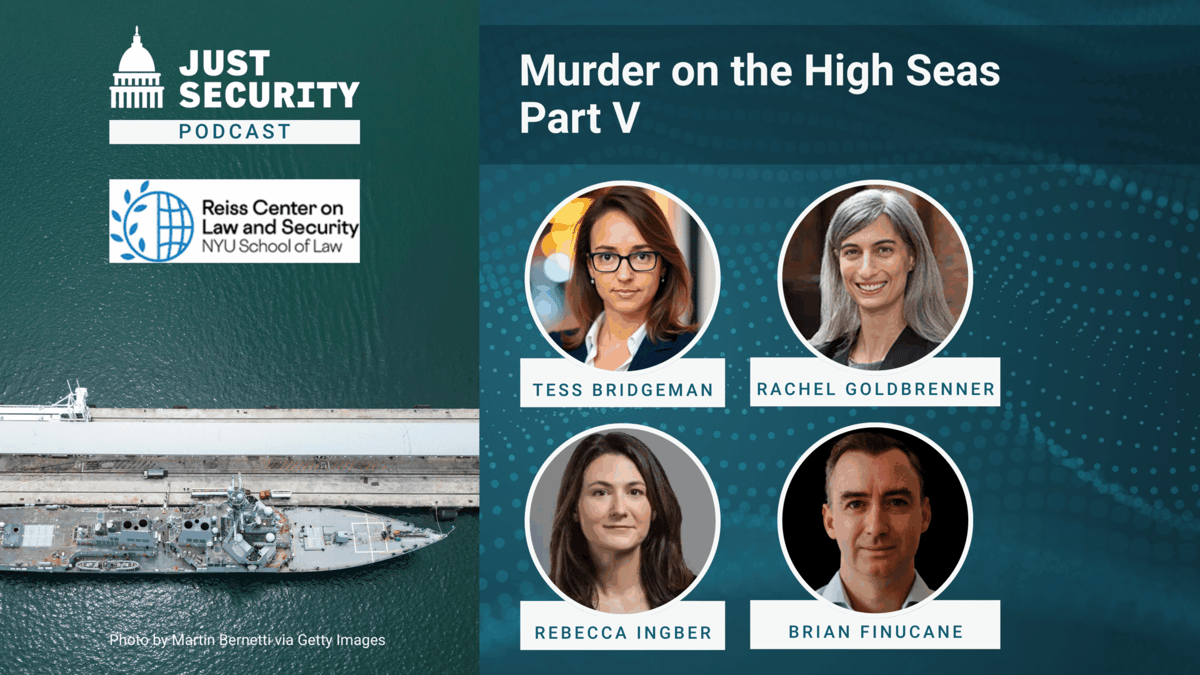
The Just Security Podcast: Murder on the High Seas Part V
Key Takeaways
- •Operation Southern Spear targets suspected drug traffickers in Caribbean
- •Trump administration cites war powers to justify lethal boat strikes
- •Legal scholars debate constitutionality and international law obligations
- •Potential lawsuits could hold U.S. government liable for wrongful deaths
Pulse Analysis
Operation Southern Spear represents a dramatic escalation in the United States’ counter‑narcotics posture, shifting from traditional interdiction to direct lethal force against vessels suspected of drug trafficking. Since the January 2026 capture of Venezuelan President Nicolás Maduro, the campaign has intensified across the Caribbean and eastern Pacific, prompting a wave of legal analyses that question the administration’s reliance on broad war‑powers claims. Experts on the Just Security podcast argue that this approach blurs the line between law‑enforcement and armed conflict, raising concerns about compliance with the War Powers Resolution and the Constitution’s separation of powers.
The legal community is divided over whether the strikes constitute lawful self‑defense or an overreach of executive authority. Scholars such as Rebecca Ingber and Brian Finucane point to the administration’s memo asserting that the President can unilaterally decide to use force against drug‑related threats, a stance that many view as a circumvention of congressional oversight. International law adds another layer of complexity, with obligations to investigate civilian casualties and to avoid targeting shipwrecked survivors. Recent publications from the Reiss Center on Law and Security underscore the potential for the United States to face wrongful‑death suits and to be held accountable under both domestic and treaty law.
Beyond the immediate legal battles, Operation Southern Spear could reshape future U.S. counter‑narcotics policy and set precedents for maritime warfare. If courts or Congress curtail the executive’s latitude, the administration may need to adopt more collaborative, multilateral strategies that respect international norms. Conversely, a permissive ruling could embolden further use of lethal force in gray‑zone operations, influencing how other nations approach transnational crime. Stakeholders—from defense contractors to human‑rights advocates—are watching closely, as the outcome will affect budget allocations, operational doctrine, and the broader debate over the balance of security and liberty.
The Just Security Podcast: Murder on the High Seas Part V
Comments
Want to join the conversation?