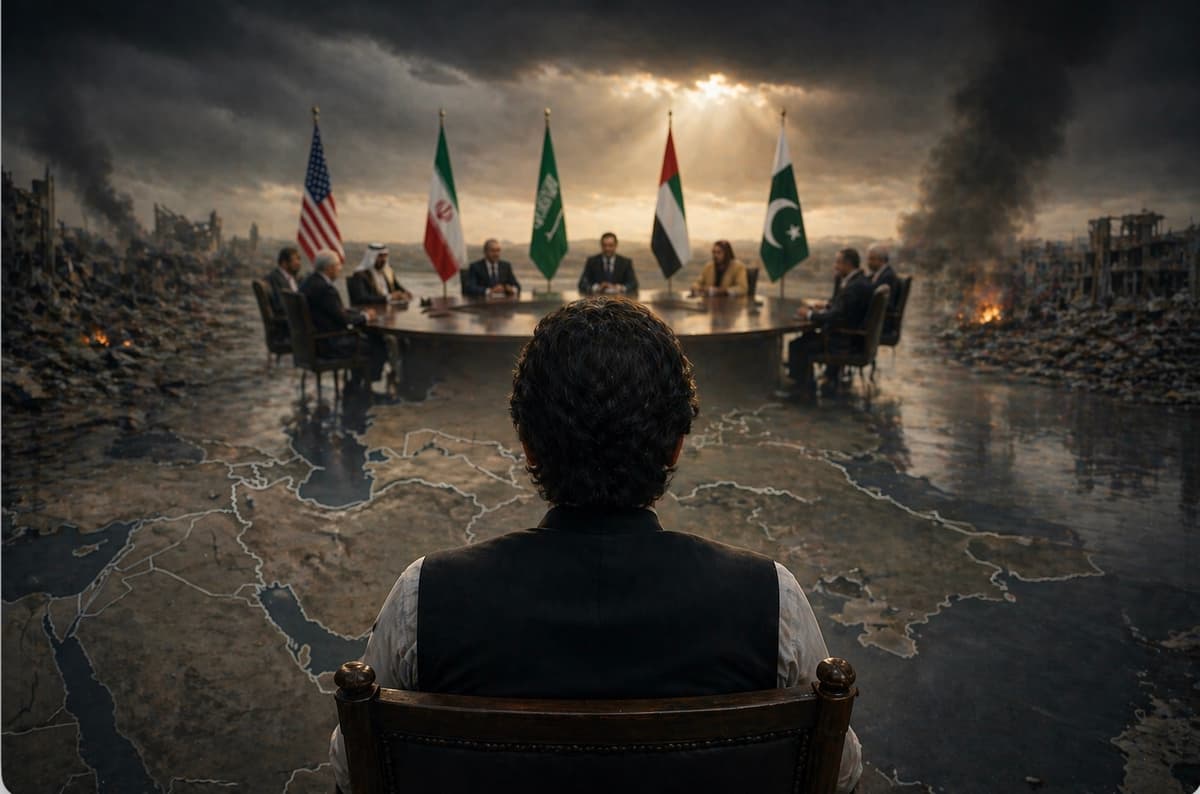
The Last Interlocutor: Imran Khan, Pakistan’s Leadership Vacuum, and the Search for a Regional Peacemaker
Key Takeaways
- •Pakistan hosted 21‑hour US‑Iran talks in Islamabad, but no deal emerged
- •Iran rejected U.S. red‑line demands, insisting on ceasefire and sanctions relief
- •Current Pakistani government lacks credibility; Iran trusts former PM Imran Khan more
- •Domestic crises—fuel price spikes, sectarian unrest, Afghan conflict—strain Pakistan’s stability
- •Khan’s independent stance could restore Pakistan’s role as a regional mediator
Pulse Analysis
The Islamabad summit underscored Pakistan’s strategic geography and its historic role as a conduit between Tehran and Washington. While the country successfully brokered a short‑term ceasefire in early April, the deeper diplomatic impasse revealed that mediation is not merely about logistics; it requires a neutral actor perceived as free from external patronage. Iran’s insistence on unconditional sanctions relief and a broader regional settlement clashed with U.S. demands for stringent nuclear constraints, leaving the talks stalled and exposing the limits of a government seen as aligned with Saudi and American interests.
Imran Khan’s emergence as a potential diplomatic linchpin reflects a broader shift in regional power calculations. Despite his imprisonment and deteriorating health, Khan retains a reputation for independence, having criticized U.S. unilateralism and maintained cordial ties with Tehran during his premiership. This personal credibility resonates across the Muslim world, where many view him as a symbol of resistance to foreign domination. If Khan were to re‑enter the political arena, his stature could provide the trust gap Iran demands, enabling Pakistan to re‑assert itself as an honest broker capable of facilitating a durable US‑Iran accord.
The stakes extend beyond bilateral negotiations. Pakistan’s internal challenges—sharp fuel price hikes, sectarian flashpoints, and a volatile Afghan frontier—risk destabilizing a nuclear‑armed state already grappling with economic austerity. A credible mediator could alleviate external pressures, allowing Islamabad to focus on domestic reforms and security consolidation. Conversely, continued diplomatic deadlock may exacerbate regional volatility, heightening the risk of miscalculation in a nuclear‑sensitive environment. Thus, the country’s political legitimacy, embodied by figures like Khan, is pivotal for both regional peace and global security.
The Last Interlocutor: Imran Khan, Pakistan’s Leadership Vacuum, and the Search for a Regional Peacemaker
Comments
Want to join the conversation?