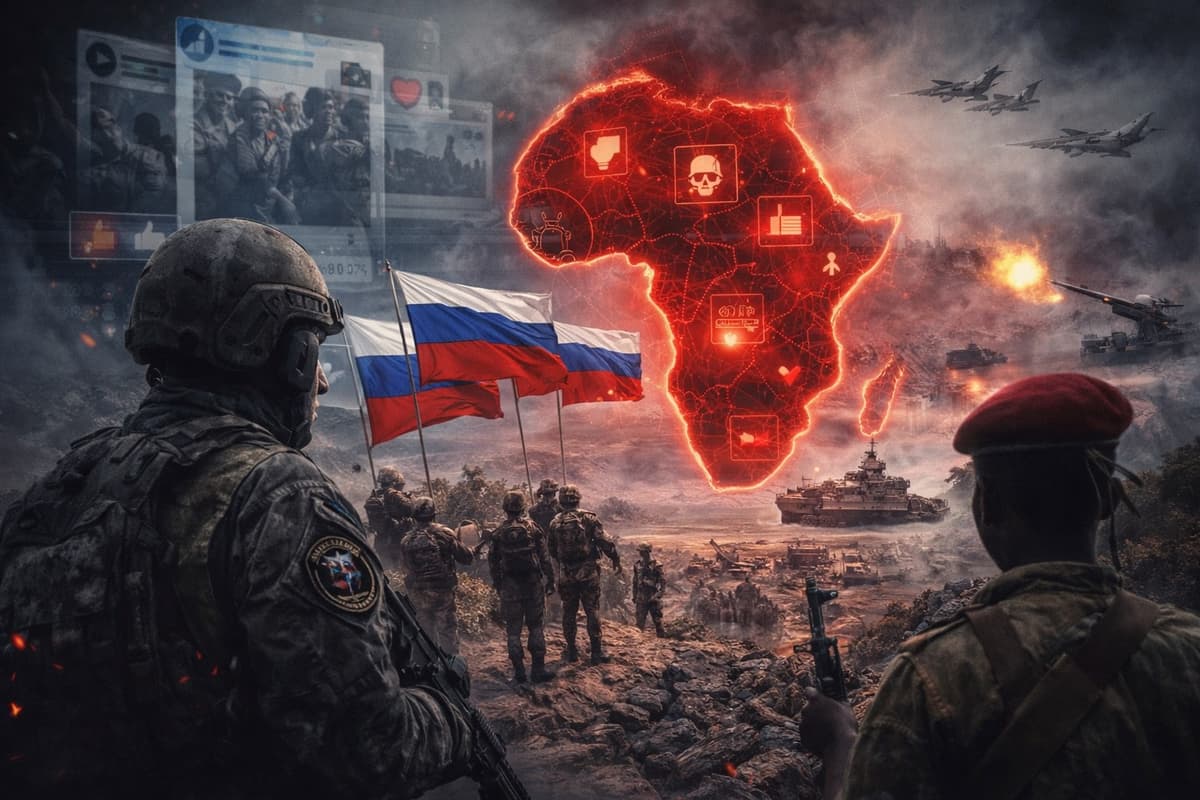
The Waiting Game: Signposts of Russia’s Coming Failure in Africa
•February 19, 2026
0
Key Takeaways
- •Russia’s Africa Corps operates in six African states.
- •Western military presence has largely withdrawn from West Africa.
- •Human rights abuses erode local support for Russian mercenaries.
- •Economic gains from gold and illicit markets fund Russia’s efforts.
- •Growing protests signal potential regime change against Russian allies.
Summary
Russia’s Africa Corps, successor to the Wagner Group, now fields troops in six African states, leveraging disinformation and security contracts to replace waning Western influence. The exodus of French, EU and U.S. forces from the Sahel and West Africa has left a vacuum that Moscow has filled with mercenaries and illicit resource deals, especially gold mining in the Central African Republic. Despite expanding its footprint, Russian forces have failed to curb jihadist violence and are linked to widespread human‑rights violations, eroding local legitimacy. Analysts warn that mounting protests and regime instability could signal an imminent collapse of Russia’s African security venture.
Pulse Analysis
Russia’s push into Africa has been driven less by ideological alignment than by a pragmatic calculus of resource extraction and geopolitical leverage. By embedding the Africa Corps—largely composed of former Wagner fighters—into regimes across the Sahel, CAR, Libya, Sudan and Equatorial Guinea, Moscow has secured access to gold mines, illicit fuel networks and strategic ports. \n\nOperationally, the mercenary presence has done little to stem the tide of jihadist attacks that now account for more than half of global terrorist casualties.
In Mali and Burkina Faso, despite the deployment of attack helicopters and advisory teams, insurgent groups continue to control large swaths of territory, while civilian casualties from indiscriminate strikes fuel anti‑Russian sentiment. S. assistance. \n\nFor Western policymakers, the erosion of Russian influence presents both a challenge and an opportunity.
Re‑establishing a limited but credible security footprint—through joint training, intelligence sharing and targeted counter‑terrorism operations—could help fill the vacuum without reigniting neo‑colonial critiques. Simultaneously, diplomatic engagement that ties aid to governance reforms may incentivize African leaders to pivot away from mercenary dependence. Monitoring the three signposts identified by analysts—mass protests, regime change, and the withdrawal of Russian troops—will be crucial for timing any renewed Western involvement and for preventing a security collapse that could reverberate across the continent.
Comments
Want to join the conversation?