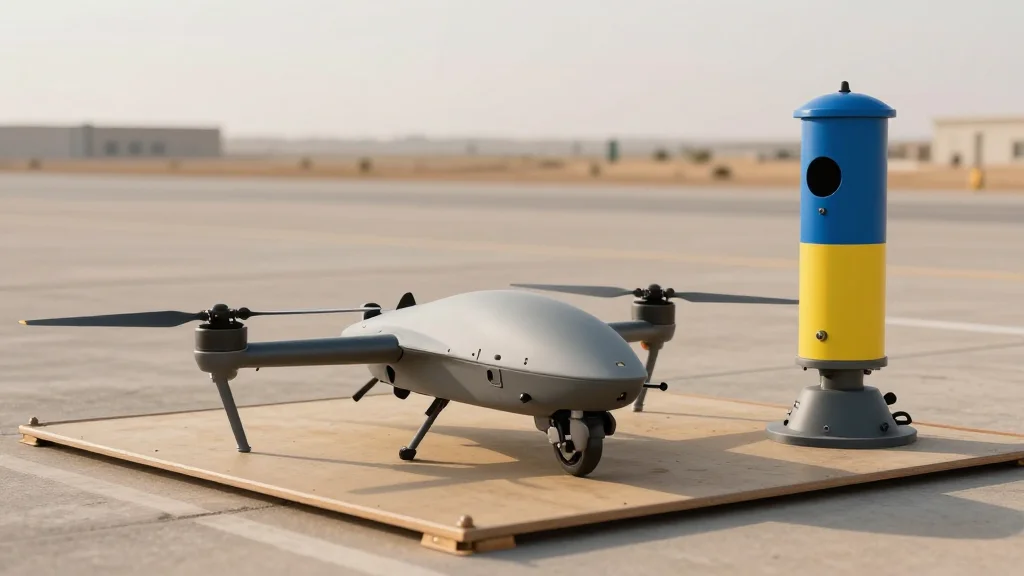
U.S. Deploys Ukrainian Acoustic Sensors, Interceptor Drones At Prince Sultan Air Base
Key Takeaways
- •Iran's Shahed drone strike destroyed US E‑3 Sentry, damaged KC‑135 tankers
- •US now uses Ukrainian Sky Map acoustic sensor network at Prince Sultan
- •Over 10,000 acoustic sensors deployed by Sky Fortress in Ukraine
- •Interceptor drones paired with Sky Map provide rapid counter‑drone response
- •Acoustic detection likely to become standard for US bases and infrastructure
Pulse Analysis
The Iranian missile‑drone barrage on Saudi Arabia’s Prince Sultan Air Base in March exposed a glaring weakness in the United States’ forward‑deployed air‑defense architecture. A Shahed‑type loitering munition succeeded in downing an E‑3 Sentry AWACS aircraft and damaging several KC‑135 aerial refueling tankers, forcing commanders to reassess protection against low‑cost, high‑volume threats. Traditional radar and missile systems, designed for conventional aircraft, struggled to spot the tiny, slow‑moving drones until they were already within striking range, prompting an urgent search for a more responsive, layered solution.
Within weeks, the Pentagon turned to a Ukrainian‑origin counter‑drone suite built by Sky Fortress. The Sky Map platform fuses a network of more than 10,000 passive acoustic sensors—originally fielded across Ukraine’s eastern front—to triangulate the sound of rotors and engines, delivering a real‑time warning to operators on the ground. Coupled with small, autonomous interceptor drones that can be launched within seconds, the system creates a rapid kill chain that does not rely on radar signatures. Ukrainian specialists have been on‑site training U.S. crews, accelerating the technology’s operational integration.
The deployment marks the first large‑scale adoption of acoustic counter‑drone technology by the United States and signals a broader shift toward low‑cost, AI‑enabled defenses for critical assets. Analysts expect similar sensor arrays to appear at forward operating bases, data centers, and even civilian infrastructure as cheap commercial drones proliferate. The move also underscores Ukraine’s emerging role as an exporter of battlefield‑tested AI and sensor solutions, opening a new market for Western defense contractors. In the long run, pairing acoustic detection with micro‑sentry guns and automated kill‑chains could redefine layered air defense doctrine.
U.S. Deploys Ukrainian Acoustic Sensors, Interceptor Drones At Prince Sultan Air Base
Comments
Want to join the conversation?