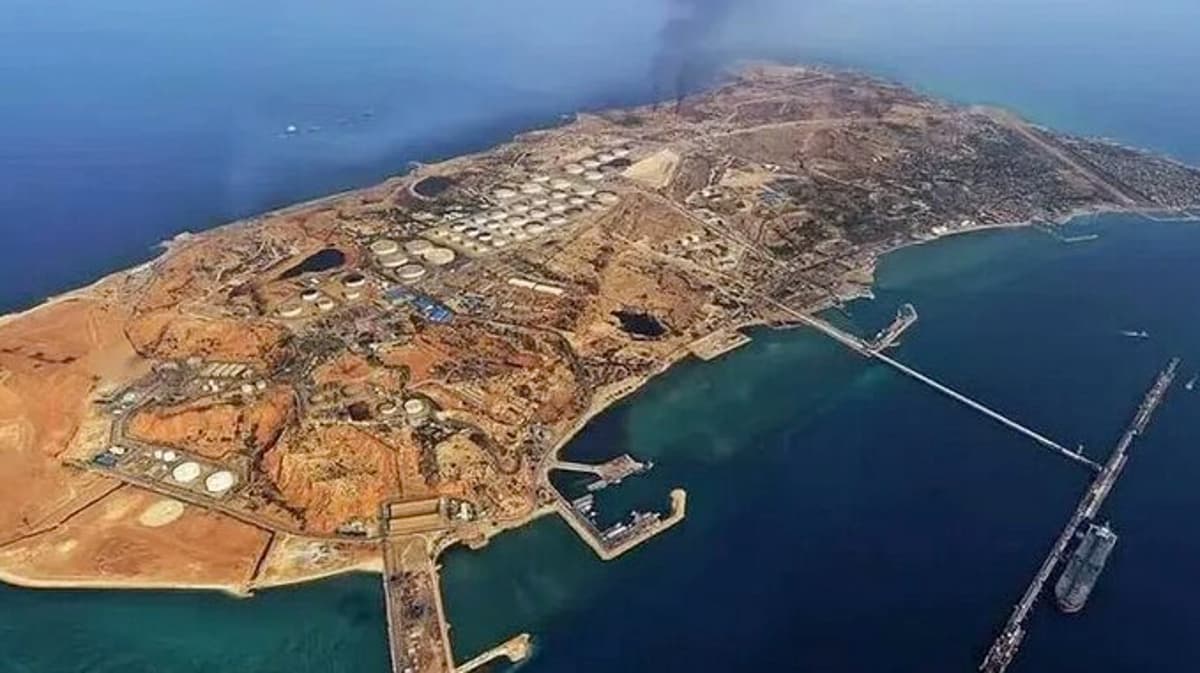
US Will Take and Keep Kharg Island Before War Is Over
•March 10, 2026

0
Key Takeaways
- •Kharg Island processes up to 7 million barrels daily
- •US proposal envisions permanent naval base on island
- •Iran's Revolutionary Guard derives half oil revenue there
- •Control could limit Iran's missile and naval expansion
Summary
The article argues that the United States should seize Iran’s Kharg Island, a strategic oil export hub handling up to 7 million barrels per day, and convert it into a permanent naval, marine, and special‑operations base. By establishing a fortified presence, the U.S. would gain direct overwatch of the Strait of Hormuz and prevent Iran from expanding its navy or missile facilities. The piece links this move to broader geopolitical leverage against Iran, China, and Russia, citing potential economic blackmail if Iran acquired nuclear weapons. It frames the operation as a lower‑cost alternative to a protracted conflict.
Pulse Analysis
Kharg Island, situated in the Persian Gulf, is Iran’s primary oil export terminal, capable of loading up to seven million barrels per day. Its strategic location near the Strait of Hormuz makes it a linchpin for global energy flows, and the island’s infrastructure supports a significant portion of the Revolutionary Guard’s financing. Understanding the island’s operational capacity provides insight into why any shift in control could reverberate through global oil markets and regional security calculations.
A U.S. foothold on Kharg would transform the island into a forward operating base, offering persistent surveillance and rapid response capabilities. Such a presence could deter Iran’s naval expansion, restrict missile development, and disrupt the so‑called “ghost fleet” that moves sanctioned crude to China and other partners. By establishing a fortified perimeter, the United States would also gain leverage in diplomatic negotiations, potentially reshaping power dynamics with Russia and China, who monitor Gulf activities closely.
However, the proposal carries significant risks. Military occupation could provoke retaliatory strikes, destabilize the already volatile Gulf region, and invite international legal challenges. Moreover, the economic fallout from disrupting Iran’s oil exports might trigger higher global oil prices, affecting energy‑dependent economies worldwide. Policymakers must weigh the strategic advantages against the potential for escalation, ensuring that any action aligns with broader U.S. objectives of maintaining stability while curbing nuclear proliferation.
Comments
Want to join the conversation?