Vector Reverberations: Challenging the New Great Game in Conflicts’ Live Laboratory
Key Takeaways
- •US base closures reduce direct military presence in Central Asia.
- •China, Russia, Iran, and Turkey supply drones to regional states.
- •Middle Corridor offers alternative trade route but lacks infrastructure.
- •Multivectorism shifts power from territorial control to network connectivity.
Pulse Analysis
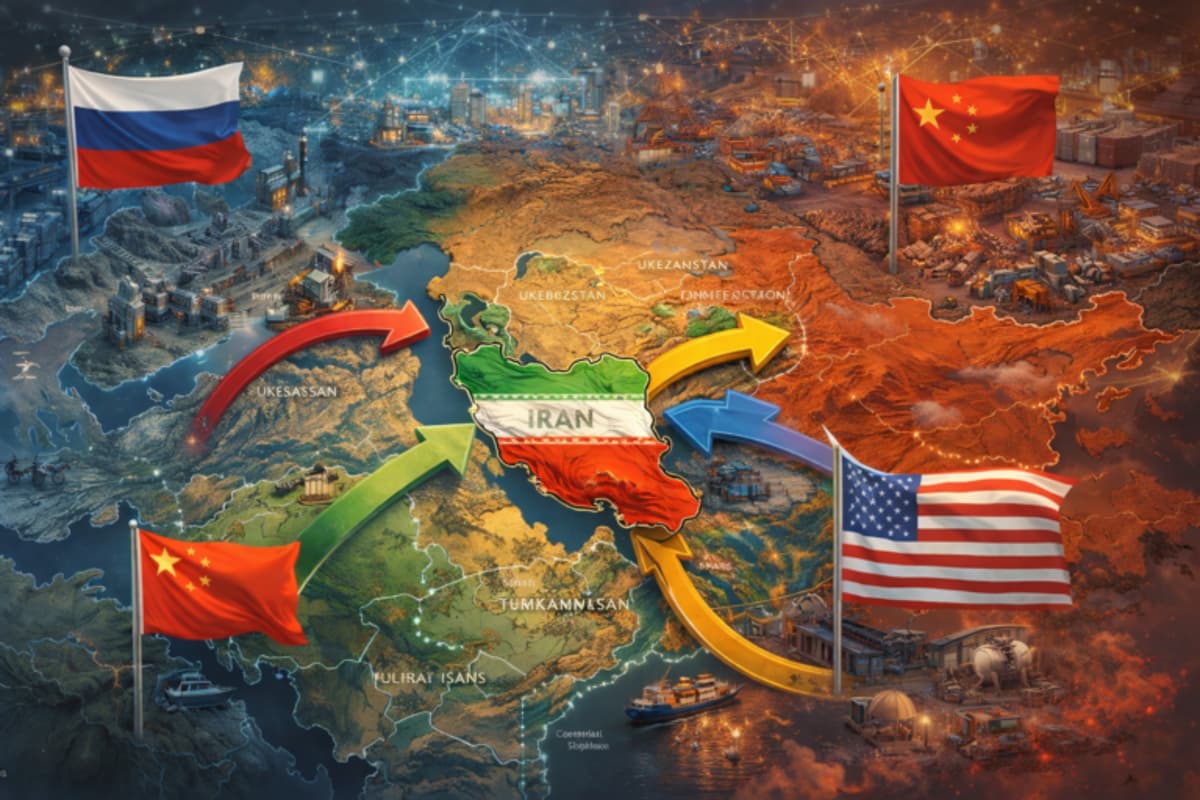
The geopolitical landscape of Central and Southwest Asia is undergoing a structural transformation. Traditional analyses that frame the region as a binary contest among Russia, China, and the United States overlook the rise of multivector foreign policies, where middle powers like Kazakhstan, Uzbekistan, and Tajikistan juggle overlapping interests. The ongoing conflict in Iran serves as a live laboratory, exposing how these states leverage security, trade, and technology ties to multiple patrons, thereby diluting the zero‑sum logic of the classic New Great Game.
Economic and security vectors now intersect in ways that redefine influence. The United States’ withdrawal of bases from Uzbekistan and Kyrgyzstan has left a vacuum that China and Russia readily fill with military deployments and drone technology transfers. Simultaneously, initiatives such as the Trans‑Caspian Middle Corridor aim to bypass the Strait of Hormuz, yet they suffer from inadequate infrastructure and limited air‑defense capabilities. Drone proliferation—spearheaded by Iran, Turkey, China, and Russia—offers cost‑effective firepower but also binds recipient states to the supply chains of their providers, creating a web of interdependence that blurs traditional alliance lines.
For decision‑makers, the implication is clear: success will depend on navigating a fluid network rather than confronting a static set of rivals. Investors should monitor infrastructure projects and defense procurement trends as proxies for shifting alignments, while policymakers need to craft engagement strategies that provide credible, multilateral incentives rather than unilateral guarantees. As the region’s agency diffuses, the next decade will likely see power redistributed through connectivity, technology, and trade, demanding adaptive approaches that can operate within a complex, ever‑evolving system.
Vector Reverberations: Challenging the New Great Game in Conflicts’ Live Laboratory
Comments
Want to join the conversation?