War Without a Theory of Victory: How the United States Lost the Strategic Thread in Iran
Key Takeaways
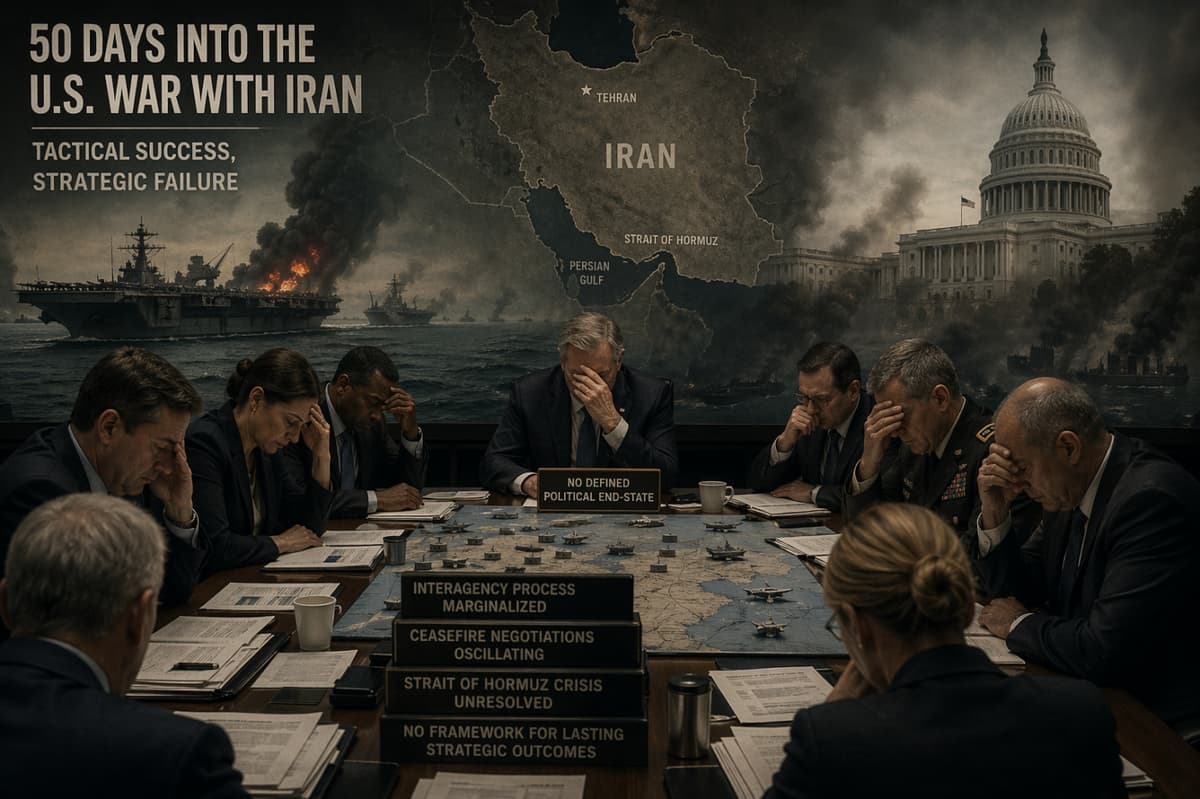
- •Operation Epic Fury destroyed key nuclear sites and killed Iran’s supreme leader
- •US lacked a pre‑defined political end‑state before launching strikes
- •Interagency coordination was sidelined, weakening diplomatic and economic response
- •Strait of Hormuz closures exposed gaps in economic impact forecasting
- •Restoring NSC’s honest‑broker role is essential for future strategic success
Pulse Analysis
The Iran war illustrates a classic strategic paradox: superior firepower does not guarantee lasting peace when the political objectives are vague. Operation Epic Fury achieved its immediate kinetic goals, but the absence of a pre‑war theory of victory left policymakers scrambling to define what a "win" actually looks like. This gap has manifested in contradictory public statements, a ceasefire negotiated through third‑party intermediaries, and a volatile Strait of Hormuz that continues to threaten global oil markets. By neglecting the DIME framework—Diplomatic, Information, Military, Economic—Washington has allowed the conflict to spill over into the domestic economy, driving gasoline prices above $4 per gallon and stoking inflation.
A functional interagency process, anchored by the National Security Council, is designed to synthesize the expertise of State, Defense, Treasury, Energy, and intelligence agencies into a coherent strategy. When that process is bypassed, as the internal accounts cited in the article reveal, critical economic forecasts are treated as secondary, and diplomatic contingencies remain under‑developed. The resulting strategic drift erodes credibility with allies and emboldens adversaries who perceive U.S. action as reactive rather than purposeful. Restoring the NSC’s role as the honest broker can re‑introduce rigorous red‑team analysis, scenario planning, and a sequenced post‑kinetic roadmap that aligns military pressure with diplomatic offers and economic incentives.
Looking ahead, the United States must articulate a concrete political end‑state—whether it be a constrained nuclear posture, a reconfigured regional alignment, or a verifiable compliance framework—and embed that vision within a multi‑instrument strategy. Only by integrating diplomatic outreach, information campaigns, and calibrated economic levers can the fleeting tactical advantages be cemented into durable strategic outcomes. The lesson from Iran is clear: victory is not measured by the number of targets struck, but by the ability to shape the adversary’s future behavior in alignment with U.S. interests.
War Without a Theory of Victory: How the United States Lost the Strategic Thread in Iran
Comments
Want to join the conversation?