
Washington Post Quotes Official About “Fresh Scrutiny” Over Israel’s Nuclear Threat
Key Takeaways
- •Washington Post cites admin official on rising scrutiny of Israel's nuclear arsenal
- •House Democrats urge Trump to address Israel's undeclared nuclear capabilities
- •Scenario discussed: Israel might use nuclear weapons if air defenses overwhelmed
- •Congressional letter proposes legislative fixes for non‑proliferation exemptions
- •Experts compare Israel's program to British and French, not North Korean
Pulse Analysis
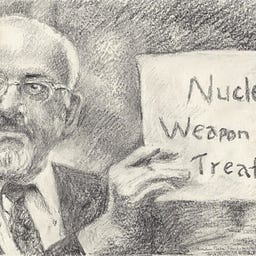
The United States has long maintained a policy of strategic ambiguity regarding Israel’s nuclear capabilities, a stance rooted in Cold‑War calculations and close bilateral ties. While Israel never officially confirms its arsenal, declassified documents and expert research suggest a program that rivals early British and French nuclear forces. This opacity complicates U.S. non‑proliferation obligations, especially as the Nuclear Non‑Proliferation Treaty (NPT) framework expects transparency from nuclear‑armed states. Recent scholarly work underscores that Israel’s deterrent is more sophisticated than previously acknowledged, raising questions about the adequacy of existing U.S. oversight mechanisms.
Political pressure is now mounting in Washington. A Washington Post article highlighted an administration official’s warning that a scenario in which Israel’s air‑defense shield is saturated by missile attacks could trigger a nuclear response. House Democrats, seeking to pressure President Trump, have publicly demanded answers about Israel’s undeclared weapons. The discourse reflects broader anxieties about a potential escalation in the Gaza‑Israel theater, where civilian casualties could prompt extreme retaliation. Analysts argue that even the perception of a nuclear option reshapes regional calculations, prompting neighboring states to reconsider their own defense postures.
In response, congressional leaders have drafted a letter to Senator Marco Rubio, proposing legislative remedies to close loopholes that have historically exempted Israel, India and Pakistan from U.S. non‑proliferation statutes. Such measures could involve tightening the Hyde Act waivers or mandating stricter reporting requirements. If enacted, these steps would signal a shift toward greater accountability, potentially influencing U.S. aid packages and diplomatic leverage. Ultimately, the debate underscores the delicate balance between strategic partnership with Israel and the United States’ broader commitment to a non‑proliferation regime.
Washington Post Quotes Official About “Fresh Scrutiny” Over Israel’s Nuclear Threat
Comments
Want to join the conversation?