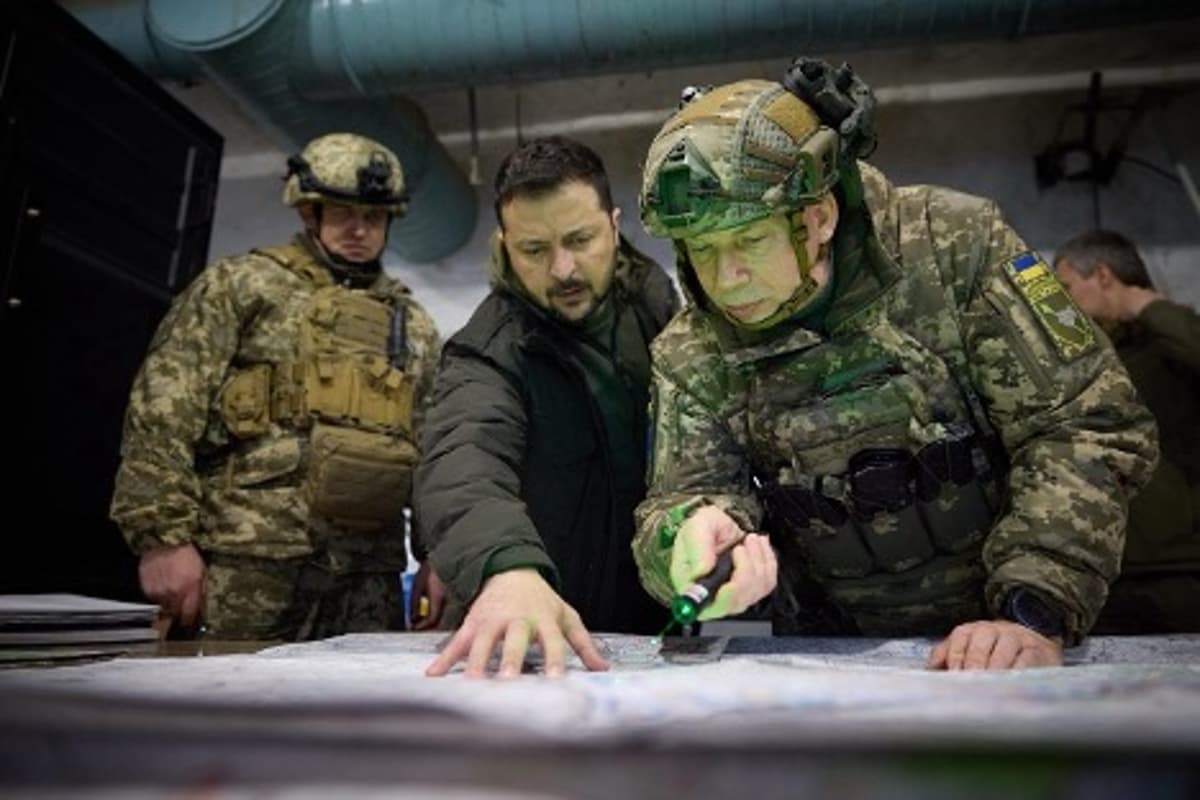
What I Learned From Being a Planner in an Advisory Command: Reflections From the Security Assistance Group – Ukraine
Key Takeaways
- •Advisory planning involves U.S., partner, and adversary actors
- •Mission analysis time rose to 50% of planning
- •FAOs provided critical cultural and language insights
- •Planners adopted design thinking and red teaming methods
- •Scenario range narrowed to success, failure, likely outcomes
Pulse Analysis
The Security Assistance Group‑Ukraine (SAG‑U) was created in late 2022 to coordinate training, equipment deliveries, and broader security assistance for Kyiv. Unlike conventional combat commands, SAG‑U operated without direct authority over Ukrainian units, forcing planners to juggle three distinct perspectives: U.S. strategic intent, Ukrainian operational realities, and Russian threat dynamics. This triadic environment exposed gaps in traditional processes such as the Military Decision‑Making Process (MDMP), which assume a clear friendly‑enemy dichotomy, and demanded a more nuanced, partner‑focused approach.
To bridge those gaps, the staff assembled an ad‑hoc Operational Planning Team that blended intelligence (J2), operations (J3), and planning (J5) expertise. A key breakthrough was the elevation of mission analysis to roughly 50% of the planning cycle, allowing deeper assessment of Ukrainian doctrine, leadership styles, and risk tolerance. Foreign Area Officers supplied vital cultural and linguistic context, preventing the common pitfall of "mirror imaging" where U.S. assumptions are projected onto partners. The team also infused design‑thinking frameworks and red‑team exercises, generating a broader set of options and three core scenarios—success, failure, and most likely outcome—rather than overly detailed single‑track plans.
The lessons from SAG‑U have broader implications for U.S. security assistance worldwide. By prioritizing partner analysis, embracing interdisciplinary planning cells, and adopting flexible scenario‑based thinking, future advisory commands can deliver more relevant advice, align equipment deliveries with actual needs, and anticipate partner risk appetites. As the Ukrainian conflict demonstrates, the ability to adapt planning processes to a multi‑actor context can translate into tangible battlefield impact, reinforcing the strategic value of well‑crafted advisory operations in contested environments.
What I Learned from Being a Planner in an Advisory Command: Reflections from the Security Assistance Group – Ukraine
Comments
Want to join the conversation?