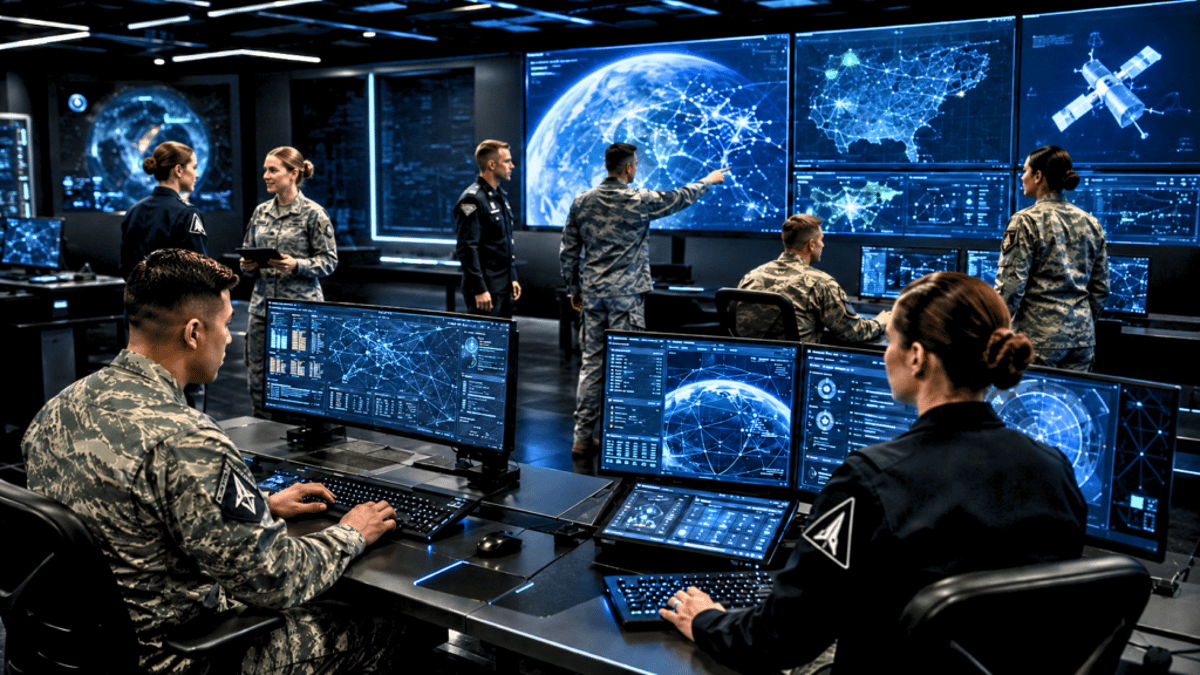
Why the “First AI War” Is Still a Human Struggle
Key Takeaways
- •AI accelerates targeting cycle but does not replace human decision‑makers.
- •Human reviewers still must validate intelligence, legal compliance, and strategic risk.
- •Data quality determines AI recommendation reliability; outdated intel caused civilian casualties.
- •Doctrinal guidance (e.g., Directive 3000.09, FM 3‑60) mandates commander authority.
- •Overreliance on AI can compress judgment into groupthink, increasing error risk.
Pulse Analysis
The integration of artificial intelligence into modern combat has fundamentally altered the tempo of the targeting cycle. Systems that ingest massive streams of ISR, signals intelligence, and behavioral data can produce actionable target packages at machine speed, compressing what once took weeks into minutes. This capability, exemplified by tools like Anthropic’s Claude and Palantir’s Maven Smart System, enhances situational awareness and allows commanders to allocate resources more efficiently, but it also places unprecedented pressure on the decision‑making process.
Despite the rapid data processing, the ultimate authority to strike remains with human operators. U.S. directives such as Directive 3000.09 and Army Field Manual 3‑60 explicitly require commanders to retain final approval, ensuring that legal, moral, and strategic considerations are weighed. The 2026 incident in Minab, where a missile hit an elementary school, underscores that AI recommendations are only as reliable as the underlying intelligence. Human analysts must rigorously verify data, conduct legal reviews, and assess risk before authorizing lethal force, preserving accountability and compliance with the laws of armed conflict.
The broader implication for defense establishments is the need to evolve doctrine that safeguards human judgment amid accelerating AI assistance. Overreliance on algorithmic outputs can foster groupthink, where operators accept probabilistic recommendations without sufficient challenge. To mitigate this, militaries should embed robust validation protocols, continuous training on AI limitations, and clear lines of responsibility that prioritize human discretion over machine certainty. Balancing speed with scrutiny will determine whether AI serves as a force multiplier or a source of unintended escalation in future conflicts.
Why the “First AI War” is Still a Human Struggle
Comments
Want to join the conversation?