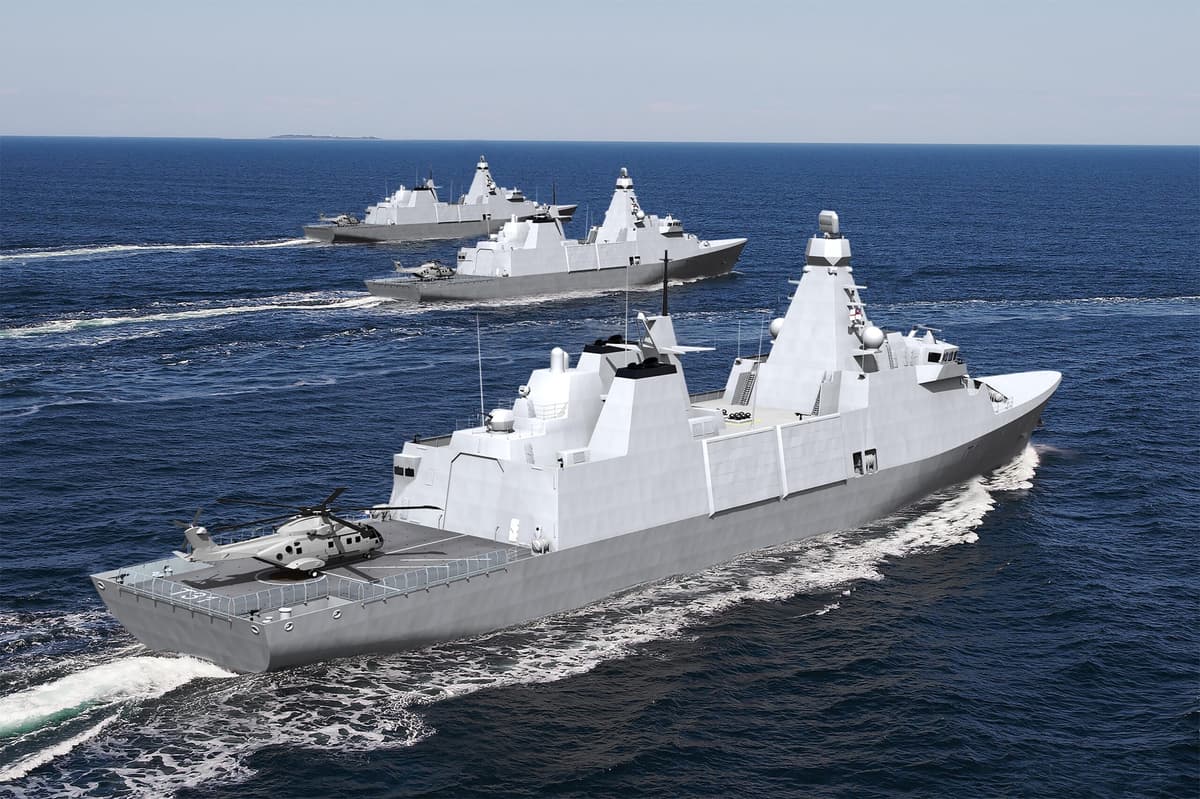
Key Takeaways
- •Type 31 uses proven Arrowhead 140 hull, reducing development risk.
- •Modular mission bay fits containers, enabling anti‑sub, mine, disaster roles.
- •Planned upgrade adds 32‑cell Mk 41 launcher for Tomahawk missiles.
- •Export sales to Poland, Indonesia, potential Denmark order boost program.
- •Program cost £250 m per hull (~$318 m), equipment funded separately.
Pulse Analysis
The Type 31 frigate represents a pragmatic shift in British naval procurement, favouring a mature, off‑the‑shelf hull over risky, bespoke designs. By basing the ship on the Arrowhead 140—derived from Denmark’s Iver Huitfeldt class—Babcock delivers a vessel with a known performance envelope, shortening development timelines and curbing cost overruns. The modest crew requirement of roughly one hundred personnel, combined with ample internal volume, gives the platform a high degree of growth potential, allowing the Royal Navy to install new weapons, sensors or autonomous systems without a major redesign.
Flexibility is baked into the Type 31’s architecture through its mission bay, which accommodates standard shipping containers, and its expansive flight deck and boat bays. This modularity lets a single hull switch between anti‑submarine warfare, mine counter‑measures, maritime security and humanitarian assistance within weeks, a capability the navy deems essential as it pursues the “Hybrid Navy” concept. The planned insertion of a 32‑cell Mk 41 vertical launch system will transform the frigate into a Tomahawk‑capable strike platform, ensuring the ship remains relevant throughout its projected 30‑year service life.
Export interest validates the design’s commercial viability. Poland’s Miecznik programme, Indonesia’s locally built Arrowhead 140, and a potential £1 billion (~$1.27 billion) order from Denmark illustrate a growing market for a cost‑effective, interoperable frigate. The programme’s headline cost of £250 million per hull (~$318 million) covers only the bare platform; radar, combat systems and weapons are funded separately by the Ministry of Defence, a budgeting approach that keeps the headline figure transparent while still delivering a capable warship. As the Royal Navy phases out ageing Type 23s, the Type 31’s adaptability and export appeal position it as a cornerstone of the UK’s maritime future.
Why the Type 31 frigate suits a modern navy
Comments
Want to join the conversation?