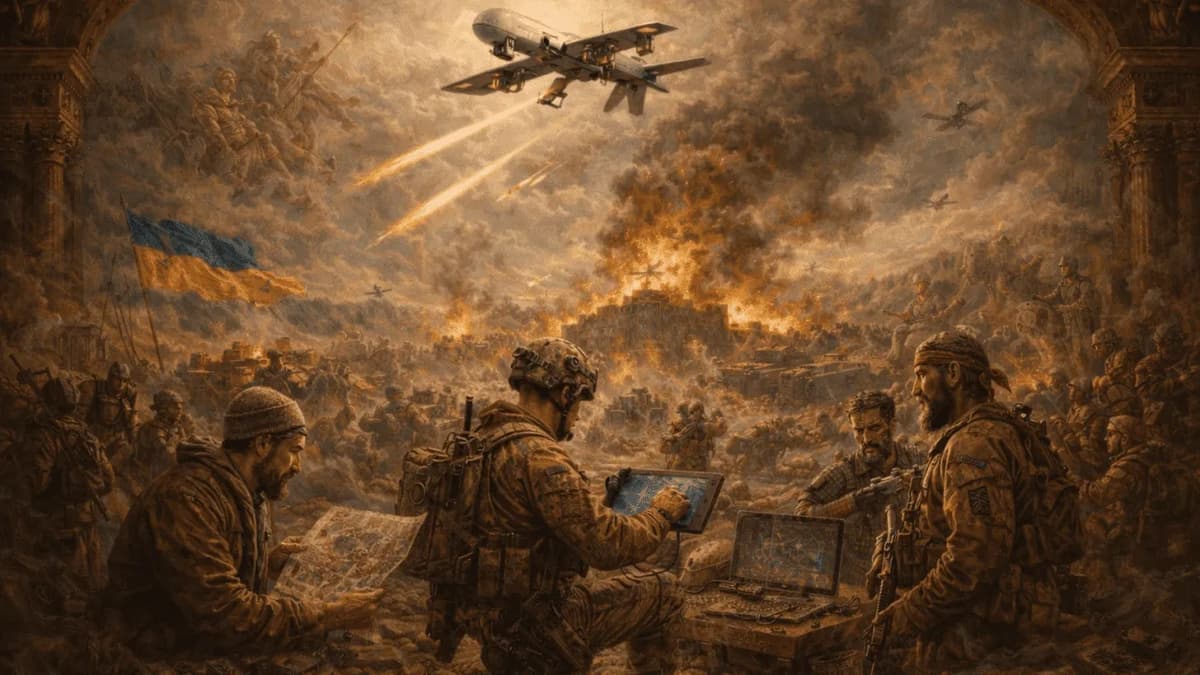
Key Takeaways
- •Conflict now fought in cognitive, not just kinetic, domain
- •Influence operations central to hybrid warfare strategies
- •Social media, AI amplify narrative battles
- •Ethical risks include manipulation and epistemic instability
- •Resilience and alliance cohesion essential for future campaigns
Summary
Dr. Joseph Long argues that modern conflict has migrated from kinetic battles to the cognitive domain, where perception and narrative shape political outcomes. Influence operations—spanning strategic communication, cyber messaging, and economic statecraft—now sit at the core of hybrid warfare designs. Social media fragmentation, disinformation, and AI intensify the contest for narrative dominance, while lethal force remains valuable only when it reinforces credibility. Long warns that expanding warfare into belief systems raises ethical challenges and calls for resilient, alliance‑wide approaches.
Pulse Analysis
The rise of cognitive warfare reflects a fundamental shift in how power is projected. Traditional mass‑destruction models are giving way to contests over perception, where real‑time interpretation of events can sway elections, trade deals, and coalition dynamics. This transition forces militaries and policymakers to integrate influence tools—strategic communication, psychological operations, and cyber‑enabled messaging—into the core of campaign planning, treating narrative control as a force multiplier rather than an ancillary activity.
Hybrid warfare now blends kinetic strikes with sophisticated information operations, leveraging fragmented social media ecosystems and AI‑driven content creation. Disinformation campaigns can erode public trust faster than conventional attacks, while algorithmic amplification magnifies both state‑sponsored and organic narratives. As adversaries exploit these digital channels, the battlefield expands beyond physical borders, demanding new doctrines that prioritize speed, credibility, and adaptability in the information environment.
The ethical dimension of cognitive conflict cannot be ignored. Manipulating beliefs risks crossing into propaganda, surveillance overreach, and epistemic instability, potentially destabilizing democratic institutions. Long’s call for integrated national strategies emphasizes building societal resilience, enhancing media literacy, and strengthening alliance coordination. Policymakers must balance persuasive power with normative safeguards to ensure that influence operations support legitimate objectives without undermining the very values they aim to protect.
Comments
Want to join the conversation?