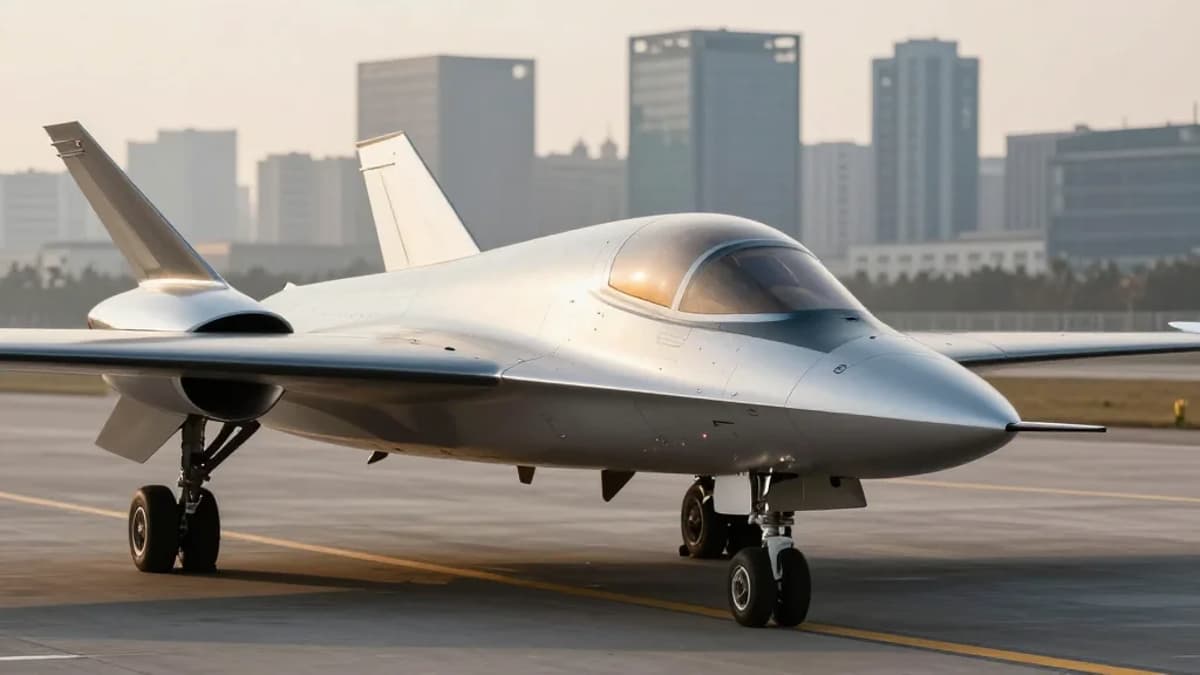
With World Seemingly At War, DARPA Finds Time To Unveil The X-76
•March 10, 2026
0
Key Takeaways
- •X‑76 targets 400+ knot cruise with VTOL capability
- •Critical Design Review cleared; production now begins
- •Bell Textron leads manufacturing under DARPA‑SPRINT
- •Designed for austere, unprepared surface operations
- •Enhances US rapid‑reinforcement and surprise options
Summary
DARPA announced the X‑76, an experimental aircraft built by Bell Textron that promises jet‑like speeds above 400 knots while retaining helicopter‑style runway independence. The program, run with U.S. Special Operations Command under the SPRINT initiative, has cleared its Critical Design Review and is moving into manufacturing and ground testing. Designed to hover in austere environments and operate from unprepared surfaces, the X‑76 aims to give U.S. forces rapid‑reinforcement and surprise capabilities. Its debut coincides with heightened geopolitical tension from Operation Epic Fury against Iran, suggesting strong defense funding support.
Pulse Analysis
Amid escalating conflict in the Middle East, DARPA’s unveiling of the X‑76 underscores the agency’s ability to push cutting‑edge technology even during wartime. The aircraft blends the high‑speed performance of a fixed‑wing jet with the vertical lift and runway‑free operation of a helicopter, addressing a long‑standing trade‑off in military aviation. By achieving cruise speeds above 400 knots while maintaining hover capability, the X‑76 promises to deliver rapid strike and extraction options in contested or remote theaters, where traditional airfields are scarce or compromised.
Technically, the X‑76 is the latest product of the SPRINT (Strategic Precision Rapid‑Insertion, Navigation, and Transport) program, a joint effort between DARPA and U.S. Special Operations Command. After passing the Critical Design Review, the program has entered the manufacturing phase, with Bell Textron tasked with integration, assembly, and ground testing. Its design emphasizes ruggedness, allowing operations from unprepared surfaces such as desert pads, ship decks, or improvised clearings. The aircraft’s VTOL capability, combined with a cruise envelope that rivals conventional jets, could provide special‑operations forces unprecedented mobility, enabling swift reinforcement, surprise attacks, and rapid evacuation without the logistical footprint of traditional runways.
The X‑76’s progress carries significant market implications. Defense firms stand to benefit from increased war‑time budgets, while the broader aerospace sector may see a shift toward hybrid VTOL platforms that blur the line between helicopters and jets. If successful, the X‑76 could set a new benchmark for future combat aircraft, prompting competitors to accelerate similar programs. Strategically, the United States gains a versatile tool that enhances power projection and operational resilience, potentially altering the calculus of rapid‑deployment missions in any future conflict.
Comments
Want to join the conversation?