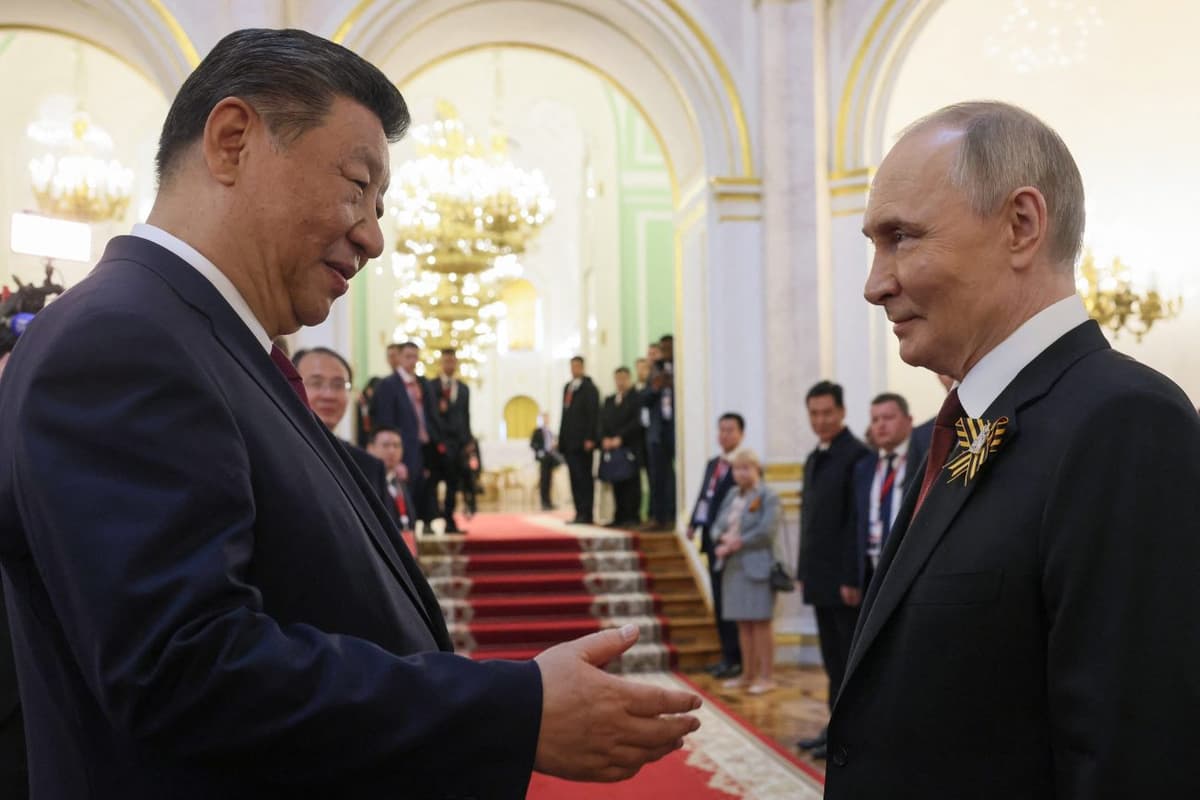
1st Time in History — U.S. Faces Double Nuclear Threat From China & Russia as Trump Threatens NATO Exit
Why It Matters
Deterring two nuclear powers while questioning NATO’s cohesion threatens the core of U.S. collective security and could reshape transatlantic defense dynamics. A NATO pull‑back would force Washington to rethink force posture and alliance commitments worldwide.
Key Takeaways
- •US must deter Russia and China nuclear arsenals simultaneously
- •Trump threatens NATO withdrawal, citing lack of support in Iran war
- •Spain, Turkey, Italy, France, Germany opposed US Iran operation
- •Eastern European allies pledged stronger backing for US stance
- •Around 84,000 US troops in Europe could be repositioned
Pulse Analysis
The United States is confronting an unprecedented strategic dilemma: it must simultaneously deter the nuclear capabilities of both Russia and China. This dual‑deterrence requirement forces the Pentagon to stretch resources, accelerate modernization, and deepen coordination with allies. The shift marks a departure from the post‑Cold War era when the U.S. primarily focused on a single great‑power nuclear rival, prompting a reassessment of missile defense, early‑warning systems, and conventional force integration.
Compounding the security challenge, President Donald Trump’s rhetoric about exiting NATO has intensified internal alliance friction. By branding NATO a "paper tiger" and threatening to pull U.S. forces from Europe, Trump is pressuring European capitals to demonstrate tangible support for American initiatives, such as the recent Iran operation. The public opposition from Spain, Turkey, Italy, France and Germany underscores a growing divergence over U.S. foreign‑policy priorities, while Eastern European members like Poland and the Baltic states double‑down on backing Washington, highlighting the alliance’s uneven commitment landscape.
If the administration follows through on troop redeployments, the roughly 84,000 U.S. service members stationed across Europe could be relocated to nations that have shown alignment with Washington’s objectives. Such a move would reshape the continent’s security architecture, potentially weakening deterrence against Russian aggression in Eastern Europe while signaling a more conditional U.S. partnership. The broader implication is a possible recalibration of NATO’s collective defense doctrine, forcing both the United States and its allies to negotiate new burden‑sharing formulas and strategic priorities in an increasingly multipolar world.
1st Time in History — U.S. Faces Double Nuclear Threat From China & Russia as Trump Threatens NATO Exit
Comments
Want to join the conversation?
Loading comments...