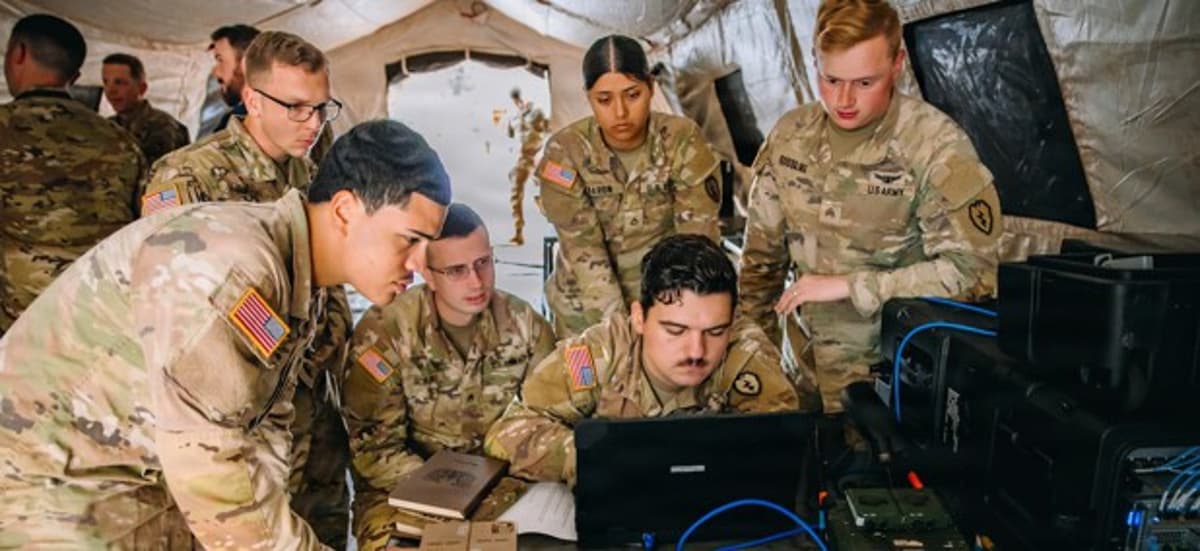
25th ID Helping the Army Smooth Out the Wrinkles in Its Next-Generation C2
•February 26, 2026
0
Why It Matters
Streamlining data flow and automating connectivity cuts manual workload and accelerates battlefield decision‑making, giving commanders a decisive edge in contested environments.
Key Takeaways
- •Lightning Surge exercises test NGC2 data integration
- •Palantir app now filters data objects for soldiers
- •Automation targets satellite path selection and classified handling
- •Goal: <4‑minute kill chain from detection to impact
- •Lockheed‑Martin partnership accelerates engineering updates
Pulse Analysis
The Army’s push for a unified command‑and‑control platform reflects a broader shift toward data‑centric warfare. Traditional battlefield systems—intelligence, surveillance, targeting, and logistics—have operated in isolated pockets, forcing commanders to piece together fragmented pictures. By leveraging Palantir’s analytics engine and Lockheed Martin’s integration expertise, the Lightning Surge series provides a live laboratory where developers can iterate on real‑world data streams. This collaborative model not only validates software under combat‑like conditions but also shortens the feedback loop between end‑users and vendors, a critical factor for rapid capability fielding.
Automation sits at the heart of the next development phase. Soldiers currently juggle separate terminals for classified and unclassified information, a process described as a "swivel chair" that drains time and energy. The new Palantir application introduces granular data filtering, while upcoming tools will automatically route information based on security classification. Simultaneously, the system is being engineered to sense the optimal satellite link—public or private 5G, GEO, or LEO—and switch without human intervention. These self‑sensing, self‑determining capabilities promise to eliminate manual re‑configuration, ensuring continuous, high‑bandwidth connectivity across the division.
The strategic payoff is a dramatically compressed kill chain. Maj. Gen. John Bartholomees cites a target of less than four minutes from electronic‑warfare detection to weapon impact, even against an unknown adversary. Achieving this tempo requires seamless data fusion, rapid classification handling, and resilient communications—all hallmarks of the NGC2 vision. Success in Lightning Surge 3 will signal to the defense industry that modular, AI‑driven C2 solutions are viable at scale, potentially reshaping procurement priorities and accelerating the adoption of similar platforms across joint services.
25th ID helping the Army smooth out the wrinkles in its next-generation C2
0
Comments
Want to join the conversation?
Loading comments...