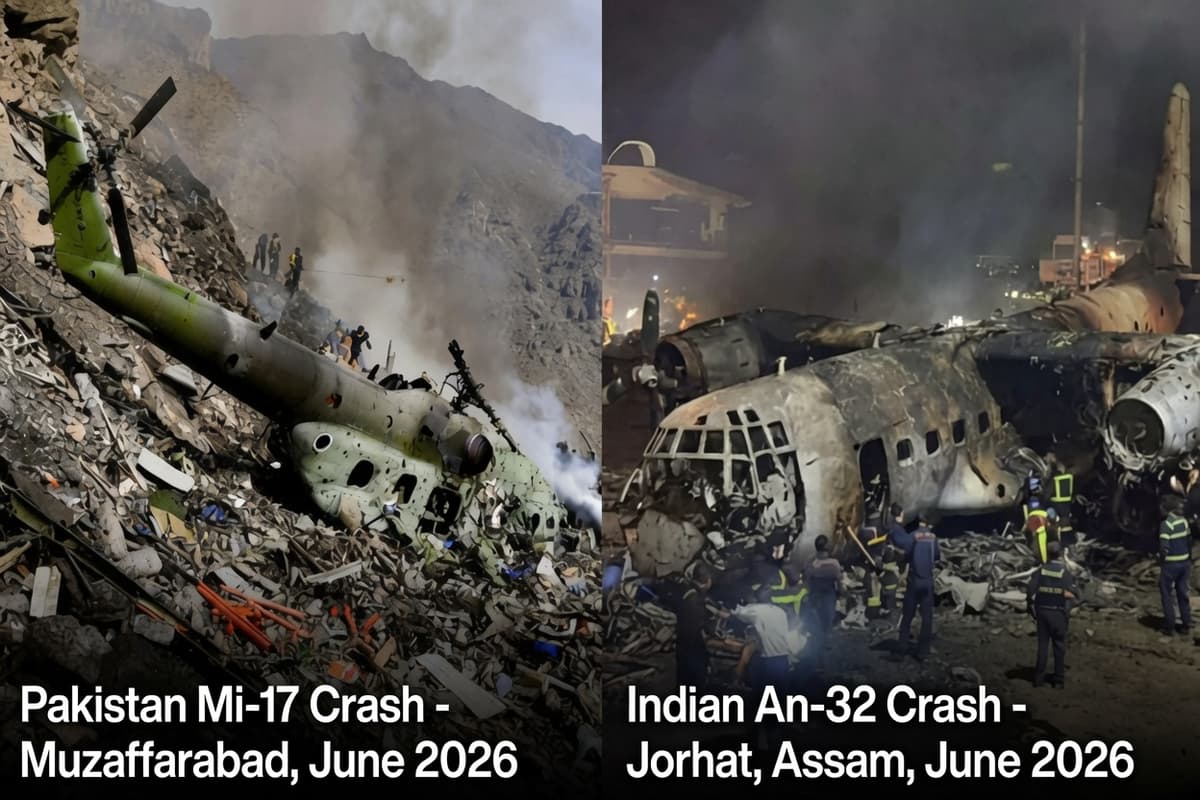
27 Dead in Back-to-Back Crashes of Russian-Origin Aircraft in Pakistan & India. Aging Fleets Raise Safety Concerns
Why It Matters
The crashes expose the operational risk of relying on outdated Soviet‑origin aircraft, prompting South Asian militaries to reassess modernization timelines and procurement priorities.
Key Takeaways
- •Pakistan Mi-17 crash killed 22 soldiers, technical fault cited.
- •India An-32 crash killed 5 aircrew, fire erupted on landing.
- •Soviet-era fleets exceed 40‑50 years, facing structural fatigue.
- •Sanctions limit spare parts, accelerating maintenance woes for Antonov, Mi‑17.
Pulse Analysis
The twin tragedies in Pakistan and India underscore how legacy platforms can become liabilities in high‑intensity environments. The Mi‑17 loss occurred in mountainous Kashmir, a region where rapid response is essential, while the An‑32 crash unfolded on a routine cargo sortie at an Indian airbase. Both aircraft, designed during the Cold War, are still central to transport and logistics missions, yet their age and the demanding terrain amplify the consequences of any mechanical fault.
Aging Soviet‑era airframes face a perfect storm of structural fatigue, outdated avionics, and dwindling supply chains. Western sanctions imposed after 2022 have choked access to original spare parts for Ukrainian‑built Antonov models, forcing operators to resort to cannibalization or reverse‑engineered components. Maintenance depots report longer turnaround times and compromised quality, especially for airframes that have logged 40‑50 years of service. The high sortie rates demanded by ongoing conflicts in the region further stress these aircraft, increasing the probability of catastrophic failures.
For defense planners in Pakistan, India, and neighboring states, the incidents serve as a catalyst for accelerated fleet renewal. Modern rotary‑wing and fixed‑wing platforms offer improved reliability, digital flight controls, and better support ecosystems, reducing both operational risk and long‑term costs. However, procurement cycles are lengthy and budget constraints tight, meaning a phased transition is likely. In the interim, enhanced inspection regimes and targeted upgrades to critical systems could mitigate immediate safety concerns while the broader modernization agenda takes shape.
27 Dead in Back-to-Back Crashes of Russian-Origin Aircraft in Pakistan & India. Aging Fleets Raise Safety Concerns
Comments
Want to join the conversation?
Loading comments...