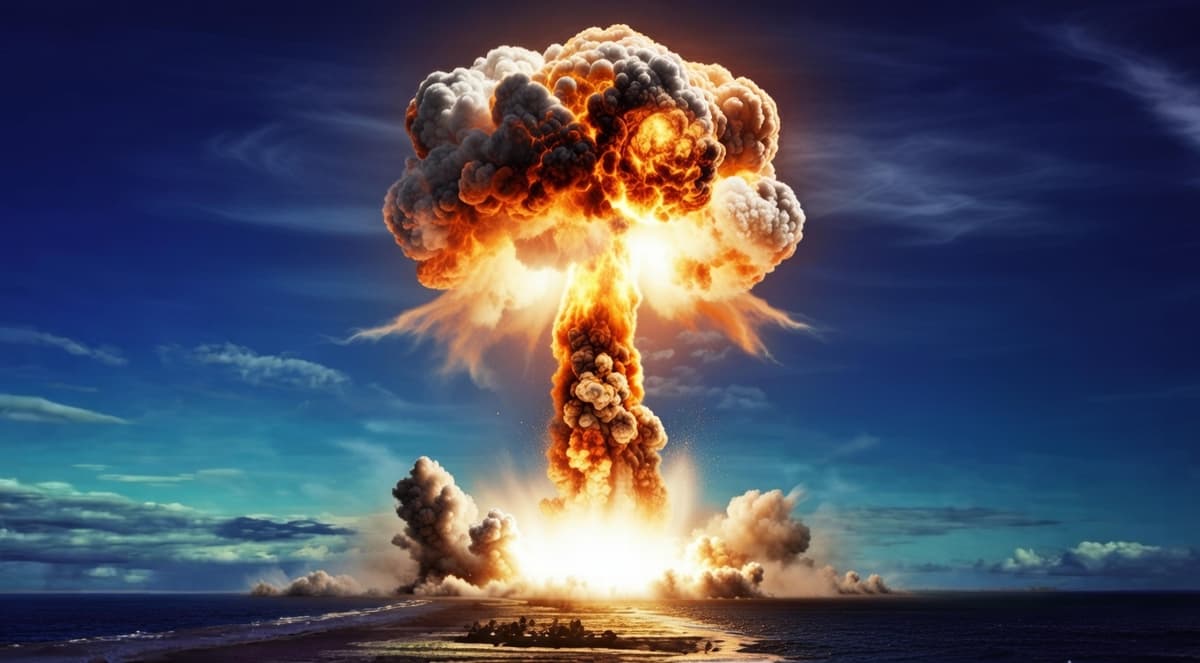
4X Hiroshima Blast: How U.S. Humiliation at Suez Forced France To Go Nuclear with “Gerboise Bleue”
•February 15, 2026
0
Why It Matters
The decision cemented France’s independent nuclear posture, reshaping NATO dynamics and influencing today’s European security debates. It also highlights the long‑term human costs of Cold‑War era testing.
Key Takeaways
- •Suez Crisis humiliation spurred France’s nuclear independence drive
- •Gerboise Bleue yielded 60‑70 kt, four times Hiroshima
- •France achieved full nuclear triad by early 1970s
- •Algerian populations suffered long‑term radiation health impacts
- •Recent French law presumes exposure for test‑zone residents
Pulse Analysis
The 1956 Suez Crisis was a turning point for French defense policy. When the United States forced Britain and France to halt their joint invasion of Egypt, French leaders perceived a stark limitation on their sovereign decision‑making. Charles de Gaulle interpreted the episode as evidence that reliance on American nuclear protection was unreliable, prompting a rapid acceleration of the clandestine atomic program that culminated in the Gerboise Bleue test. This move was not merely about prestige; it was a calculated effort to secure strategic autonomy in a bipolar world where nuclear capability equated to diplomatic leverage.
Gerboise Bleue’s 60‑70 kiloton yield dwarfed the 15‑kiloton bomb dropped on Hiroshima, making it the most powerful first test in history. Between 1960 and 1967 France conducted a series of atmospheric and underground detonations, eventually establishing a complete nuclear triad—air‑launched bombers, land‑based missiles, and submarine‑borne SLBMs—by the early 1970s. The doctrine of “strict sufficiency” ensured that France possessed enough firepower to impose unacceptable costs on any aggressor, reinforcing its position as a sovereign nuclear power independent of NATO’s U.S.-dominated command structure.
The legacy of those tests is starkly visible in the Sahara. Thousands of Algerians lived near the blast sites, often without warning, and have since suffered elevated rates of cancer and other radiation‑related illnesses. France only acknowledged responsibility in 2010, later simplifying compensation through a presumption‑of‑exposure law. The episode underscores how Cold‑War nuclear ambitions can generate enduring humanitarian crises, while also reminding policymakers that strategic autonomy must be balanced against ethical obligations to affected populations.
4X Hiroshima Blast: How U.S. Humiliation at Suez Forced France To Go Nuclear with “Gerboise Bleue”
0
Comments
Want to join the conversation?
Loading comments...