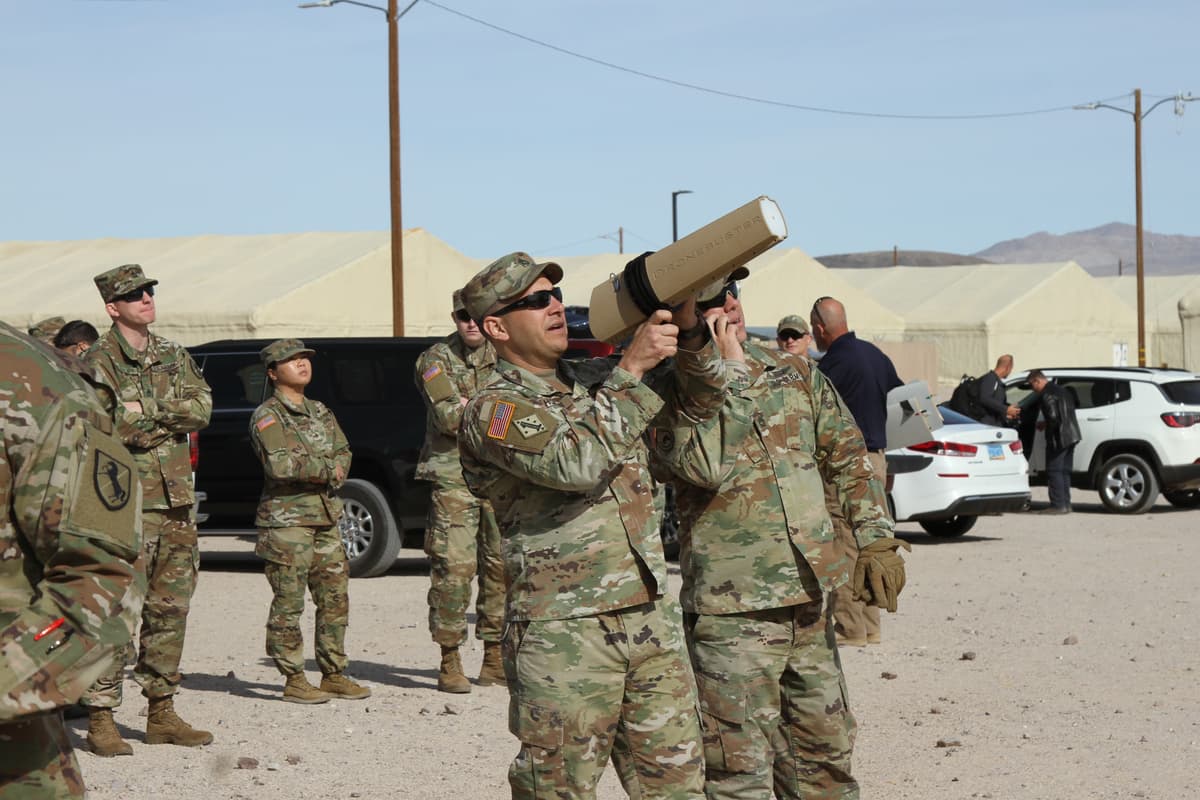
5 US Bases Selected for Anti-Drone Pilot Program
Why It Matters
The program accelerates integration of high‑energy laser and microwave systems into the homeland defense toolkit, enhancing the U.S. ability to neutralize unlawful drones without endangering civilian aircraft.
Key Takeaways
- •Five bases selected for anti‑drone pilot, spanning border and interior sites
- •Program will test high‑energy lasers and microwave systems against rogue UAVs
- •Joint task force aims to finalize deployment plans within 180 days
- •FAA safety assessment cleared directed‑energy tech for civilian airspace
- •Operational rollout expected later this year to bolster homeland defense
Pulse Analysis
The Department of Defense’s Joint Interagency Task Force 401, created under the FY 2026 National Defense Authorization Act, is spearheading a new anti‑drone pilot program to address the growing threat of small, unmanned aircraft. By selecting two border installations—Fort Huachuca, Arizona, and Fort Bliss, Texas—alongside three interior bases, the task force ensures that testing covers a range of operational scenarios, from border security to air‑base protection. This geographic diversity is crucial for validating how directed‑energy systems perform against varied terrain, weather conditions, and mission requirements.
Central to the pilot are high‑energy lasers and high‑powered microwave weapons, technologies that have recently demonstrated safety in joint DoD‑FAA trials at White Sands, New Mexico. Those tests, prompted by earlier safety concerns after CBP’s use of anti‑drone lasers led to temporary airspace closures in El Paso, resulted in a formal safety agreement confirming that the systems pose no risk to commercial aircraft. This regulatory clearance paves the way for broader deployment, allowing the military to integrate these tools into existing counter‑UAS frameworks without disrupting civilian aviation.
If the pilot succeeds, the program could reshape U.S. homeland defense by providing a rapid, low‑collateral‑damage response to rogue drones targeting critical infrastructure or crowds. With deployment plans due within 180 days and operational rollout expected later in 2026, the initiative signals a shift toward scalable, technology‑driven security solutions. Success at the five test sites may prompt expansion to additional bases, establishing a nationwide network capable of deterring unlawful UAV activity across the United States.
5 US bases selected for anti-drone pilot program
Comments
Want to join the conversation?
Loading comments...