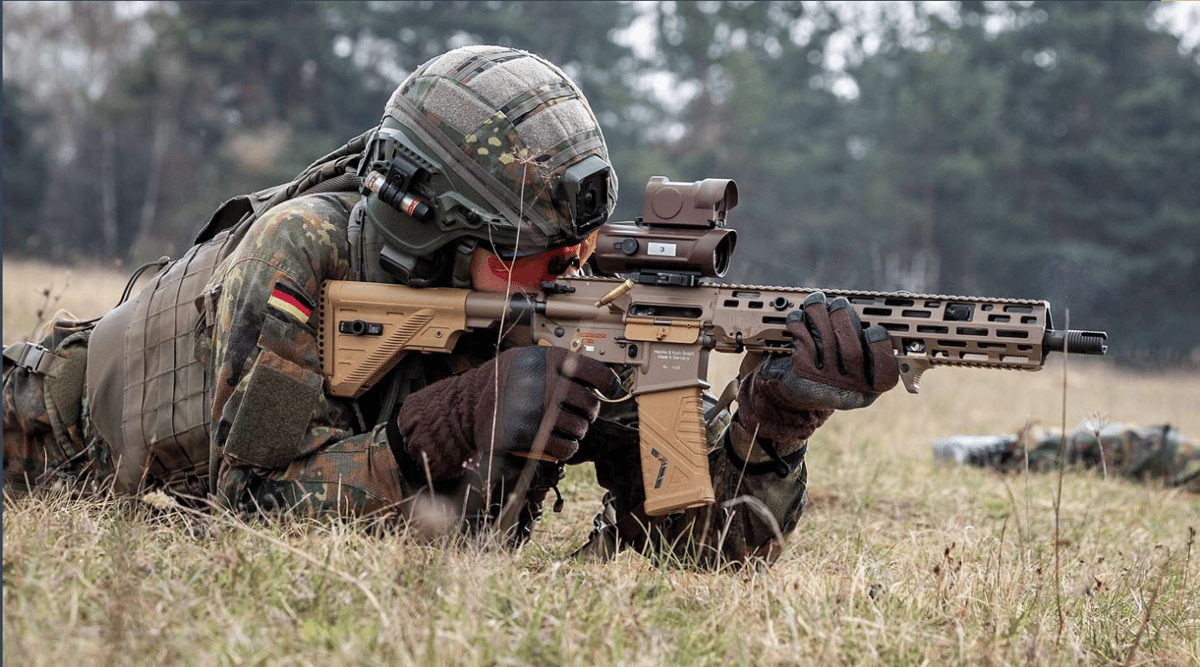
71 Years without a Military Strategy, Germany Just Wrote One
Why It Matters
The plan redefines Germany’s role from a NATO‑dependent force to a potential European defence leader, influencing security calculations of Eastern European allies and the future of transatlantic burden‑sharing.
Key Takeaways
- •Germany releases first standalone Bundeswehr military strategy, 38 pages.
- •Targets 260k active troops, 200k reservists by 2035.
- •Plans permanent Panzerbrigade 45 in Lithuania by 2027.
- •Embraces “One-Theatre Approach” linking NATO, Middle East, Indo‑Pacific.
- •Signals Berlin will lead conventional European defence if US support wanes.
Pulse Analysis
For seven decades Germany relied on NATO‑wide white papers and national security strategies, never publishing a dedicated military doctrine in the Bundeswehr’s own voice. The new “Verantwortung für Europa” breaks that tradition, offering a concise 38‑page roadmap that aligns force‑structure targets with a broader geopolitical vision. By committing to 260,000 active soldiers and 200,000 reservists by 2035, Berlin signals an ambition to field the strongest conventional army in Europe, a stance that would have been politically untenable a few years ago.
The strategy’s most consequential element is its “One‑Theatre Approach,” which treats Europe’s NATO front, the Middle East, and the Indo‑Pacific as interconnected security spaces. This reflects the 2026 U.S. National Defense Strategy’s call for European allies to shoulder primary conventional defence responsibilities while U.S. support becomes more calibrated. By embedding this logic into capability planning, Germany moves from diplomatic framing to operational intent, positioning itself as a potential lead‑nation for European deterrence, especially if American commitment wanes.
Eastern European capitals are reading the document with a mix of optimism and caution. Warsaw will gauge whether German force‑building truly complements its U.S.‑backed deterrent, while Prague and Bratislava worry that a focus on distant theatres could dilute central European security. The deployment of Panzerbrigade 45 to Lithuania by 2027 offers a tangible reassurance for the Baltic states, but the strategy remains thin on procurement timelines and execution details. How Berlin translates these ambitions into concrete capabilities will shape NATO’s burden‑sharing calculus and the security architecture of the continent for the next decade.
71 years without a military strategy, Germany just wrote one
Comments
Want to join the conversation?
Loading comments...