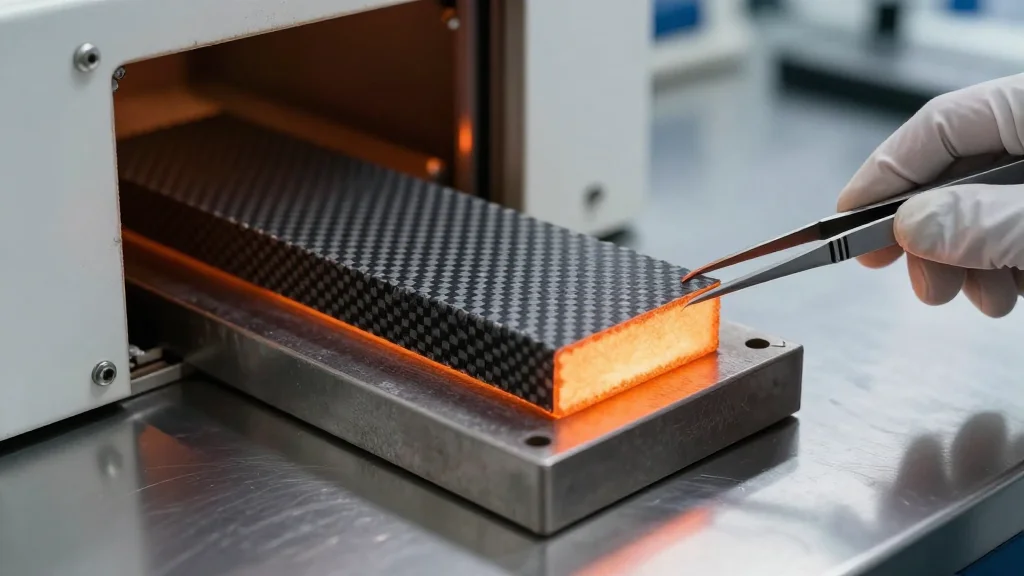
A French High-Temperature Composites Sector for Technological Sovereignty
Companies Mentioned
Why It Matters
The project reduces France’s dependence on foreign high‑temperature materials, strengthening strategic autonomy for aerospace and defence. Successful commercialization could reshape supply chains and lower weight‑critical component costs across the sector.
Key Takeaways
- •COMPINNOV HT+ targets 200‑400 °C resin performance
- •Consortium includes Safran, ArianeGroup, MBDA, SMEs, and CEA
- •Goal: achieve TRL 4‑5 industrial demonstrators within next years
- •New resins aim to replace titanium and ceramic matrix parts
- •French supply chain reduces reliance on U.S. high‑temp materials
Pulse Analysis
France is betting on home‑grown high‑temperature composites to safeguard its aerospace and defence capabilities. The COMPINNOV HT+ programme, spearheaded by IRT Saint‑Exupéry and backed by the defence innovation agency, brings together a full‑stack value chain—from university labs to major OEMs such as Safran and ArianeGroup. By focusing on organic matrix resins that remain stable up to 400 °C, the project tackles a long‑standing performance gap where epoxy‑based systems falter and U.S. suppliers dominate. The initiative’s ambition is not merely technical; it is a strategic move to create a sovereign supply chain that can feed both military and civil programmes.
Technically, the consortium is evaluating phthalonitrile‑based resins that promise strength, lightness and thermal stability comparable to titanium alloys. Early testing by Specific Polymers has yielded several candidates that meet the 200‑350 °C operating window required for next‑generation jet engines and rocket thrust chambers. By integrating carbon and glass reinforcements through RTM and impregnation processes, the team aims to reach Technology Readiness Level 4‑5, paving the way for industrial demonstrators. Success would enable designers to eliminate heavy thermal protection systems, cut component weight, and lower fuel consumption—key levers for competitive aircraft and launch vehicle performance.
The broader impact extends beyond material science. By uniting defence contractors, civil aerospace leaders, and innovative SMEs, COMPINNOV HT+ creates a collaborative ecosystem that shares risk and accelerates market entry. A domestic supply chain diminishes exposure to export controls and geopolitical supply shocks, reinforcing France’s strategic autonomy. If the resins achieve commercial scale, they could reshape procurement strategies across Europe, prompting a shift away from imported high‑temperature composites toward a resilient, locally controlled market that supports Horizon 2030 aerospace ambitions.
A French high-temperature composites sector for technological sovereignty
Comments
Want to join the conversation?
Loading comments...