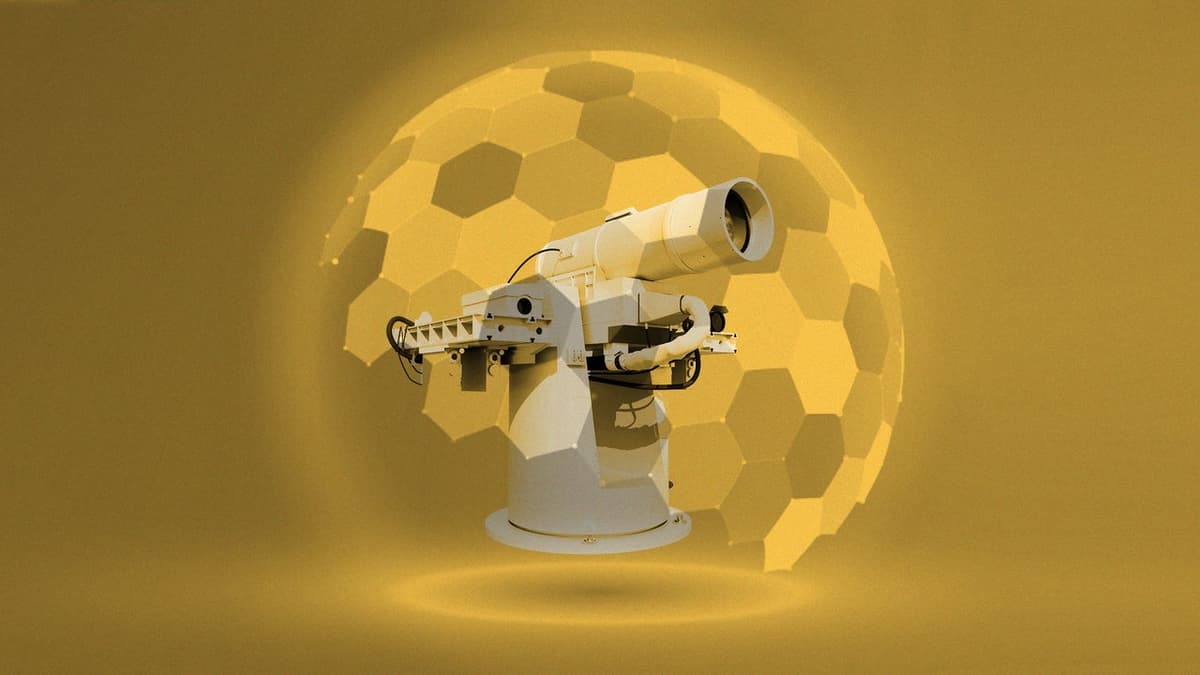
A Key Weapon in America’s ‘Golden Dome’ Defense Shield Is Taking Shape
Why It Matters
JLWS could give the United States a scalable, rapid‑response layer against cruise‑missile threats, filling a long‑standing gap in directed‑energy defense and reshaping surface‑fleet protection.
Key Takeaways
- •JLWS will start with a 150 kW containerized laser, scalable to 300 kW
- •Army allocated $51 M FY2026; Navy seeks $94.8 M FY2027 for JLWS
- •Total R&D funding projected at $676 M through FY2031
- •Lockheed Martin likely to win early JLWS contracts
- •Modular design enables rapid deployment across surface fleet
Pulse Analysis
The Pentagon’s Golden Dome concept has long sought a laser capable of knocking down cruise missiles, a challenge that has eluded programs from the 1970s chemical lasers to the Airborne Laser. JLWS represents the latest attempt, leveraging lessons from the Navy’s HELIOS system on the destroyer USS Preble and the Army’s forthcoming IFPC‑HEL prototype. By consolidating research under a joint Army‑Navy effort, the program aims to accelerate technology maturation and reduce duplication, positioning the United States to field a directed‑energy shield that can protect critical infrastructure and forward bases.
Budget documents reveal a steep increase in funding: the Navy’s FY2027 request jumps to $94.8 million, while the Army’s FY2026 allocation stands at $51 million, together forecasting $675.9 million in R&D through 2031. Early contracts, likely awarded to Lockheed Martin—already the technical lead on HELIOS and IFPC‑HEL—will focus on the Joint Beam Control System and the containerized laser package slated for delivery by early 2027. The modular, container‑based architecture is designed for rapid swap‑out across surface vessels, sidestepping costly shipyard retrofits and enabling the fleet to field the system where the threat is greatest.
Despite the funding surge, technical hurdles remain. Cruise missiles travel low, fast, and can maneuver to evade a beam, demanding precise targeting and sustained power that 150‑300 kW lasers have yet to demonstrate in realistic conditions. Atmospheric effects such as scattering and absorption further erode beam effectiveness. If JLWS can overcome these physics limits, it will not only validate the Golden Dome vision but also set a precedent for future high‑energy laser deployments across the services, potentially reshaping the strategic calculus of missile defense worldwide.
A key weapon in America’s ‘Golden Dome’ defense shield is taking shape
Comments
Want to join the conversation?
Loading comments...