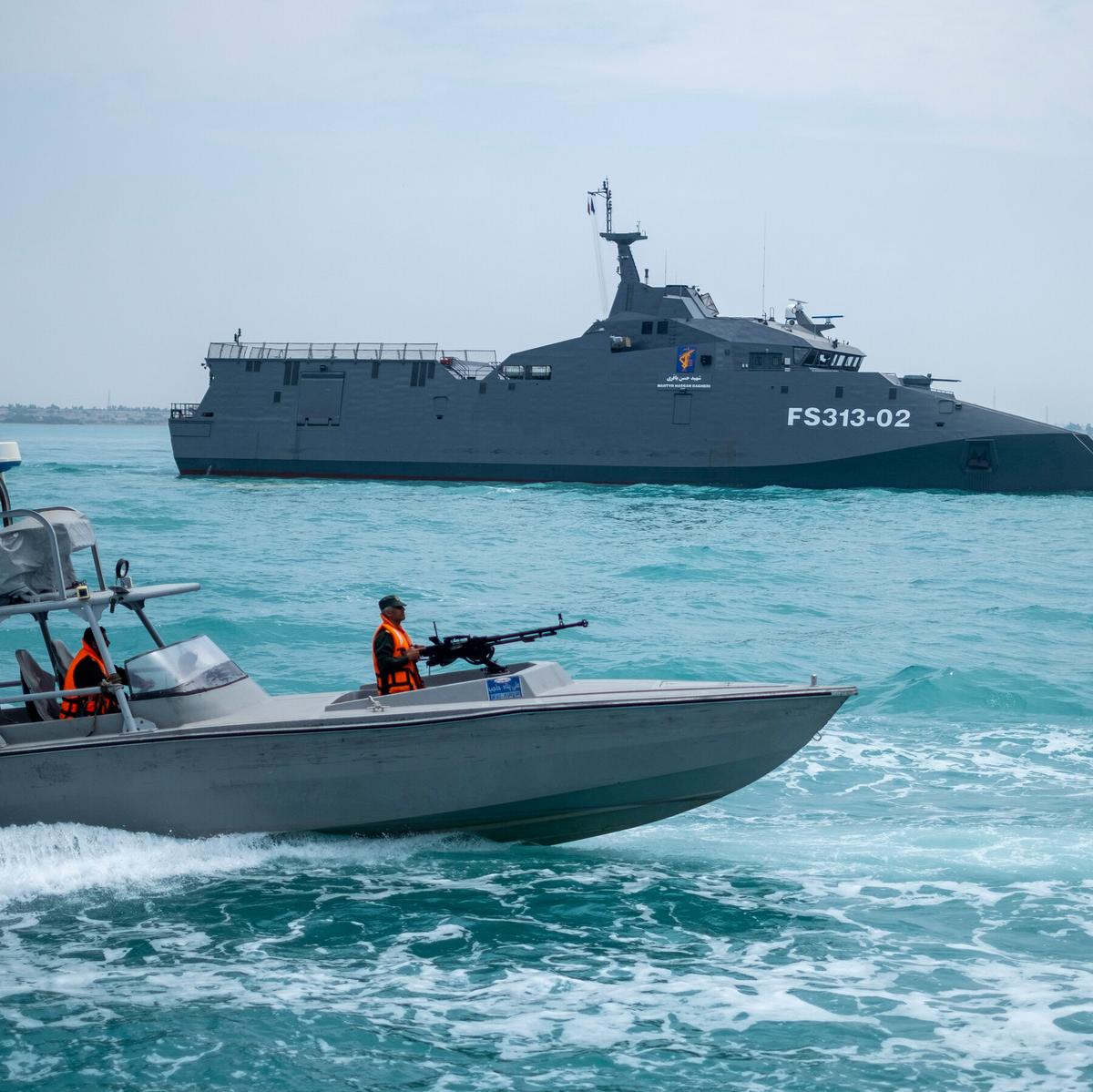
A Potent Threat in Strait of Hormuz: Iran’s ‘Mosquito Fleet’
Why It Matters
Disruption of Hormuz jeopardizes the flow of roughly 20% of global oil, raising shipping costs and prompting heightened naval security measures worldwide.
Key Takeaways
- •IRGC operates a “mosquito fleet” of high‑speed attack boats
- •Boats can exceed 115 mph, launch missiles and drones at vessels
- •Fleet aims to disrupt commercial traffic through the Strait of Hormuz
- •Iran’s ambiguous stance on reopening the strait heightens uncertainty
- •U.S. and allies monitor the fleet as a maritime security risk
Pulse Analysis
The IRGC’s mosquito fleet represents a shift from conventional naval power to asymmetric maritime warfare. These lightweight craft, capable of sprinting at over 115 mph, carry precision‑guided missiles and can deploy swarms of loitering drones, turning the narrow 21‑mile Strait of Hormuz into a high‑risk zone for merchant vessels. Unlike Iran’s blue‑water navy, the fleet relies on speed, stealth, and guerrilla tactics, allowing it to strike quickly and disappear into the congested Gulf waters, complicating detection and response for conventional warships.
The strategic importance of the Strait cannot be overstated: it channels roughly 20 percent of the world’s oil and a significant share of liquefied natural gas. Any interruption—whether from a missile strike, a drone swarm, or a coordinated swarm of fast boats—can trigger price spikes, reroute cargo, and force insurers to raise premiums. Past incidents, including missile attacks on tankers and the sinking of Iranian warships by U.S. and Israeli forces, illustrate how quickly the corridor can become a flashpoint, prompting navies to maintain a constant presence and develop counter‑swarm technologies.
Geopolitically, Iran’s mixed signals about reopening the strait reflect broader regional calculations. While Tehran claims a willingness to allow supervised transits, it also leverages the mosquito fleet as a bargaining chip against U.S. sanctions and Israeli actions. For global shippers and policy makers, the key question is whether diplomatic overtures can curb the fleet’s aggressive posture or if the waterway will remain a theater for proxy confrontations. Monitoring the fleet’s movements, investing in advanced detection systems, and maintaining diplomatic channels are essential steps to mitigate the risk of a sudden escalation that could ripple through energy markets worldwide.
A Potent Threat in Strait of Hormuz: Iran’s ‘Mosquito Fleet’
Comments
Want to join the conversation?
Loading comments...