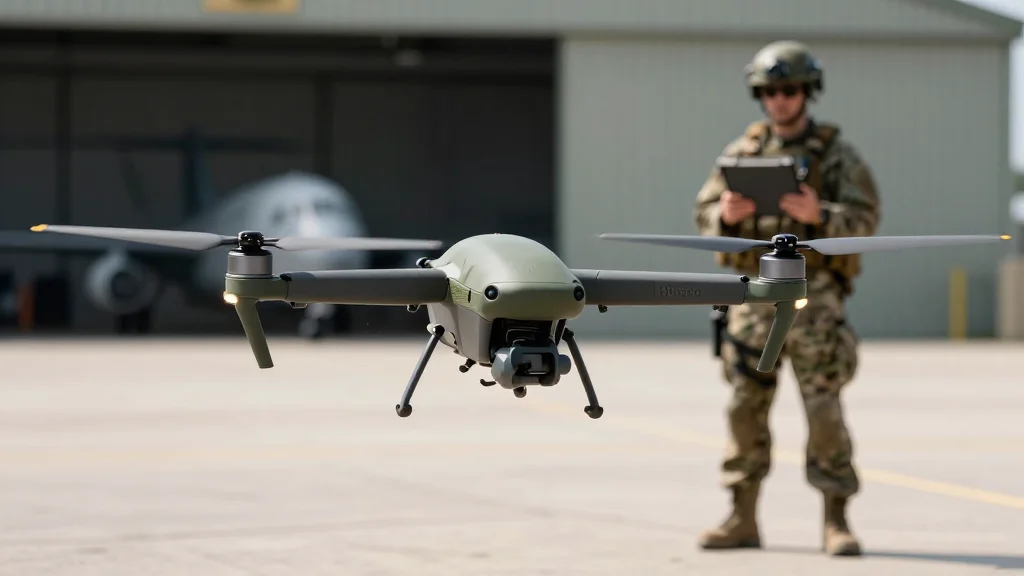
Accelerating the Fight for Drone Dominance
Why It Matters
The initiative accelerates the U.S. military’s ability to detect, neutralize, and employ drones, a capability increasingly decisive in modern conflict and base security.
Key Takeaways
- •Secretary Hegseth’s memo spurs rapid expansion of Army drone training.
- •JBER’s 11th Airborne Division teaches counter‑sUAS detection and camouflage.
- •Innovation lab 3D‑prints custom drones, cutting costs versus commercial models.
- •Security Forces use NINJA system to detect, seize, and trace drones.
- •Offensive sUAS tactics being added, expanding drones from defense to attack.
Pulse Analysis
The rapid proliferation of small unmanned aerial systems (sUAS) has reshaped battlefield calculus, prompting senior defense leaders to prioritize drone superiority. Secretary of War Pete Hegseth’s July 2025 memorandum framed drones as the most consequential innovation of a generation, urging the removal of bureaucratic barriers and a surge in resources. This policy shift reflects lessons from Ukraine’s drone‑intensive warfare and Iran’s evolving aerial threats, underscoring the strategic imperative for both offensive and defensive capabilities.
At Joint Base Elmendorf‑Richardson, the Army’s 11th Airborne Division translates the memo into action through a comprehensive counter‑sUAS curriculum. Soldiers receive hands‑on experience with commercial off‑the‑shelf drones that simulate hostile platforms, learning to detect, react, and employ camouflage against infrared sensors. An on‑site innovation lab leverages 3D‑printing to fabricate purpose‑built drones at a fraction of commercial costs, enabling rapid prototyping and the upcoming rollout of first‑person‑view offensive sUAS tactics. This blend of training and low‑cost technology accelerates skill acquisition while expanding the tactical toolbox.
Installation security also benefits from advanced drone‑defeat solutions. The 673rd Security Forces Squadron employs the Air Force’s NINJA system, a layered detect‑and‑neutralize platform that can seize rogue drones and trace operators, mitigating espionage and safety hazards. By integrating these capabilities, JBER not only protects critical infrastructure but also creates a testbed for broader Army adoption. As regulations evolve, the base’s expertise in both defensive and emerging offensive drone operations positions the U.S. military to maintain a decisive edge in the emerging aerial domain.
Accelerating the fight for drone dominance
Comments
Want to join the conversation?
Loading comments...