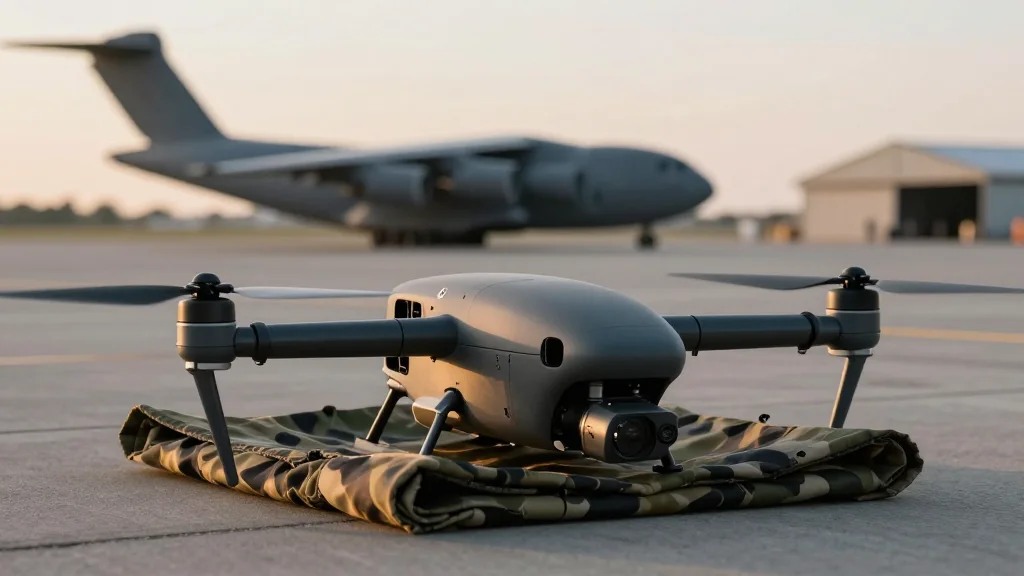
Accelerating the Fight for Drone Dominance
Why It Matters
Boosting drone proficiency strengthens base protection and readies forces for emerging UAS threats, a priority as adversaries exploit commercial drones for surveillance.
Key Takeaways
- •Elmendorf‑Richardson launches combat drone training for base defense
- •Program integrates commercial quadcopters with high‑definition cameras
- •Trainees learn counter‑UAS tactics against data‑exfiltration threats
- •Initiative supports DoD’s broader unmanned‑aircraft readiness strategy
Pulse Analysis
The rapid diffusion of low‑cost, high‑resolution commercial drones has reshaped the battlefield, giving both state and non‑state actors new avenues for intelligence gathering and kinetic attacks. Traditional air‑defense systems struggle to detect small, low‑altitude platforms, prompting the U.S. military to prioritize counter‑UAS (C‑UAS) training that blends technology with tactics. By incorporating real‑world scenarios—urban rooftops, dense foliage, and indoor facilities—forces can develop playbooks that address the full spectrum of drone‑related threats, from data exfiltration to weaponization.
At Joint Base Elmendorf‑Richardson, the new program leverages off‑the‑shelf quadcopters equipped with high‑definition cameras to simulate both friendly and hostile UAVs. Soldiers and airmen practice coordinated responses, including electronic jamming, kinetic interception, and cyber‑based denial of service. The curriculum also covers rules of engagement and privacy considerations, ensuring that operators can balance mission effectiveness with legal constraints. By embedding these capabilities into installation defense, the base creates a replicable model for other installations seeking to harden their perimeters against unmanned incursions.
The broader implications extend beyond the military. As the Department of Defense invests in C‑UAS expertise, commercial vendors are incentivized to develop more resilient drone architectures and secure data links. This arms‑race spurs innovation in anti‑drone sensors, AI‑driven threat classification, and rapid‑deployment counter‑measures. For policymakers, the Elmendorf initiative underscores the urgency of updating airspace regulations and inter‑agency coordination to address a future where drones are ubiquitous tools of both warfare and espionage. The program’s success could shape the next generation of UAS doctrine, influencing budget allocations and joint training standards across services.
Accelerating the fight for drone dominance
Comments
Want to join the conversation?
Loading comments...